Introduction
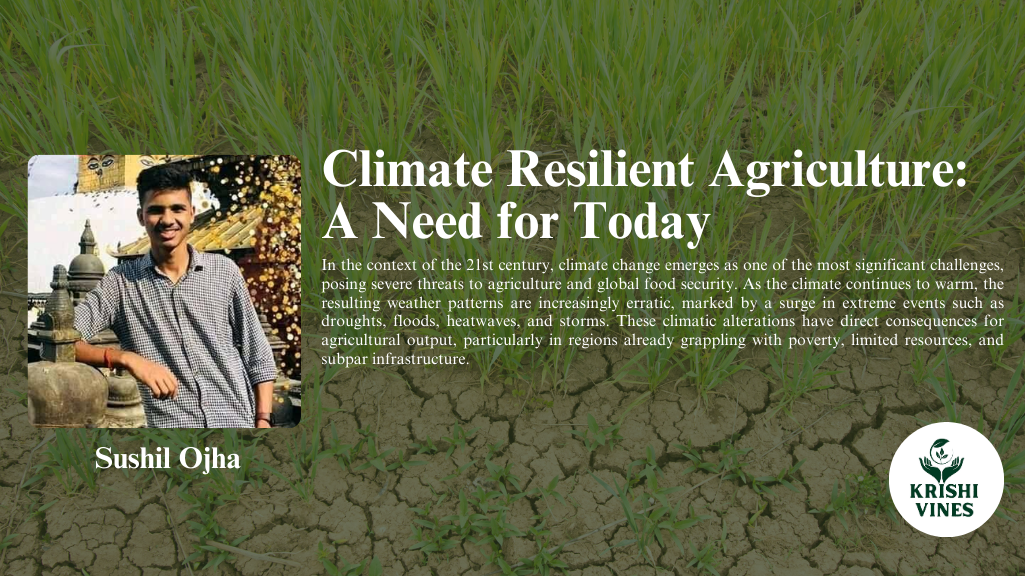
In the context of the 21st century, climate change emerges as one of the most significant challenges, posing severe threats to agriculture and global food security. As the climate continues to warm, the resulting weather patterns are increasingly erratic, marked by a surge in extreme events such as droughts, floods, heatwaves, and storms. These climatic alterations have direct consequences for agricultural output, particularly in regions already grappling with poverty, limited resources, and subpar infrastructure. The urgency for an agricultural model capable of withstanding such climatic fluctuations has reached critical levels. The Intergovernmental Panel on Climate Change (IPCC) warns that climate change is set to negatively impact crop yields in many areas, particularly in those already facing food insecurity. The IPCC’s 2022 report emphasizes the agricultural sector’s dual role as both a victim of and contributor to climate change, highlighting the pressing need for sustainable practices that can mitigate emissions and adapt to a transforming environment (IPCC, 2022).
Climate Resilient Agriculture (CRA) serves as a strategic response to these intertwined challenges of adaptation and mitigation. It embodies a comprehensive system of agricultural practices aimed at enhancing the ability of farming systems to adapt to climate variability while sustaining or even boosting productivity. CRA focuses on fortifying the resilience of crops, livestock, soil, water resources, and ecosystems against climate-induced stresses, all while working to lower greenhouse gas (GHG) emissions linked to agricultural activities (FAO, 2013). Not only is agriculture one of the sectors most vulnerable to the impacts of climate change, but it also plays a significant role in its causation, contributing roughly 14% of global GHG emissions. This is driven by factors such as livestock production, deforestation for agricultural expansion, and the inefficient use of fertilizers (Wheeler & von Braun, 2013). To combat these issues, CRA advocates for farming techniques that minimize emissions, conserve resources, and enhance biodiversity.
The relevance of CRA is particularly critical for smallholder farmers, who constitute a considerable portion of the agricultural workforce in developing countries. These farmers often face heightened vulnerability to the effects of climate change, as they typically depend on rain-fed agriculture and lack access to resilient technologies, infrastructure, or financial resources (Vermeulen, Campbell, & Ingram, 2012). CRA offers a comprehensive approach to help these farmers navigate changing climate conditions, protect their livelihoods, and ensure food security within their communities. Moreover, CRA extends beyond mere adaptation; it focuses on fostering sustainable agricultural practices that reduce the environmental footprint of farming. Methods such as agroforestry, conservation tillage, and organic farming not only contribute to mitigating climate change but also support long-term soil health, water conservation, and the preservation of biodiversity (Lal, 2015). These practices are vital components of a broader strategy aimed at creating sustainable, climate-smart agricultural systems capable of withstanding climatic shocks while diminishing agriculture’s contribution to global warming.
Key Components of Climate Resilient Agriculture (CRA)
Climate Resilient Agriculture (CRA) encompasses a variety of practices, technologies, and strategies aimed at fortifying agricultural systems against climate challenges. These elements concentrate on adapting to climate change, curbing agriculture’s greenhouse gas (GHG) emissions, and ensuring long-term sustainability. Below, we examine the detailed components of CRA:
- Water ManagementWater is an indispensable resource in agriculture, and its availability is increasingly jeopardized by climate change. Effective water management practices are vital for enhancing resilience, particularly in regions facing erratic rainfall, extended droughts, or flooding.
- Rainwater Harvesting: This method involves capturing and storing rainwater during periods of heavy rainfall for use during dry spells. It is particularly beneficial for rain-fed agricultural systems with limited access to irrigation. By acting as a buffer against unpredictable rainfall patterns, rainwater harvesting enhances crop productivity even during droughts (Joshi & Dayal, 2017)
- Drip Irrigation: Drip irrigation systems supply water directly to the roots of plants, significantly minimizing water loss through evaporation and runoff. This efficient technique conserves water, making it well-suited for regions experiencing water scarcity (Suryavanshi et al., 2020).
- Floodwater Diversion and Storage: In areas prone to flooding, capturing and redirecting excess floodwater to storage ponds or reservoirs can help prevent crop damage while providing a dependable water source during dry spells.
2. Soil Health Management
Maintaining healthy soils is crucial for sustaining crop productivity, especially amidst changing climatic conditions. Soil health management emphasizes the maintenance and enhancement of soil fertility, water retention, and capacity to support plant growth.
- Conservation Tillage: This practice minimizes soil disturbance by leaving crop residues on the soil surface, which helps prevent erosion, enhance water retention, and maintain organic matter. Conservation tillage also lowers GHG emissions by decreasing fossil fuel consumption in machinery operations (Lal, 2015).
- Cover Cropping: Cover crops, such as legumes or grasses, are cultivated during off-seasons to protect and enrich thesoil. These crops prevent soil erosion, improve soil structure, and contribute organic matter, bolstering the soil’s resilience to extreme weather events.
- Organic Fertilizers and Composting: Utilizing organic fertilizers, including compost and manure, improves soil fertility by providing essential nutrients and organic matter. These inputs enhance soil structure, water retention, and microbial activity, all critical for sustaining productivity under climatic stress.
3. Agroforestry
Agroforestry integrates trees and shrubs into agricultural landscapes, delivering multiple advantages that enhance climate resilience. This practice is particularly effective for mitigating the impacts of extreme temperatures, minimizing soil erosion, and improving carbon sequestration.
- Shade and Wind Protection: Trees provide shade, helping to regulate microclimates and safeguard crops from heat stress. Windbreaks created by trees reduce wind erosion and shield crops from damage during storms.
- Carbon Sequestration: Agroforestry systems play a vital role in capturing atmospheric carbon dioxide (CO₂). Trees and shrubs absorb CO₂ and store it in their biomass, thereby contributing to the reduction of GHG emissions (Nair & Garrity, 2012).
- Biodiversity Conservation: Agroforestry promotes biodiversity by creating habitats for various plant, animal, and microorganism species, enhancing ecosystem services like pollination and natural pest control.
4. Crop Diversification and Improved Crop Varieties
Diversifying crops and utilizing enhanced crop varieties are essential strategies for bolstering agricultural resilience. Diversified cropping systems mitigate the risk of total crop failure due to adverse climate conditions and improve ecosystem stability.
- Drought and Heat-Resistant Crop Varieties: Developing and planting crop varieties that are more tolerant to drought, heat, and salinity is a critical element of CRA. These varieties can sustain productivity even under challenging weather conditions, thereby enhancing food security (Aggarwal et al., 2019).
- Flood-Resistant Rice Varieties: In flood-prone areas, using rice varieties that can withstand prolonged submergence allows farmers to maintain yields even in the face of unexpected flooding (Nelson et al., 2010).
- Intercropping and Crop Rotation: Intercropping—growing two or more crops in close proximity—enhances resource efficiency and diminishes pest and disease pressures. Crop rotation, which involves alternating crops in the same field across different seasons, helps break pest and disease cycles while enhancing soil health.
5. Livelihood Diversification
Livelihood diversification encourages alternative income-generating activities beyond traditional farming. This approach reduces farmers’ vulnerability to climate-related shocks, ensuring they have multiple income streams to rely on during periods of crop failure.
- Agroforestry and Beekeeping: Integrating beekeeping into farming systems provides an additional income source while enhancing pollination and conserving biodiversity.
- Agro-tourism and Eco-tourism: Agro-tourism allows farmers to diversify their income by hosting visitors and showcasing traditional farming practices. Eco-tourism, particularly in scenic areas, can also provide alternative livelihoods for rural communities.
- Handicrafts and Small-Scale Food Processing: Encouraging farmers to engage in small-scale food processing or handicrafts can create supplemental income, especially during times of low agricultural production.
6. Integrated Pest Management (IPM)
Integrated Pest Management (IPM) is an ecological strategy for controlling pests that minimizes reliance on chemical pesticides. IPM combines biological, cultural, and mechanical practices to manage pest populations while mitigating the environmental impact of chemical controls.
- Biological Control: Utilizing natural predators, such as ladybugs and parasitic wasps, to manage pest populations reduces the need for synthetic pesticides, thus promoting biodiversity and lowering GHG emissions from chemical production.
- Cultural Practices: Techniques such as crop rotation, intercropping, and habitat management can naturally reduce pest pressures by disrupting pest life cycles and enhancing biodiversity.
- Resistant Varieties: Breeding pest-resistant crop varieties minimizes the need for chemical pesticide applications, fostering a more sustainable and resilient farming approach.
7. Climate Information Services and Early Warning Systems
Access to timely climate information is crucial for empowering farmers to make informed decisions. Early warning systems can help farmers prepare for extreme weather events, such as floods, droughts, or frosts, thereby minimizing potential damage to crops and livelihoods.
- Weather Forecasting: Short- and medium-term weather forecasts enable farmers to plan irrigation, planting, and harvesting based on predicted rainfall or temperature extremes.
- Seasonal Climate Outlooks: Seasonal climate predictions provide farmers with insights into longer-term climate trends, facilitating strategic decisions about which crops to plant and when.
- Early Warning Systems: These systems deliver timely alerts about impending extreme weather events, such as storms or floods, allowing farmers to take preventative measures to protect their crops and livestock (World Bank, 2020).
Significance of Climate Resilient Agriculture (CRA)
Climate Resilient Agriculture (CRA) plays a crucial role in adapting to climate change, safeguarding food security, and promoting sustainable farming practices. Here are its key benefits:
- Adaptation to Climate Change: CRA equips farmers to cope with extreme weather events, such as droughts and floods, by advocating for climate-resilient crops and livestock, improving water management, and encouraging sustainable land-use practices.
- Ensuring Food Security: By stabilizing yields through crop diversification, drought-resistant varieties, and efficient irrigation, CRA enhances food security, particularly in regions susceptible to climate variability.
- Mitigation of Climate Change: CRA contributes to reducing greenhouse gas emissions through sustainable practices like carbon sequestration in soils, optimized fertilizer usage, and improved livestock management.
- Biodiversity Conservation: CRA encourages agroecological practices that conserve biodiversity, such as agroforestry and diverse cropping systems, which bolster resilience to pests, diseases, and climate stressors.
- Poverty Reduction and Economic Stability: CRA helps alleviate poverty by enhancing farmers’ resilience to climate shocks, offering diversified income opportunities, and improving access to markets and credit.
- Sustainable Use of Natural Resources: CRA promotes long-term sustainability by advocating for water conservation, soil health management, and the adoption of renewable energy sources in agriculture.
Challenges in Implementing Climate Resilient Agriculture (CRA)
While the adoption of Climate Resilient Agriculture (CRA) is crucial for adapting to climate change, several challenges impede its implementation. These obstacles vary widely across regions and communities, and addressing them is essential for fostering a more resilient agricultural future.
- Lack of Awareness and Knowledge: Many farmers, particularly in developing regions, may not be aware of the benefits and practices of CRA. This knowledge gap can hinder the adoption of innovative techniques and technologies necessary for building climate resilienc
- Limited Access to Financial Resources: Implementing CRA often requires initial investments in new technologies, seeds, and infrastructure. Many smallholder farmers lack the financial resources or access to credit needed to make these investments, which can stall progress.
- Inadequate Infrastructure: Poor infrastructure, such as inadequate irrigation systems, roads, and storage facilities, can severely limit the effectiveness of CRA practices. In many regions, insufficient infrastructure leads to post-harvest losses and reduces farmers’ ability to adapt to changing climatic conditions.
- Policy and Institutional Barriers: Effective implementation of CRA requires supportive policies and institutional frameworks. However, existing policies may not prioritize climate resilience or may lack coordination among different sectors, making it challenging for farmers to access the necessary support.
- Market Limitations: Farmers may face challenges in accessing markets for their products, particularly if they adopt new and diverse crops that may not have established demand. Without reliable markets, farmers may be hesitant to invest in CRA practices that require changes to their cropping systems.
- Climate Uncertainty: The unpredictability of climate change can make it difficult for farmers to plan and implement CRA practices. Uncertain weather patterns can lead to difficulties in selecting suitable crops and planning for irrigation and other inputs.
- Cultural Resistance: Traditional farming practices are often deeply rooted in local cultures. Resistance to changing these practices can hinder the adoption of CRA, even when new methods may offer significant benefits.
- Access to Technology and Research: The development and dissemination of climate-resilient technologies and research are critical for CRA. However, in many areas, there is limited access to the latest agricultural research, extension services, and technologies, which can slow the implementation of CRA practices.
Conclusion
In conclusion, Climate Resilient Agriculture (CRA) emerges as a critical approach to address the pressing challenges posed by climate change on global agriculture and food security. With the increasing unpredictability of weather patterns and the heightened frequency of extreme events, the agricultural sector must adapt and mitigate its impact on the environment. CRA promotes a range of sustainable practices that enhance the resilience of crops, livestock, and ecosystems while simultaneously reducing greenhouse gas emissions. As the global population continues to grow and climate variability becomes more pronounced, the implementation of CRA is crucial for ensuring sustainable food production while protecting the environment. Despite its importance, the path to widespread adoption of CRA is fraught with challenges, including a lack of awareness, financial constraints, inadequate infrastructure, and resistance to change among traditional farming practices. To secure a resilient agricultural future that can withstand the impacts of climate change, it is essential to invest in CRA and support farmers in adopting sustainable practices. Through collective action and innovation, we can build an agricultural system that not only survives but thrives in a changing climate, ensuring food security for generations to come.
References
Aggarwal, P. K., et al. (2019). Climate Resilient Agriculture: A Research and Development Perspective. Agricultural Systems.
Food and Agriculture Organization (FAO). (2013). Climate-Smart Agriculture: Sourcebook. FAO, Rome.
Intergovernmental Panel on Climate Change (IPCC). (2022). Climate Change 2022: Impacts, Adaptation and Vulnerability. Contribution of Working Group II to the Sixth Assessment Report of the IPCC.
Joshi, U., & Dayal, D. (2017). Rainwater Harvesting: A Sustainable Solution for Water Scarcity. International Journal of Water Resources Development.
Lal, R. (2015). Conservation Tillage for Sustainable Agriculture. Advances in Agronomy.
Lal, R. (2015). Restoration of Degraded Soils. Advances in Agronomy.
Nair, P. K. R., & Garrity, D. P. (2012). Agroforestry Systems in the Tropics. Springer.
Nelson, A., et al. (2010). Climate Change and Rice: The Future of Food Security. Rice Research Institute.
Nelson, A., et al. (2010). Flood-Resistant Rice Varieties and Climate Change. Rice Research Institute.
Suryavanshi, R., et al. (2020). Drip Irrigation: A Sustainable Water Management Technique. Agricultural Water Management.
Vermeulen, S. J., Campbell, B. M., & Ingram, J. S. I. (2012). Climate Change and Food Systems. Annual Review of Environment and Resources.
Wheeler, T., & von Braun, J. (2013). Climate Change Impacts on Global Food Security. Science.
World Bank. (2020). Climate-Smart Agriculture: A Call to Action. World Bank Publications.
World Bank. (2020). Climate-Smart Agriculture: Enhancing Food Security in a Changing Climate. World Bank Publications.