Abstract
Agrobiodiversity, the variety and variability of animals, plants, and microorganisms used directly or indirectly for food and agriculture, is vital for ecosystem resilience and food security. Climate change, however, threatens this diversity, posing significant risks to global food production and sustainability. This article reviews current research trends on agrobiodiversity conservation in the context of climate change, emphasizing the importance of preserving genetic diversity, traditional knowledge, and sustainable practices. We also discuss how technological advancements and policy frameworks contribute to agrobiodiversity conservation, offering insights into future directions for research and development.
1. Introduction
Agrobiodiversity, a subset of biodiversity, encompasses the diversity of crops, livestock, pollinators, soil organisms, and ecosystems involved in agriculture. It is integral to the resilience of food systems, especially in the face of climate change. Climate change, characterized by shifting weather patterns, temperature changes, and increased frequency of extreme events, exerts profound impacts on agricultural systems globally. Agrobiodiversity plays a critical role in buffering these impacts by supporting ecosystem services like pollination, nutrient cycling, and disease control agrobiodiversity, therefore, becomes essential in mitigating the risks posed by climate change to global food security.
2. The Role of Agrobiodiversity in Climate Change Mitigation
2.1. Enhancing Resilience of Farming Systems
One of the key benefits of agrobiodiversity is its contribution to the resilience of farming systems. Diverse agricultural systems, which include a variety of crop species and genotypes, tend to be more resistant to pests, diseases, and extreme weather events. For example, mixed cropping systems or agroforestry can reduce the vulnerability of crops to climatic shocks, maintaining productivity under variable conditions.
2.2. Geneop Improvement
Preserving the genetic diversity of crops and livestock is fundamental to climate adaptation. Research has focused on using genetic resources to develop crop varieties that are tolerant to drought, salinity, and temperature extremes. For instance, drought-tolerant maize varieties have been developed through selective breeding and genetic modification, improving yields under water-scarce conditions. Traditional varieties, or landrace offer valuable traits for climate adaptation, as they are often better adapted to local conditions than modern, high-yielding varieties.
3. Traditional Knowledge and Sustainabes
3.1. Importance of Indigenous Knowledge
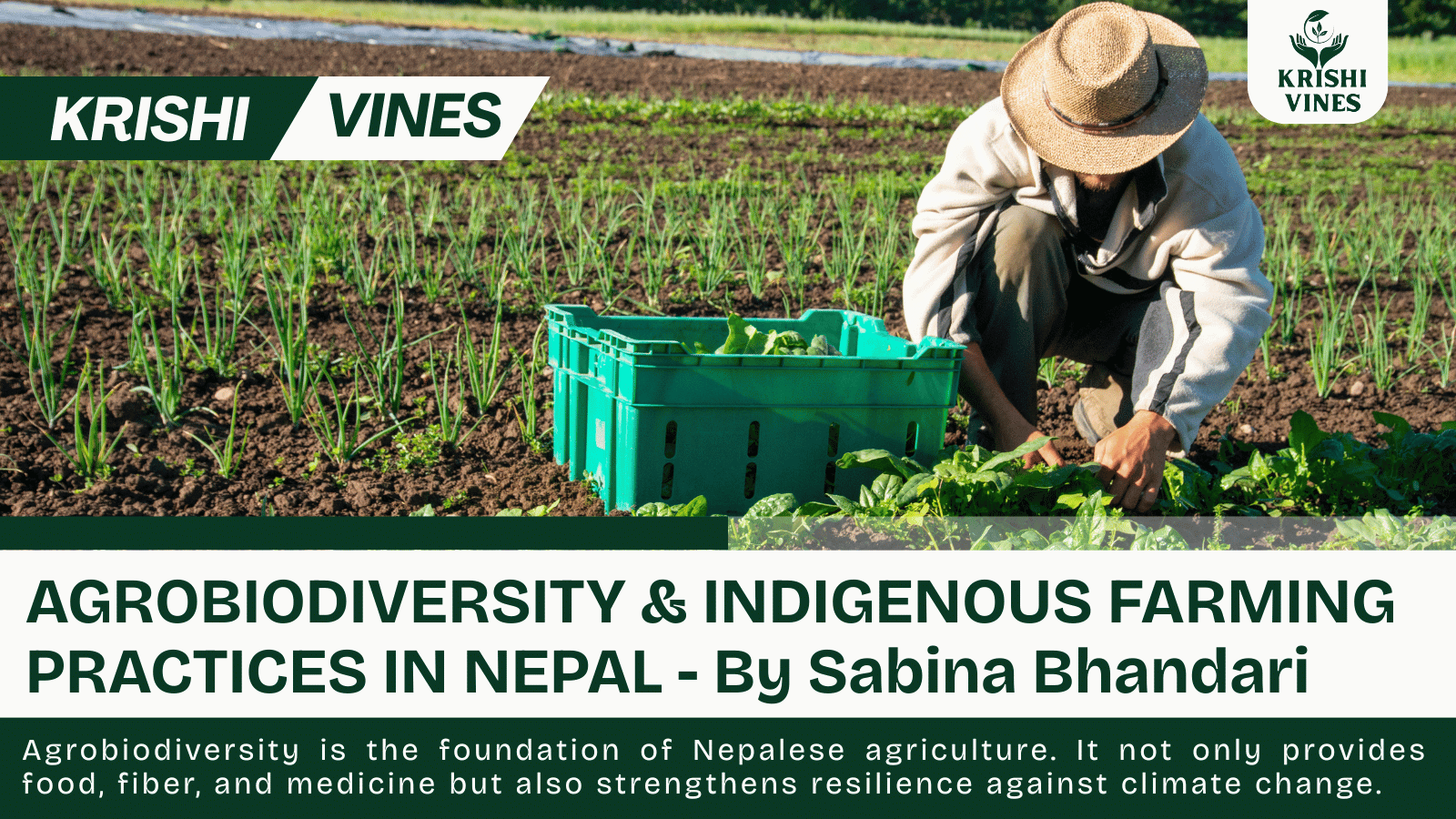
Indigenous agricultural systems, which have evolved over centuries, are repositories of valuable knowledge for agrobiodiversity conservation. These systems often employ techniques such as crop rotation, polyculture, and seed saving, which enhance biodiversity and ecosystem resilience. Researchers have increasingly recognized the important of integrating traditional knowledge with modern agricultural practices to develop sustainable, climate-resilient farming systems.
3.2. Agroecology and Sustainable Agriculture
Agroecology that applies ecological principles to agricultural systems, has emerged as a key approach for agrobiodiversity conservation. Agro ecological practices such as intercropping, integrated pest management, and organic farming promote biodiversity while reducing dependency on chemical inputs. These practices improve soil health, enhance biodiversity, and contribute to climate change mitigation by sequestering carbon in the soil.
4. Technological Advances in Agrobiodiversity Conservation
4.1. Technology
Technological advancements in genomics and biotechnology have opened new avenues for conserving and utilizing agrobiodiversity. Genomic tools, such as CRISPR and marker-assisted selection, allow for the precise breeding of crops with desired traits such as pest resistance or heat tolerance . Moreover, biotechnology is being used to conserve genetic resources through seed banks a conservation techniques .
4.2. Digital Platforms and Remote Sensing
Digital technologies, including remote sensing, bigtics, and artificial intelligence, are transforming agrobiodiversity research. Remote sensing allows researchers to monitor biodiversity changes and climate impacts on agricultural landscapes at a large scale. Digital platforms facilitate the sharing of genetic resources, such as through global seed networks, and contribute to the documentation of traditional knowledge .
5. Policy and Institutional Frameworks for Agrobiodiversity Conservation
5.1. International Treatial
This makes efforts to conserve agrobiodiversity are supported by international frameworks such as the Convention on Biological Diversity (CBD), the International Treaty on Plant Genetic Resources for Food and Agriculture (ITPGRFA), and the United Nations Framework Convention on Climate Change (UNFCCC). These treaties promote the conservation of genetic resources, the sharing of benefits arising from their use, and the integration of biodiversity into national and international agricultural policies.
5.2. National and Regional Policies
Many countries have implemented national strategies for agrobiodiversity conservation, ing on the protection of traditional agricultural systems and the sustainable use of genetic resources. Regional initiatives, such as the African Union’s Comprehensive Africa Agriculture Development Programme (CAADP), promote the integration of biodiversity conservation into agricultural development plans.
6. Future Directions in Research
While significant progress has been made in understanding the links between agrobiodiversity and cli, several areas require further research. These include:
- Impact assessments: More research is needed to quantify the impacts of climate change on specific agrobiodiversity components, such as soil microorganisms and pollinators
- Climate-smart agricultural technologies: Development of technologies that combine high productivity with biodiversity conservation is crucial economic and policy research**: Understanding the socio-economic dimensions of agrobiodiversity conservation, including the role of markets, incentivicies, will be vital in scaling up successful practices.
7. Conclusion
Agrobiodiversity is a key element in building resilient food systems capable of withstanding the impacts of climate change. Conservation efforts thae traditional knowledge, sustainable agricultural practices, and technological innovations are crucial for ensuring food security in the future. Ongoing research and policy support will be needed to maintain and enhance agrobiodiversity as a buffer against climate-induced stresses.
References
- Thrupp, L. A. (2000). Linking agricultural biodiversity and food security: The valuable role of agrobiodiversity for sustainable agriculture. International Affairs, 76(2), 265-281.
- Altieri, M. A. (1999). The ecological role of biodiversity in agroecosystems. Agriculture, Ecosystems & Environment, 74(1-3), 19-31.
- Lin, B. B. (2011). Resilience in agriculture through crop diversification: Adaptive management for environmental change. BioScience, 61(3), 183-193.
- IPCC. (2021). Climate Change 2021: The Physical Science Basis. Contribution of Working Group I to the Sixth Assessment Report of the Intergovernmental Panel on Climate Change.
- Varshney, R. K., et al. (2013). Integrated genomic approaches for crop improvement. Current Opinion in Plant Biology, 16(2), 237-243.
- Jarvis, D. I., et al. (2011). A global perspective of the richness and evenness of traditional crop-variety diversity maintained by farming communities. Proceedings of the National Academy of Sciences, 108(13), 5326-5331.
- Altieri, M. A., & Koohafkan, P. (2008). Enduring farms: Climate change, smallholders, and traditional farming communities. Environment and Development Economics, 12(3), 402-414.
- Mijatović, D., et al. (2013). The role of agricultural biodiversity in strengthening resilience to climate change: Towards an analytical framework. International Journal of Agricultural Sustainability, 11(2), 95-107.
- Wezel, A., et al. (2009). Agroecology as a science, a movement, and a practice. A review. Agronomy for Sustainable Development, 29(4), 503-515.
- Gliessman, S. R. (2007). Agroecology: The ecology of sustainable food systems. CRC Press.
- Jaganathan, D., et al. (2018). CRISPR for crop improvement: An update review. Frontiers in Plant Science, 9, 985.
- Engelmann, F. (2011). Use of biotechnologies for the conservation of plant biodiversity. In Vitro Cellular & Developmental Biology – Plant, 47(1), 5-16.
- Leclère, D., et al. (2020). Bending the curve of terrestrial biodiversity needs an integrated strategy. Nature, 585(7826), 551-556.
- Newbold, T., et al. (2015). Global effects of land use on local terrestrial biodiversity. Nature, 520(7545), 45-50.
- FAO. (2019). The State of the World’s Biodiversity for Food and Agriculture. FAO.
- African Union. (2020). Comprehensive Africa Agriculture Development Programme (CAADP). Addis Ababa, African Union Commission.
- Sala, O. E., et al. (2000). Global biodiversity scenarios for the year 2100. Science, 287(5459), 1770-1774.
- Lipper, L., et al. (2014). Climate-smart agriculture for food security. Nature Climate