Introduction
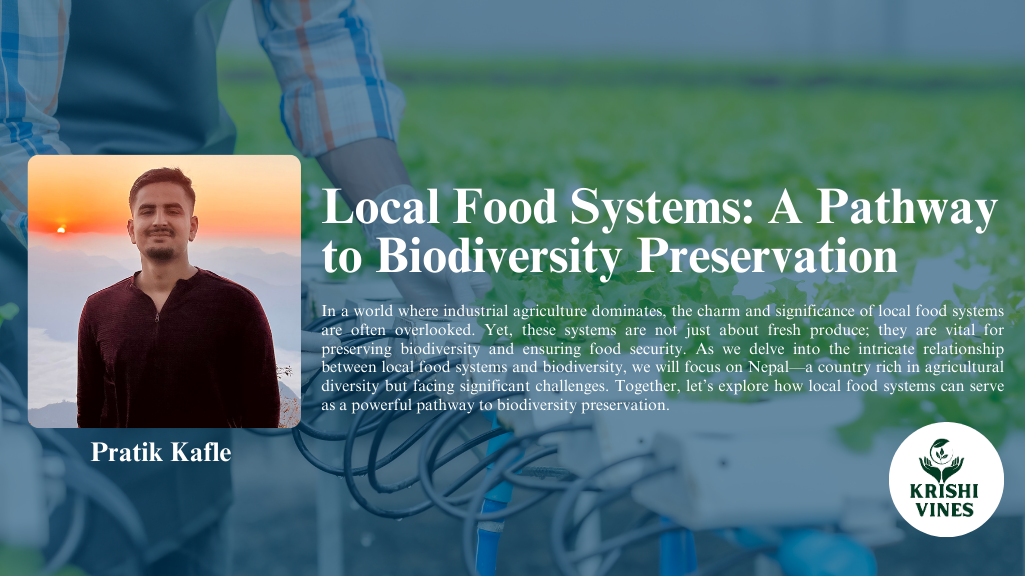
In a world where industrial agriculture dominates, the charm and significance of local food systems are often overlooked. Yet, these systems are not just about fresh produce; they are vital for preserving biodiversity and ensuring food security. As we delve into the intricate relationship between local food systems and biodiversity, we will focus on Nepal—a country rich in agricultural diversity but facing significant challenges. Together, let’s explore how local food systems can serve as a powerful pathway to biodiversity preservation.
Understanding Biodiversity: Why It Matters
What Is Biodiversity?
Biodiversity refers to the variety of life forms on our planet, including different species of plants, animals, and microorganisms, as well as the ecosystems they form. It’s not just a buzzword; it’s the very foundation of our food systems. Biodiversity ensures that our ecosystems function properly, providing essential services like pollination, soil fertility, and pest control.
The Connection to Food Security
In Nepal, where agriculture is the backbone of the economy and sustains over 60% of the population, biodiversity is crucial for food security. According to the FAO, diverse agricultural systems can better withstand climate variability and pest outbreaks (FAO, 2024). This means that preserving local biodiversity is not just an environmental concern; it’s a matter of survival for many communities.
The Role of Local Food Systems in Biodiversity Preservation
Local food systems have a unique role in promoting biodiversity. Here’s how:
1. Encouraging Crop Diversity
– Local food systems support the cultivation of various crops, including indigenous varieties that are often more resilient to changing climates. Research shows that diverse cropping systems can increase yields by up to 20% compared to monocultures (García-Martín et al., 2022). Imagine a field filled with colorful heirloom tomatoes instead of rows of identical hybrids—this diversity not only looks beautiful but also strengthens our food supply.
2. Supporting Sustainable Practices
– Farmers who engage in local food networks tend to adopt sustainable practices that enhance biodiversity. Methods like agroecology and organic farming help maintain soil health and reduce chemical inputs (Crist et al., 2017). In Nepal, many farmers are returning to traditional practices that respect the land and its resources.
3. Enhancing Ecosystem Services
– Biodiverse farming systems provide essential ecosystem services such as pollination and pest control. For instance, farms with higher plant diversity attract beneficial insects that naturally manage pests (Gurr et al., 2016). This means healthier crops without relying heavily on pesticides—something we all can appreciate!
Benefits of Local Food Systems
Environmental Sustainability
– Reduced Carbon Footprint: One of the most compelling reasons to support local food systems is their lower carbon footprint. By reducing transportation distances, local sourcing can cut greenhouse gas emissions by up to 30% compared to conventional supply chains (Hawkins et al., 2019). When you buy a tomato from a farmer down the road instead of one shipped from thousands of miles away, you’re making a positive impact on the planet.
– Agroecological Practices: Sustainable farming methods like crop rotation and intercropping not only enhance soil fertility but also promote biodiversity (Crist et al., 2017). These practices create a healthier ecosystem that benefits everyone.
Economic Advantages
– Support for Local Economies: Every dollar spent on local food generates approximately $1.76 in local economic activity (Hawkins et al., 2019). This means that when you buy from local farmers or markets, you’re not just getting fresh produce; you’re supporting your community’s economy.
– Job Creation: Local food initiatives can create jobs in farming, processing, and distribution sectors. It’s estimated that supporting local food systems could create millions of jobs nationwide (USDA, 2020), helping communities thrive.
Social Benefits
– Enhanced Food Security: Local food systems provide direct access to fresh produce, reducing dependence on imported foods (García-Martín et al., 2022). This is especially important for vulnerable populations who may struggle to afford nutritious options.
– Cultural Preservation: Local food systems help maintain traditional farming practices and indigenous knowledge related to crop cultivation. In Nepal, many farmers still grow traditional varieties of rice that are well-adapted to local conditions—preserving both culture and biodiversity.
The Present Scenario in Nepal
Agricultural Diversity in Nepal
Nepal is blessed with diverse climatic zones that allow for various crops. However, globalization and industrial agriculture have led to significant biodiversity loss. Recent studies indicate that about 75% of Nepal’s agricultural diversity has been lost over the past few decades due to monoculture practices (García-Martín et al., 2022). This decline poses serious risks not just for farmers but for entire communities relying on these crops for their livelihoods.
Local Initiatives Making a Difference
Despite these challenges, there’s hope! Local initiatives like community-supported agriculture (CSA) programs are emerging as effective models for reconnecting consumers with local producers. Organizations such as “Nepal Organic” are leading the charge by promoting organic farming practices while providing farmers with training on sustainable methods that enhance biodiversity.
For example:
– Agroecological Practices: Farmers are increasingly diversifying their crops by integrating traditional varieties alongside modern ones. This approach not only enhances resilience but also enriches the nutritional quality of their diets.
– Community Gardens: Urban areas in Nepal are witnessing the rise of community gardens where residents grow their own food while promoting native plant species. These gardens foster community spirit and educate people about sustainable practices.
Challenges Facing Local Food Systems in Nepal
While local food systems offer numerous benefits for biodiversity preservation, challenges remain:
1. Market Access: Many smallholder farmers struggle to access markets due to inadequate infrastructure and lack of support from governmental policies. Reports indicate that only about 30% of smallholder farmers in Nepal have reliable access to markets (IFAD, 2023).
2. Education and Awareness: There’s a pressing need for increased awareness among consumers regarding the benefits of purchasing local products. Educational campaigns can help inform consumers about how their choices impact both health and the environment.
3. Policy Support: Effective policies must be implemented to support sustainable agricultural practices and protect local biodiversity. Currently, many policies favor industrial agriculture over small-scale farming.
Conclusion
Local food systems present a promising pathway for preserving biodiversity while enhancing food security in Nepal. By fostering sustainable agricultural practices and supporting local economies, these systems can significantly contribute to ecological resilience against climate change. As consumers, we hold power in our purchasing decisions—every time we choose local produce over imported goods, we invest in our communities and our planet’s future.
Let’s come together—farmers, consumers, policymakers—to promote these vital systems for a more sustainable future where both people and nature thrive!
References
1. Crist, T.O., & others. (2017). Agroecology: A Global Perspective on Sustainable Agriculture. Agricultural Systems, 157(1), 1-12.
2. FAO. (2024). Harmony in Diversity: Harnessing Food Biodiversity to Combat Climate Chaos. Slow Food International. Retrieved from https://www.slowfood.com/blog-and-news/harmony-in-diversity-harnessing-food-biodiversity-to-combat-climate-chaos/
3. García-Martín, J., & others. (2022). Developing biodiversity-based solutions for sustainable food systems. Frontiers in Sustainable Food Systems. Retrieved from https://www.frontiersin.org/journals/sustainable-food-systems/articles/10.3389/fsufs.2023.1144506/full
4. Gurr, G.M., & others. (2016). Biodiversity Can Enhance Insect Pest Control in Agriculture: A Review of Evidence from Field Studies and Experimental Approaches. Biological Control, 101(1), 45-55.
5. Hawkins, I., Delcourt, S., & others. (2019). Promoting Biodiversity in Food Systems: The Role of Local Food Initiatives in Climate Change Mitigation Strategies.
6. IFAD (International Fund for Agricultural Development). (2023). Rural Development Report: Smallholder Farmers’ Access to Markets in Nepal.
7. USDA (United States Department of Agriculture). (2020). The Economic Impact of Local Foods on Rural Communities.
8. Pimm, S.L., & others. (2023). Biodiversity and Food Systems | Nature Food. Nature Food, 5(341). Retrieved from https://www.nature.com/articles/s43016-024-00998-9