Keyword: Agrobiodiversity, Climate Change, Policy, Resilience
Introduction
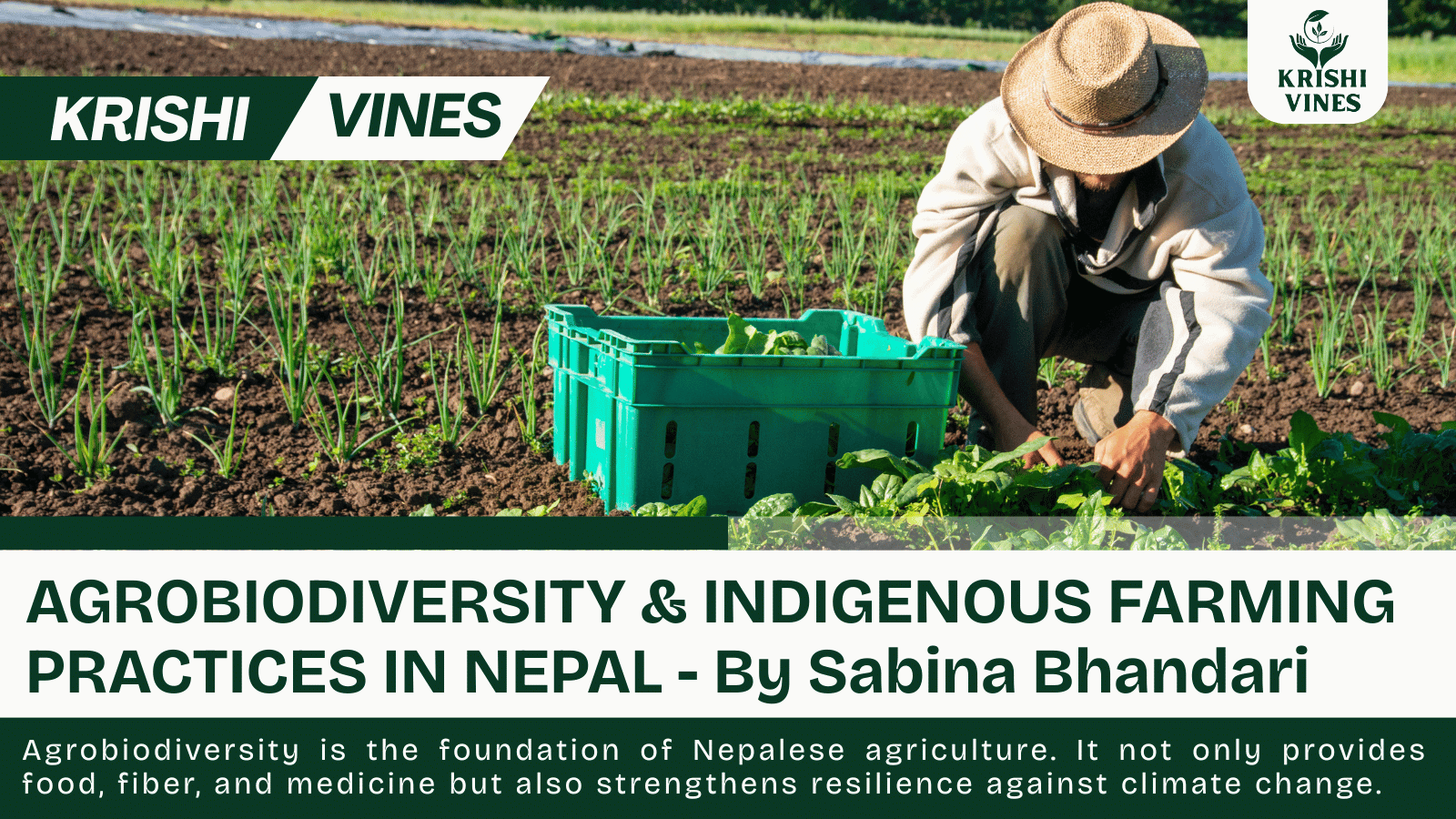
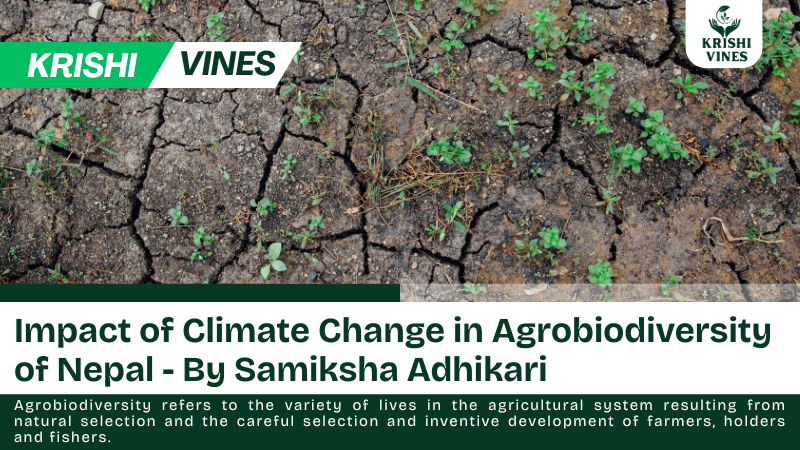
Agrobiodiversity refers to the variety of lives in the agricultural system resulting from natural selection and the careful selection and inventive development of farmers, holders and fishers. Agro biodiversity is the result of the interaction between the environment’s genetic resources and management system and practices used by culturally diverse peoples and therefore land and water resources are used for production in different ways. Thus, agrobiodiversity encompasses the variety and variability of animal plants and microorganisms that are necessary for sustaining key functions of the agro ecosystem including structure and process for, and in support of, food production and food security.
A total of 24,300 biological species are reported in Nepal. Among them 28% are agricultural species excluding 27 exotic ornamental species. Species richness of agricultural fauna is higher than agricultural flora. Nepal is rich in biodiversity, occupying the 49th position in the world. The country harbors 3.2 % and 1.1% of the world’s known flora and fauna, respectively. As per one estimate, on average, 40% of agricultural genetic resources are lost in the country. Some of the major reasons for their rapid loss include climate change, modern farming practice characterized by monoculture of modern varieties, limited use of local landrace in breeding, epidemics of disease and insect paste and over exploitation.
Impact of Climate Change on Agrobiodiversity
- Temperature and precipitation change
One study found that from 1975- 2006 in Nepal, the average temperature rise was about 1.8 degree Celsius in that period. The changing rainfall and increased frequency of extreme weather like floods, drought, and landslides is reported widely. Nepal is heavily dependent on the monsoon season, which accounts for nearly 80% of its annual rainfall. The impact of climate change had made monsoon pattern more unpredictable, with both excessive rainfall and prolonged dryness becoming more frequent. A national survey noted that in the last 5 years, farm and off farm economic losses amount to about NRs. 415.44 billion in Nepal.
- Shift in cropping pattern, loss of traditional varieties
Change in species distribution and range limit predict in this region beget the question of how species interaction may change within shifting ecotones, weather new interaction will immerse, and how these changes will affect existing species. These species level affect may manifest community level changes such as species composition and productivity. Traditional vegetable varieties in Nepal have evolved over time to adopt to specific local condition, but these varieties are at risk of disappearing due to climate change. Unpredictable rainfall, extremely increase in temperature, evolve of new paste and disease dynamics add making it harder to grow traditional vegetables which lead many farmers to shift towards modern high yielding varieties. Data from the Nepal Agricultural Research Council shows that the cultivation of traditional vegetable varieties has decreased by 30% over the last 2 decade. This trend is particularly prominent in mid hills and mountainous region where farmers are increasingly abounding land races like traditional spinach, beans and local varieties of mustard greens in favor of commercial hybrid. This shift causes genetic erosion that reduce the genetic pool, weakening the overall resilience of Nepal’s vegetable production system to climate shock.
- Increase pest, disease and invasive species pressure
Warmer temperature with more humidity creates a favorable condition for pest and disease outbreak. With the change in climate, the incidence of vegetable disease rises by 20% over past decade has been reported. With the loss in the agro biodiversity, the system is more vulnerable because monoculture or limited varieties reduce the resilience towards pest and disease.
- Loss of ecosystem services and pollinators
The decline of agrobiodiversity and climate driven stress to ecosystem also affect pollinators, soil microbes and beneficial insects. The population of pollinator in Nepal decreased by almost 17% over past decade according to an article, impacting pollinator dependent crops. Natural disaster like soil erosion, landslide and changing land use reduce habitat for wild relatives and forest which are important component of agrobiodiversity.
- Agro ecosystem transformation and land use change
Climate change interact with land use change, migration, fragmentation of agro ecosystem. Mountain terraces may be abandoned due to out migration, or land may shift to other use because of climate stress. These chains reduce the availability of niches microhabitat for land races and local varieties, biodiversity is lost when the micro environment disappear. One qualitative study in Balaku [okhaldhunga], found that rising temperature, erratic rainfall and water scarcity are already reducing yield and pushing farming to resource intensive alternative crop.
- Impacts on nutrition, diet diversity and livelihood
With fewer traditional vegetables, local grains legumes being grown and consumed, nutritional diversity can decline. According to one report, household relying on hybrids consume 25% fewer traditional vegetable. With agrobiodiversity loss, resilience to climate shock diminishes, the more the yield loss.
Challenges and Issues
Nepal is an agrobiodiversity rich country but native genetic resources never got priority in resource, education and development, resulted in genetic erosion. Major challenges are to stop genetic erosion, to make native agriculture genetic resources competitive, to decrease the current 95-100% dependency on foreign germplasm, to secure food and nutrition conserving existing agrobiodiversity, to replace foreign agriculture product and germplasm by native agricultural genetic resources and their products, to identify global potential native AGRs and market globally, to develop site specific different products, to create enabling environment for favoring diversity reach varieties, breeds and strains to accelerate the evolutionary population to capture diversity from wide range of agricultural area.
The formal seed sector remains weak, the formal sector was meeting only about 25% of the 180,000 metric ton seed requirement in recent years, meaning farmers often rely on informal seed system or imports. Similarly seed replacement rate is also low, around 25% for cereals and even lower for legumes and oilseed undermining varietal turnover and adaptation capacity. Policy and institutional gaps compound the problem, there is no comprehensive agro biodiversity act, research and extension coordination is weak and incentive for conserving minor crops or land rates are minimal. In one study of high hill agriculture the author identified tourism, low social value attached to traditional crops, insufficient resource support and food subsidies favoring commercial crop as threat to agrobiodiversity. Climate change and environmental degradation amplify the challenges like erratic rainfall, increased erosion and landslides shifting growing zone and increased pest and disease pressure mean that many locally adapted varieties become less viable or abandoned.
One study in mountain agro-ecosystem documents that naked barley is important in mountain region but its production area and genetic diversity is shrinking fast. The paper estate only one variety [solu Uwa] has been released with yield potential 1.9 metric ton per hector. It notes that inadequate varietal selection means farmer are shifting to wheat, reducing cultivation of naked barley land races.
Policy, Conservation Efforts and Gaps
Nepal has documented policy, Agrobiodiversity Policy 2063, amended in 2014 which stated goal includes conserving and sustainably using agrobiodiversity, protecting farmers right and traditional knowledge and ensuring equitable sharing of benefits from agricultural genetic resources. Similarly the National Seed Policy 1999 and subsequent seed legislation provide frameworks for production, quality control, distribution of seed and include some acknowledgement of farmers variety. The National Biodiversity Strategy and Action Plan 2014-2022 aligns the International Treaty on Plant Genetic Resources for Food and Agriculture and emphasizes in-situ and ex-situ conservation of plant genetic resources.
Despite these steps, important gap remains, many of which undermine the effective conservation and use of agrobiodiversity. While there is the agrobiodiversity policy, Nepal lacks the standalone comprehensive legal act that fully address access beneficiary, farmers rights over native varieties and the commercialization of land races. Policies often prioritized former seed system, hybrids and commercial varieties. There are few incentive for conserving or using land races, and seed subsidies and credits larger support commercial varieties rather than minor crops or local varieties. Even where policies exist, implementation is weak. Institutional responsibilities are overlapping and local governments often lack capacity awareness and resources to act on agrobiodiversity policy. There is little policy to support value chain of local language is or minor crops nor credits or subsidy schemes that promote them. Instead, system favors input intensive commercial varieties.
Implication for Food Security Resilience and Sustainable Agriculture
The loss of agrobiodiversity has serious implication for Nepal’s future food security and resilience. With three staple [Rice, Maize, Wheat] occupying about 83% of total cultivar land area the narrowing of crop based adaptive capacity to climate variability and shock. This over residence on a few crops has made farming system increasingly vulnerable to climate variability, pest and disease. The Himalayas are warming faster than global average, with the rate of 0.06 degree Celsius per year forcing mainly traditional crops such as Millet, Barley and Buckwheat to shift to higher altitude and reducing their cultivation range. As a result, Nepal is rapidly losing climate resilient gene vital for future adaptation including drought tolerant and pest resistant traits.
The ongoing erosion of Nepal’s agrobiodiversity represents not only an ecological and cultural loss but also a direct threat to national food sovereignty and climate resilience. Safeguarding this diversity is crucial for maintaining the adaptability of Nepal’s agriculture to environmental change. Strengthening community seed banks, encouraging farm lead breeding programs and integrating agro biodiversity conservation into national climate and agricultural policy add essential strategies for insuring sustainable food system. Protecting Nepal’s genetic resources is there for not merely a conservation goal, it is a prerequisite for a resilient, self -reliant and food secure future.
Conclusion
The erosion of agrobiodiversity in Nepal poses severe threat to food security, nutrition, climate resilient and rural livelihood. With over 40% of traditional land races already lost and the majority of farmland dominated by just 3 staple crops, national agricultural system is increasingly vulnerable to climate variability, pest and extreme weather event. The decline of nutrient treats traditional crops coupled with reduction in pollinator population and livestock forages diversity undermines both ecosystem services and dietary quality, these proportionately affecting small holders and hill farmers. To secure food sovereignty, climate adaptability and sustainable ruler livelihoods, Nepal most prioritize the protection and promotion of indigenous crop varieties, community seed system and farm led agro-ecological practices. Preserving agrobiodiversity is not only a conservation imperatives but also a critical strategy for building a resilient and equitable farming agriculture future. About 5-15% of native Agricultural Genetic Resources depending on specific Agricultural Genetic Resources has been used in resource and development. Priority for conservation and utilization should be given to native AGRs focusing on developing site specific staple easy areas marketing globally by involving all relevant stakeholders.
References
- Chaudhary, P., Bhatta, S., Aryal, K., Joshi, B. K., & Gauchan, D. (2023). Threats, drivers, and conservation imperative of agrobiodiversity. Journal of Agriculture and Environment, 21, 1–13. https://doi.org/10.3126/aej.v21i0.38441
- Gauchan, D., & Joshi, B. K. (Eds.). (2022). Agrobiodiversity conservation on-farm: Nepal’s contribution to a scientific basis for national policy recommendations. International Plant Genetic Resources Institute. https://www.academia.edu/21688327
- Joshi, B. K., Khanal, S., Shrestha, R. K., & Shrestha, R. (2023). Policy gaps and practices on genetic diversity: The heterogeneous and localized evolutionary population as well as native landraces in agriculture of Nepal. Nepal Public Policy Review, 3(1), 1–15. https://doi.org/10.59552/nppr.v3i1.60
- Livepati News. (2024, October 22). Agrobiodiversity-based climate-smart farming. Livepati. https://livepati.com/news-details/20570/2024-10-22
- Ministry of Agriculture and Livestock Development (MoALD). (2022). Agricultural statistics of Nepal 2021/22. Government of Nepal.
- Ministry of Forests and Environment (MoFE). (2021). National adaptation plan of action to climate change (NAPA) 2021–2030. Government of Nepal.
- Nepal Agriculture Research Council (NARC). (2023). National agriculture statistics 2022/23. Government of Nepal.
- Nepal Journal of Agricultural Research (NARJ). (2022). Conservation status of traditional landraces in Nepal. 8(1), 45–58.
- Nepal Journals Online (NepJOL). (2022). National gene bank accessions. https://www.nepjol.info/index.php/aej/article/view/38441
- Nepal Journals Online (NepJOL). (2023). Impacts of agrobiodiversity loss on livestock systems. https://www.nepjol.info/index.php/aej/article/view/38441
- Bhattarai, A., Pandey, K., Paudel, G., & Bhattarai, S. (2023). Agroforestry: An inspirational case of diversified farmers’ income and climate change adaptation strategy in the mid-hills of central Nepal. Forestry: Journal of Institute of Forestry, Nepal, 20(1), 1–11. https://doi.org/10.3126/forestry.v20i1.64266