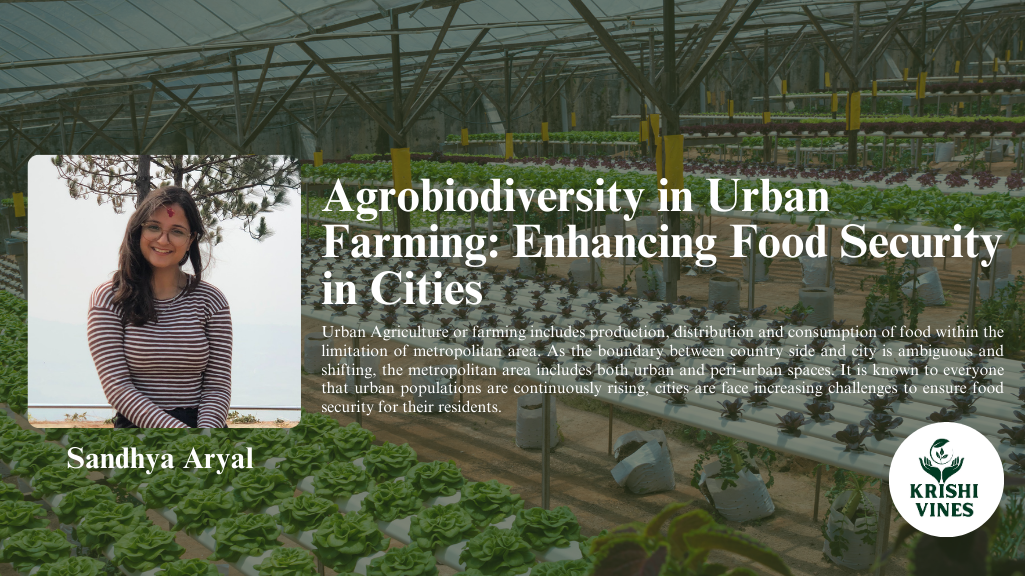
Urban Agriculture or farming includes production, distribution and consumption of food within the limitations of metropolitan areas. As the boundary between countryside and city is ambiguous and shifting, the metropolitan area includes both urban and peri-urban spaces. It is known to everyone that urban populations are continuously rising, and cities are facing increasing challenges to ensure food security for their residents. In this context, urban farming is gaining importance as a viable solution to provide fresh, local produce, reduce food miles, and build resilient food systems. An important aspect of urban agriculture that often goes unnoticed is agrobiodiversity—the variety and variability of plants, animals, and microorganisms that are used directly or indirectly for food production.
When we incorporate agrobiodiversity into urban farming, it can significantly enhance the resilience and sustainability of urban food systems, providing diverse, nutritious diets, promoting ecological balance, and improving urban livelihoods. This article explores how agrobiodiversity can transform urban farming into a key player in the fight for food security in urban areas.
The Role of Agrobiodiversity in Urban Farming
Agrobiodiversity involves growing a diverse range of crops, raising varied livestock, and nurturing beneficial microorganisms in farming systems. Agro ecological urban farming promotes biological activity in the soil, conserves soil organic matter, and relies on interactions and positive synergies between agroecosystem components, further enhancing the system’s resilience. Because diversity makes cities more resilient to social, economic and environmental challenges, it can serve as the foundation of a sturdy food system in urban settings.
Here’s how agrobiodiversity enhances urban farming:
1. Increased Food Production and Diversity
Urban farming does not mean growing a single type of vegetable or raising one kind of livestock. By incorporating a variety of species—such as leafy greens, root crops, fruits, and even edible flowers—urban farmers can maximize the productivity of small spaces. By efficiently using small spaces, people can practice farming on their rooftops, terraces, balcony and even interior spaces.The practice of growing diverse crops provides a steady supply of different types of produce throughout the year, contributing to improved nutrition for city dwellers.
2. Resilience to Climate Change and Pests
Diverse farming systems are more resilient to environmental extremes like harsh weather events and disease/pest outbreaks. Different crops have varying tolerances to temperature changes, drought, flooding, pests and diseases. By cultivating a range of species, urban farms can mitigate risks associated with climate change. Additionally, a diverse ecosystem attracts beneficial insects and pollinators, which helps to naturally control pests and enhance crop yields. It would also economically empower the farmers by providing security against environmental hazards.
3. Nutrition Security through Diverse Diets
Agrobiodiversity contributes to nutrition security by providing a wide array of micronutrients through diverse diets. Many crops like vegetables, green leafy vegetables, and even smaller fruits can be grown in the small spaces if managed properly. They tend to be highly nutritious and serves as a portion of their balanced diet. Urban farming systems that practice agrobiodiversity help ensure that city dwellers have access to fresh, nutrient-rich produce, which is often lacking in their lifestyle.
4. Sustainable Use of Resources
Generally, lack of enough space is a major problem faced by urban farmers. While growing a variety of plants in small urban spaces the available resources should be used efficiently. Like farming should be done with the use of limited water and soil. So the crops requiring excessive water and large spaces should be avoided. Many farming practices can be taken into account for example, polyculture (growing multiple species together) can enhance soil fertility by encouraging nutrient cycling, while intercropping and companion planting can reduce the need for chemical fertilizers and pesticides. The waste products especially from the kitchen, and houses can be used as fertilizer and plastic bottles can be used to grow small plants. Urban farms practicing agrobiodiversity can serve as models of sustainable agriculture by optimizing resource use in limited spaces.
5. Social and Economic Benefits
Those farms that grow a variety of crops, create opportunities for local markets, where unique produce can be sold or exchanged, fostering food security and financial stability. Moreover, particularly in underprivileged areas, urban farming projects that emphasize agrobiodiversity can offer employment opportunities and skills development.
Case Studies of Agrobiodiversity in Urban Farming on Kathmandu:
1. Rooftop Farming Projects
Rooftop farming is a practical solution for urban dwellers in densely populated areas like Kathmandu. Initiatives like Kathmandu’s Rooftop Farming Project aim to transform underutilized rooftop spaces into productive gardens.
2. Community Gardens in Kathmandu
Community gardens have gained popularity in urban areas, particularly in Kathmandu. These gardens are established on vacant lands and are managed by local residents. By cultivating a variety of fruits, vegetables, and herbs, these gardens promote agrobiodiversity while providing fresh produce to urban households.
3. Urban Agriculture and Agroecology
Organizations like Food and Agriculture Organization (FAO), NARC, ICIMOD, Eco Himal etc are working to promote the agro ecological practices in urban farming. They emphasize the importance of agrobiodiversity by conducting different seminars, programs and educational workshops.
Challenges to Agrobiodiversity in Urban Farming
Despite the benefits, there are several challenges to integrating agrobiodiversity into urban farming systems:
- Limited Space: Urban areas have limited space for agriculture, and integrating diverse species in small plots requires innovative techniques like vertical farming, rooftop gardens, and hydroponics.
- Policy Barriers: Many cities have zoning regulations that restrict agricultural activities. Encouraging urban policies that promote the use of diverse crops in farming systems can help expand the practice.
- Lack of Awareness: Urban populations may not be familiar with the importance of agrobiodiversity. Education and outreach programs are essential to promote the value of diverse food systems and support local farming efforts.
- Occupied in their daily schedule: Despite of the willingness, because of their busy schedule they remain occupied in their office works and are unable to give sufficient time for farming and as a result the crops may die due to lack of proper care and affection.
Conclusion: A Pathway to Food Security
Urban farming, enhanced by agrobiodiversity, offers a practical and sustainable solution to this challenge. By growing a diverse array of crops and integrating sustainable practices, urban farms can provide nutritious food and build more self-sufficient cities. Embracing agrobiodiversity in urban agriculture not only benefits the environment and local economies but also ensures that cities can thrive in the face of future challenges.
Citations
Companioni, N. R. (January 11, 2023). LaAgricultura Urbana en Cuba: su participación en la segur-idad alimentaria”. CubaProceedings III Encuentro Nacional deAgricultura Organica (pp. 9-13). Cuba: Villa Clara: Cuba.
Elmqvist, T. F. (2003). Response diversity, ecosystem change, and resilience. Front. Ecol. Environ. 1, 488–494.
OECD, F. a. (2020). Food security and nutrition: Challenges for agriculture and the hidden potential of soil. www.fao.org/publications.
Opitz, I. B. (2016). ontributing to food security in urban areas: differences between urban agriculture and peri-urban agriculture in the global north. Agric Human Values 33, 341-358.