Introduction
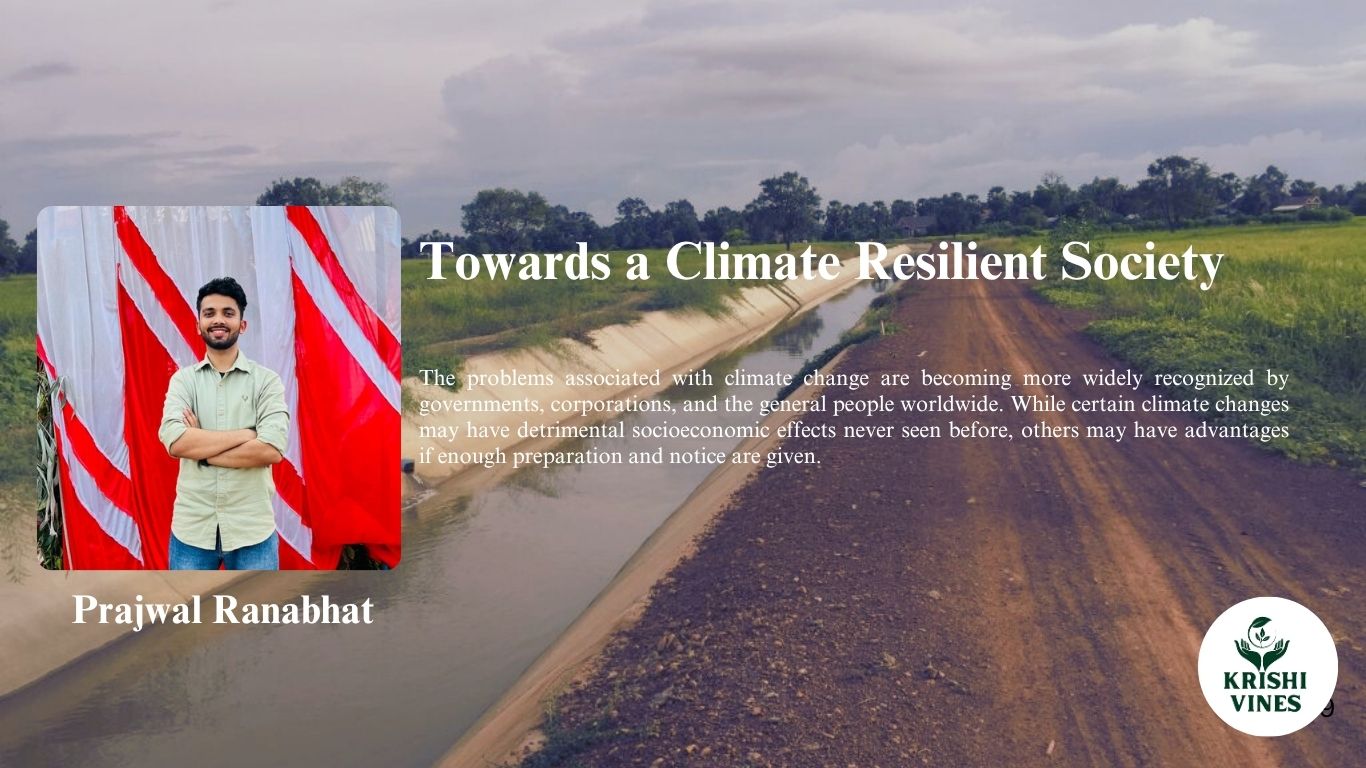
The problems associated with climate change are becoming more widely recognized by governments, corporations, and the general people worldwide. While certain climate changes may have detrimental socioeconomic effects never seen before, others may have advantages if enough preparation and notice are given.
Climate resilience denotes the ability to anticipate and reduce risk to climate variability and change, the ability to “bounce back” from the negative impacts of climate variability and change. It places a special focus on reducing inequality and increasing social and other capitals so that the most vulnerable in society are not differentially negatively impacted by climate change. The concept of resilience can be adopted by policy making as a new interdisciplinary approach enabling differing dimensions of societal development to link up with each other.
Four current lead concepts of resilient society:
The idea of a resilient society is interpreted in different ways depending on social, economic, political, ecological, and technological contexts. Current discourse highlights four overlapping schools of thought i.e security, innovation, analytical, and technological, each offering unique perspectives on how societies can withstand shocks, adapt to change, and ensure long-term stability.
1. Security and Disaster Preparedness Approach
This approach focuses on emergency planning, risk reduction, and robust infrastructure such as earthquake-proof buildings and resilient power and telecom systems.
2. Innovation and Transformation Approach
The innovation and transformation approach emphasizes adapting to change rather than merely minimizing risks. It encourages grassroots initiatives, decentralized energy systems, regional economies, and community-driven solutions that increase societal flexibility.
3. Analytical and Socio-Economic Assessment Approach
This approach measures resilience using socio-economic indicators such as housing, energy, transport, and social capital. It assesses a society’s capacity to respond to crises and highlights that even developed nations are vulnerable to social unrest.
4. Technological and Future-Oriented Approach
This approach emphasizes technology and participatory innovation. Universal access to digital tools and knowledge networks allows societies to learn, adapt, and become more flexible.
Challenges
Societies face multiple challenges in building climate resilience. First, the increasing frequency and intensity of extreme weather events, such as floods, droughts, hurricanes, and heatwaves places significant strain on infrastructure, agriculture, and public health systems. Second, socio-economic inequalities limit the ability of marginalized communities to prepare for and recover from climate impacts. Low-income households often lack access to safe housing, technology, and emergency services. Third, fragile infrastructure in urban and rural areas can amplify the effects of disasters, including power outages, transportation disruptions, and communication breakdowns. Fourth, limited access to technology and knowledge hinders early-warning systems, adaptive planning, and informed decision-making. Finally, policy and governance gaps can prevent coordinated, timely, and effective responses across sectors, reducing overall societal resilience.
Prospects
Despite these challenges, there are significant prospects for building climate-resilient societies. Nature-based solutions such as urban green spaces, wetlands, and reforestation can reduce vulnerability while providing ecological benefits. Community participation and empowerment enhance adaptive capacity by leveraging local knowledge, fostering social cohesion, and promoting self-reliance. Technological innovation: including early-warning systems, digital monitoring, and decentralized renewable energy: can improve disaster preparedness and response. Adaptive governance and cross-sectoral collaboration ensure that policies are flexible, inclusive, and integrated with sustainable development goals. By combining protective measures, adaptive strategies, and innovation-driven solutions, societies can enhance their flexibility, safeguard livelihoods, and thrive despite ongoing climate challenges.
Conclusion
Creating a climate-resilient society is a complex process that needs combining ecological, technical, social, and economic approaches. Even if problems like severe weather, socioeconomic disparities, brittle infrastructure, and governance gaps still remain, there are also opportunities because of community involvement, technology innovation, nature-based solutions, and adaptive government. The four main strategies—security, innovation, analytical evaluation, and technology-driven tactics—can help society become more capable of anticipating, absorbing, and recovering from climatic shocks. Ultimately, building resilience in an increasingly uncertain climate not only protects lives and livelihoods but also advances social justice, sustainable development, and long-term stability.
References
1. Hewitt, C. D., Allis, E., Mason, S. J., Muth, M., Pulwarty, R., Shumake-Guillemot, J., … & Tapia, B. (2020). Making society climate resilient: International progress under the global framework for climate services. Bulletin of the American Meteorological Society, 101(2), E237-E252.
2. Benedikter, R., & Fathi, K. (2017). What is a resilient society?. International Policy Digest, 17.
3. Elgar Blog. (2017, July 10). Challenges and opportunities for building climate resilience. Edward Elgar
4. Intergovernmental Panel on Climate Change. (2014). Climate-resilient pathways: Adaptation, mitigation, and sustainable development.
5. SpringerLink. (2022). Towards a climate resilience society: Challenges and prospects.
6. Earth.Org. (2023, July 24). How to build climate-resilient communities.