Climate change presents significant challenges to global agriculture, with its impacts growing more severe each year. Unpredictable weather patterns, prolonged droughts, floods, and rising temperatures threaten food security and livelihoods, especially for smallholder farmers. To address these challenges, agrobiodiversity—the diversity and variability of plants, animals, and microbes used directly or indirectly in agriculture—has emerged as a crucial tool for enhancing climate resilience. Nepal, a country abundant in natural biodiversity and traditional farming practices, offers valuable insights into how agrobiodiversity can help agricultural systems adapt to the effects of climate change.
What is Agrobiodiversity?
All life forms that are vital to agriculture and food production are included in agrobiodiversity, such as crop species, cattle breeds, and soil organisms. Diversity within species (genetic diversity), diversity between species (species diversity), and diversity within ecosystems (ecosystem diversity) are all included. Ecosystem services such as soil fertility, pollination, pest control, and water management are all made possible by agrobiodiversity and are essential to the resilience and sustainability of agricultural systems.
Practically speaking, agrobiodiversity involves cultivating a wide range of crops, raising diverse livestock breeds, and applying traditional knowledge along with adaptive management practices to enhance ecosystem health. This diversity acts as a buffer against environmental stresses, offering resilience in case one crop or livestock breed fails, allowing others to thrive. In a time when agricultural systems are increasingly vulnerable to climate change, agrobiodiversity serves as a vital strategy for adaptation.
Nepal’s Unique Agricultural Landscape
Nepal, with its remarkable topography, serves as an excellent example of how agrobiodiversity can strengthen climate resilience. The country’s landscape spans from the tropical lowlands of the Terai to the alpine regions of the Himalayas. This vast range of altitudes creates diverse microclimates and ecosystems, supporting a wide variety of agricultural products.
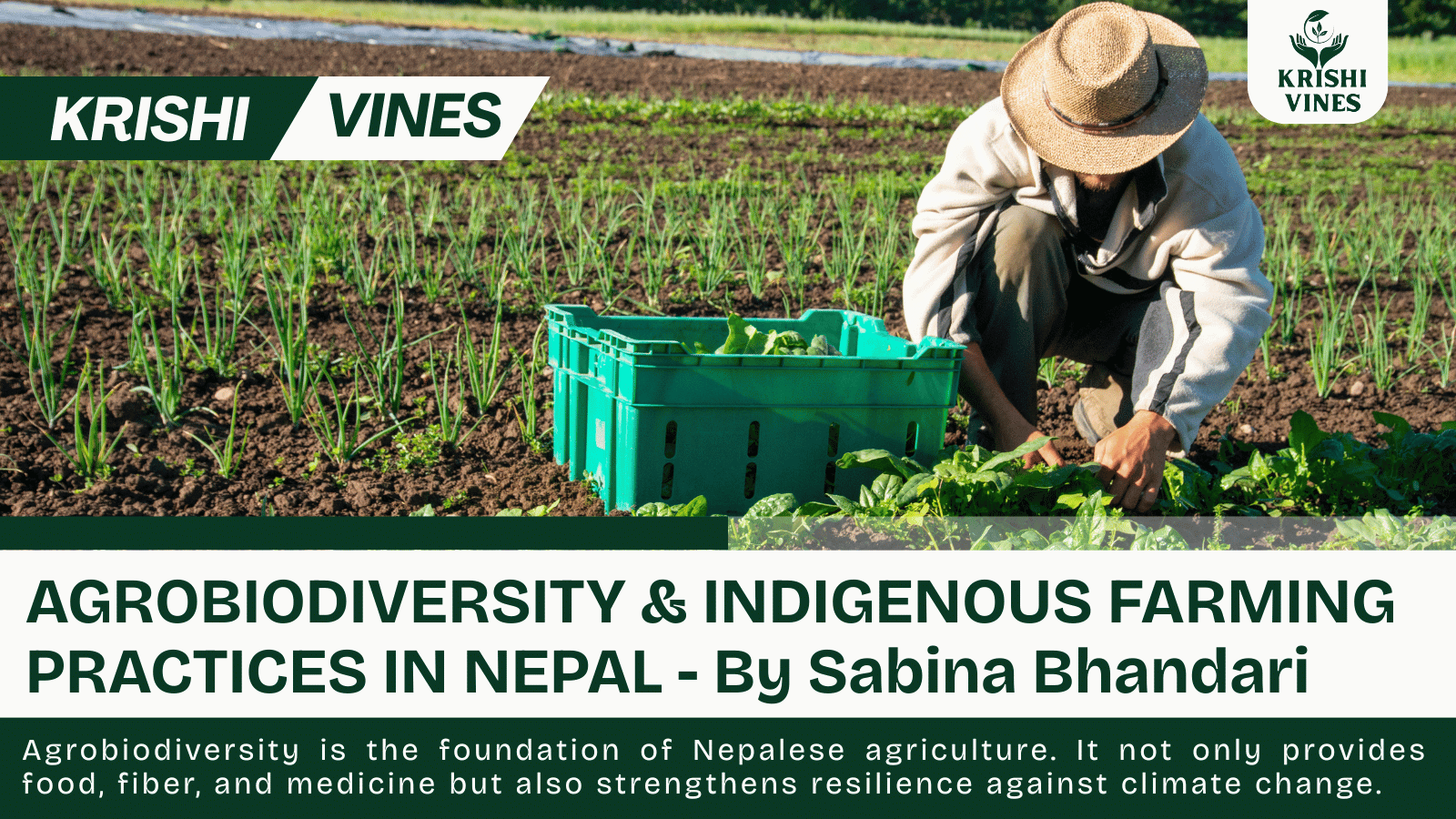
Nepal’s traditional farming practices have long depended on agrobiodiversity to adapt to these diverse and challenging conditions. Farmers across the country cultivate a wide range of crops, including rice, maize, millet, wheat, barley, and buckwheat, often in multiple varieties suited to their specific ecological settings. For instance, drought-resistant rice varieties are grown in the Terai’s lowlands, while maize and millet varieties are cultivated in the mid-hills to cope with fluctuating rainfall. In the highlands, barley, buckwheat, and traditional potato varieties have adapted to cold temperatures and shorter growing seasons. This crop diversity helps farmers reduce the risks posed by climate change, ensuring food security for themselves and their communities. Furthermore, preserving these traditional crop varieties not only sustains agrobiodiversity but also helps maintain Nepal’s rich cultural heritage.
This genetic diversity within crops provides Nepalese farmers with flexibility and resilience. It allows them to select varieties that can better tolerate specific climatic challenges, such as extreme rainfall, prolonged drought, or fluctuating temperatures. Furthermore, the practice of intercropping growing multiple crops in the same field enhances resilience by spreading the risk of crop failure across different plant species. This diversification of crops also helps improve soil health and fertility, reducing the need for chemical inputs and promoting sustainable agricultural practices. Overall, the combination of traditional crop varieties and intercropping techniques contributes to food security and economic stability for Nepalese farmers.
The Threat of Climate Change in Nepal and Need for Agrobiodiversity
Nepal is extremely vulnerable to the effects of climate change, which are already felt throughout the country. Rising temperatures, erratic monsoons, longer droughts, increased flooding, unexpected landslides, and glacial melt provide new concerns for Nepalese farmers. Smallholder farmers, who comprise the vast majority of Nepal’s agricultural sector, are especially vulnerable to these changes since they frequently lack the wherewithal to invest in large-scale technology solutions or modern irrigation systems. Given Nepal’s reliance on agriculture, it is critical to strengthen resilience in this sector.
For example, crops like rice that depend on timely water availability can fail because of delayed monsoon rains. Similar to this, extended dry spells or unexpected frost in hilly areas can completely destroy traditional crops that need certain growth circumstances. In this regard, preserving and boosting agrobiodiversity is becoming more widely recognized as a successful strategy for adjusting to these shifting circumstances.
Agrobiodiversity serves as a natural defensive mechanism against climate variability. Farmers in Nepal can mitigate their risks by producing a diverse range of crop species and kinds. If one crop fails due to drought or heavy rains, another type may thrive in the same conditions. This diversification also minimizes the risk of total crop failure, which is typical in monoculture systems based on a single crop species.
For example, in the Terai region, farmers have returned to producing indigenous rice types that are more adapted to endure floodwaters. In contrast, growers in mountain regions are increasingly relying on drought-resistant millet and buckwheat to deal with irregular rainfall and drying soil conditions. These climate-adapted crops highlight the critical role that agrobiodiversity plays in providing agricultural resilience in times of climate uncertainty.
Jumli Marsi Rice: A Case Study in Climate Resilience
One remarkable example of agrobiodiversity in Nepal is Jumli Marsi rice, a traditional variety cultivated in the high-altitude district of Jumla, situated at over 2,500 meters above sea level. Jumli Marsi is a cold-tolerant, high-altitude rice variety that has been grown for generations by farmers in the region. This rice is uniquely suited to the harsh climatic conditions of the Himalayas, thriving in short growing seasons and cooler temperatures where other rice varieties would fail.
As climate change intensifies, Jumli Marsi has become an invaluable resource to farmers in Jumla, who are confronting with shifting rainfall patterns and colder growing seasons. By continuing to cultivate this traditional rice, farmers not only ensure local food security but also contribute to the preservation of a valuable genetic resource that could hold the key to future climate adaptation strategies.
Millet and Barley in Drought-Prone Regions
Traditional crops such as millet and barley have regained prominence in the arid high-altitude regions of Mustang and Dolpa, where rainfall is unreliable and water scarcity is a rising issue. These crops are well-suited to the dry environment of these places due to their drought resistance and capacity to survive with little water. Their extensive root systems allow them to reach water even in arid soils, making them reliable sources of food when other crops fail.
Millet and barley, which were once outpaced by more commercially appealing crops, are being reintroduced by farmers who appreciate their importance in combating climate change. As temperatures rise and droughts become more common, these hardy crops are becoming an essential component of Nepal’s climate adaptation plan.
Traditional Knowledge and Agrobiodiversity
In Nepal, traditional agricultural practices and indigenous knowledge are closely associated with the country’s agrobiodiversity. For centuries, Nepalese farmers have carefully selected, saved, and exchanged seeds, maintaining the genetic diversity of crops that are well-suited to local ecological conditions. This knowledge, passed down through generations, is critical to maintaining agrobiodiversity in the face of modern agricultural pressures such as high-yield commercial crops and monocultures.
In many areas, restoring historic crop varieties has proven to be an effective climate adaptation method. Farmers in drought-prone areas, for example, are shifting back to resilient millet varieties that were previously disregarded in favor of more commercially successful crops such as maize. Similarly, in flood-prone areas, local seed banks are being formed to preserve and disseminate traditional flood-tolerant rice varieties, ensuring that these climate-resilient crops are available for future generations.
The role of community seed banks in preserving agrobiodiversity
Community-based initiatives, such as community seed banks, have grown in popularity in Nepal to support agrobiodiversity and climate resilience. These seed banks are administered by local farming groups and contain traditional seeds that have been suited to the local environment. During instances of climate stress, such as droughts or floods, farmers can use these seeds to replace failed crops, making sure that agricultural biodiversity is preserved and farmers can adapt to new challenges.
Organizations like LI-BIRD (Local Initiatives for Biodiversity, Research, and Development) have been instrumental in supporting community seed banks and promoting the use of traditional, climate-resilient varieties. These initiatives not only conserve valuable genetic resources but also empower local communities by providing them with the tools and knowledge needed to sustain agricultural biodiversity and build resilience against climate change.
Conclusion
Nepal’s experience illustrates the critical role that agrobiodiversity plays in building climate-resistant farming systems. By preserving and promoting the diversity of crops and livestock, Nepalese farmers are better suited to adapt to the unpredictable challenges posed by climate change. The country’s rich agricultural biodiversity, combined with traditional knowledge and community-based initiatives, offers a blueprint for sustainable, resilient farming in an era of environmental uncertainty.
As climate change continues to destabilize global agricultural systems, it is critical to acknowledge the benefits of agrobiodiversity-not only as a source of food security but also as an important approach for adaptation and resilience. The lessons from Nepal show that by promoting agrobiodiversity, we can construct farming systems that are both more productive and more resilient to the effects of climate change.