Abstract
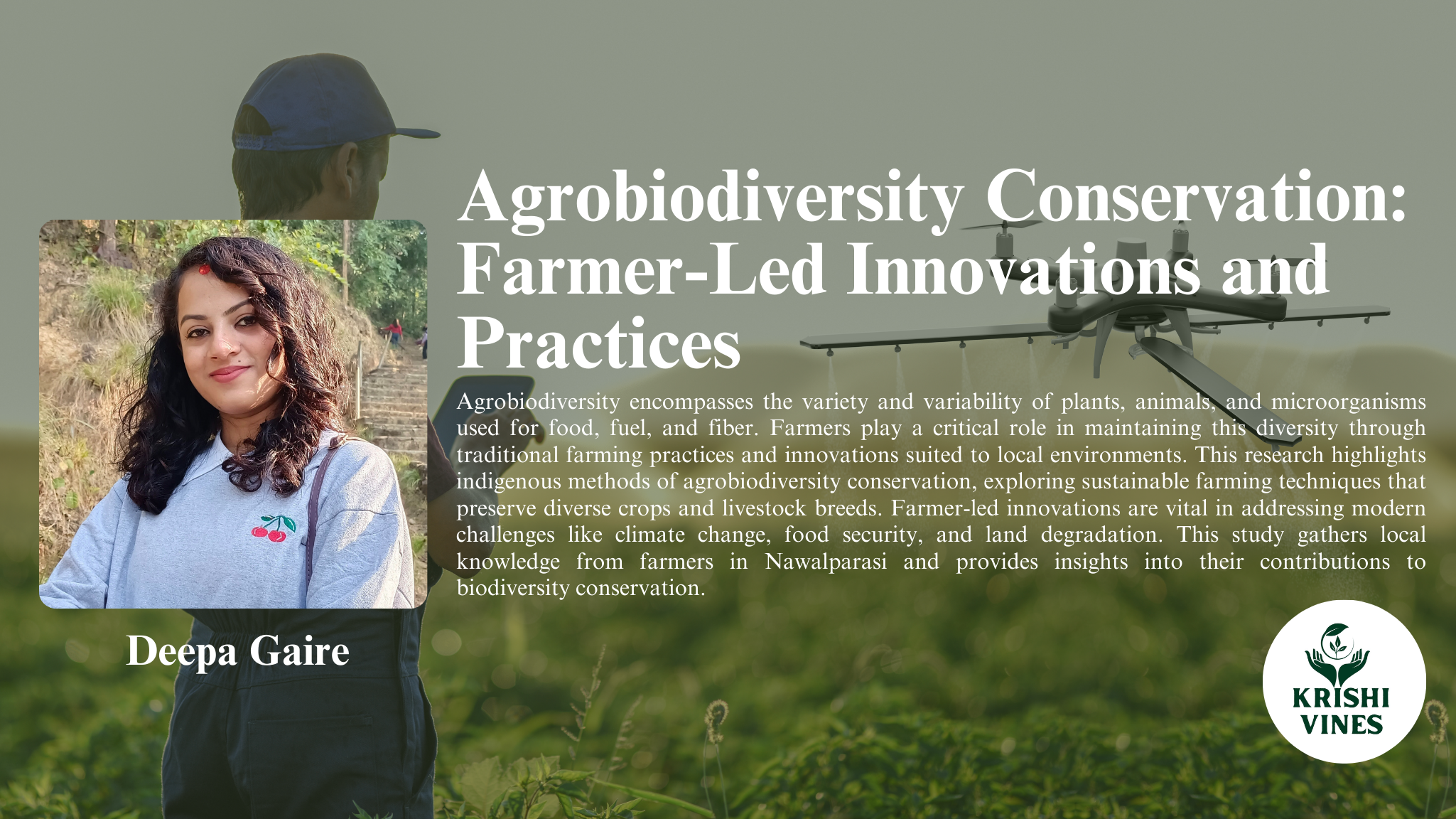
Agrobiodiversity encompasses the variety and variability of plants, animals, and microorganisms used for food, fuel, and fiber. Farmers play a critical role in maintaining this diversity through traditional farming practices and innovations suited to local environments. This research highlights indigenous methods of agrobiodiversity conservation, exploring sustainable farming techniques that preserve diverse crops and livestock breeds. Farmer-led innovations are vital in addressing modern challenges like climate change, food security, and land degradation. This study gathers local knowledge from farmers in Nawalparasi and provides insights into their contributions to biodiversity conservation.
Introduction
Agrobiodiversity refers to the diversity of crops, livestock, and associated biodiversity that contributes to food production systems. It plays a vital role in maintaining ecosystem services, ensuring food security, and enhancing resilience to climate change. Indigenous communities, in particular, have deep-rooted knowledge and sustainable practices for managing agrobiodiversity. These practices are often aligned with conservation goals, fostering an intricate relationship between culture and nature. Understanding and promoting these farmer-led practices is crucial for long-term biodiversity conservation and agricultural sustainability (FAO, 2020). It is essential for food security, resilience to environmental changes, and the ability to adopt to new challenges such as climate change and evolving pests and diseses.
Materials and Methods
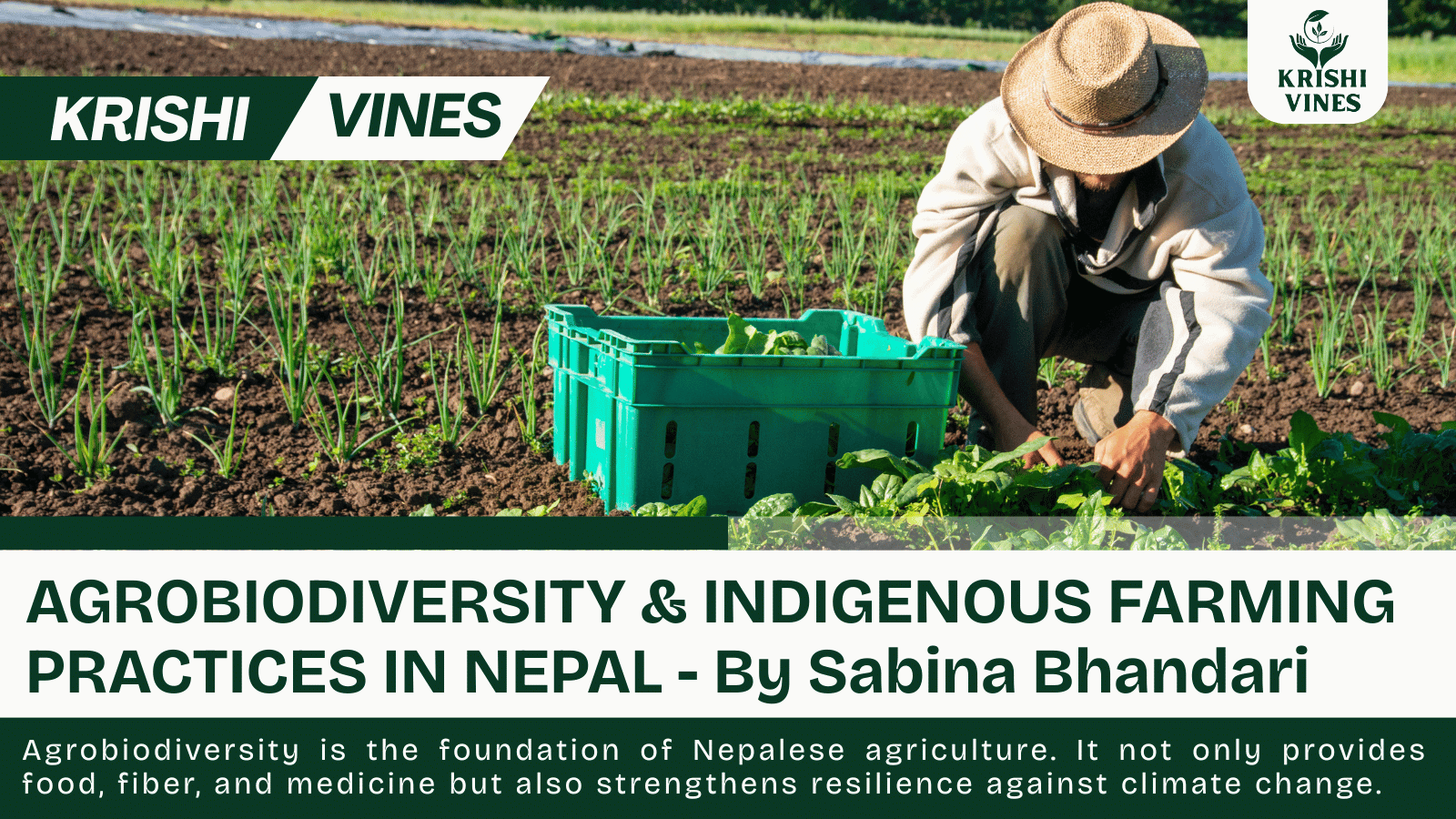
This study was conducted in the Nawalparasi district, where farmers from various indigenous communities were interviewed. The research methods included direct field visits and structured interviews. Secondary data was collected from several scientific literature on biodiversity conservation. The study emphasized farmer innovations in crop rotation, mixed cropping, and seed-saving techniques, as well as their contributions to conserving traditional varieties of crops like rice, wheat and maize.
Results and Discussions
Traditional Farming Practices for Agrobiodiversity Conservation
- Seed Banks and Seed Exchange:
Farmers in Nawalparasi have been practicing seed-saving for generations, creating local seed banks to store a variety of seeds. The exchange of seeds between farmers strengthens genetic diversity and ensures the continued existence of rare crop varieties. These practices reduce dependency on external seed sources and promote in-situ conservation of crop diversity.
- Crop Rotation:
Alternating different crops across seasons to improve soil health and reduce pests and diseases.
- Mixed Cropping Systems:
The practice of growing multiple crops on the same plot of land, such as maize intercropped with beans, improves soil fertility and reduces the risk of pest outbreaks. These polyculture systems mimic natural ecosystems and enhance biodiversity both above and below ground, ensuring soil health and nutrient cycling.
- Livestock Integration:
Livestock plays a crucial role in maintaining agrobiodiversity. Traditional livestock indigenous cattle breeds, are well adapted to the environment and contribute to nutrient recycling through manure. Their conservation is integral to the ecosystem services they provide.
- Agroforestry:
Agroforestry systems, combining trees and crops, are another sustainable practice used by farmers. These systems enhance biodiversity by providing habitats for wildlife, improving soil structure, and promoting water conservation. Farmers grow timber and fruit trees alongside crops, maintaining ecological balance while boosting farm productivity.
Innovative Practices:
Modern day innovations driven by farmers include organic farming , use of biopesticides and biofertilizers. Farmers are increasingly adopting didgital technologies and precision agriculture tools that help to optimize resources while conserving biodiversity.
Conclusion and Acknowledgement
Agrobiodiversity is critical to the resilience and sustainability of agricultural systems, particularly in the face of climate change. The conservation practices employed by farmers in Nawalparasi, such as seed-saving, mixed cropping, and agroforestry, demonstrate the importance of local knowledge in maintaining biodiversity. These traditional methods contribute to sustainable food production while enhancing ecosystem services. Farmers are central to the conservation of the biodiversity, and their knowledge and innovations need to be supported through policies, research and market systems. Acknowledging and promoting these practices within agricultural policies and extension programs is vital for broader agrobiodiversity conservation efforts.
I would like to thank the farmers of Nawalparasi for their contributions and insights, as well as the faculty for their guidance.
References
Altieri, M.A. (2018). Agroecology: The Science of Sustainable Agriculture. CRC Press.
FAO. (2020). The State of the World’s Biodiversity for Food and Agriculture. Rome: Food and Agriculture Organization.
Thrupp, L.A. (2000). Linking Agricultural Biodiversity and Food Security: The Valuable Role of Sustainable Agriculture. International Affairs, 76(2), 265-281.