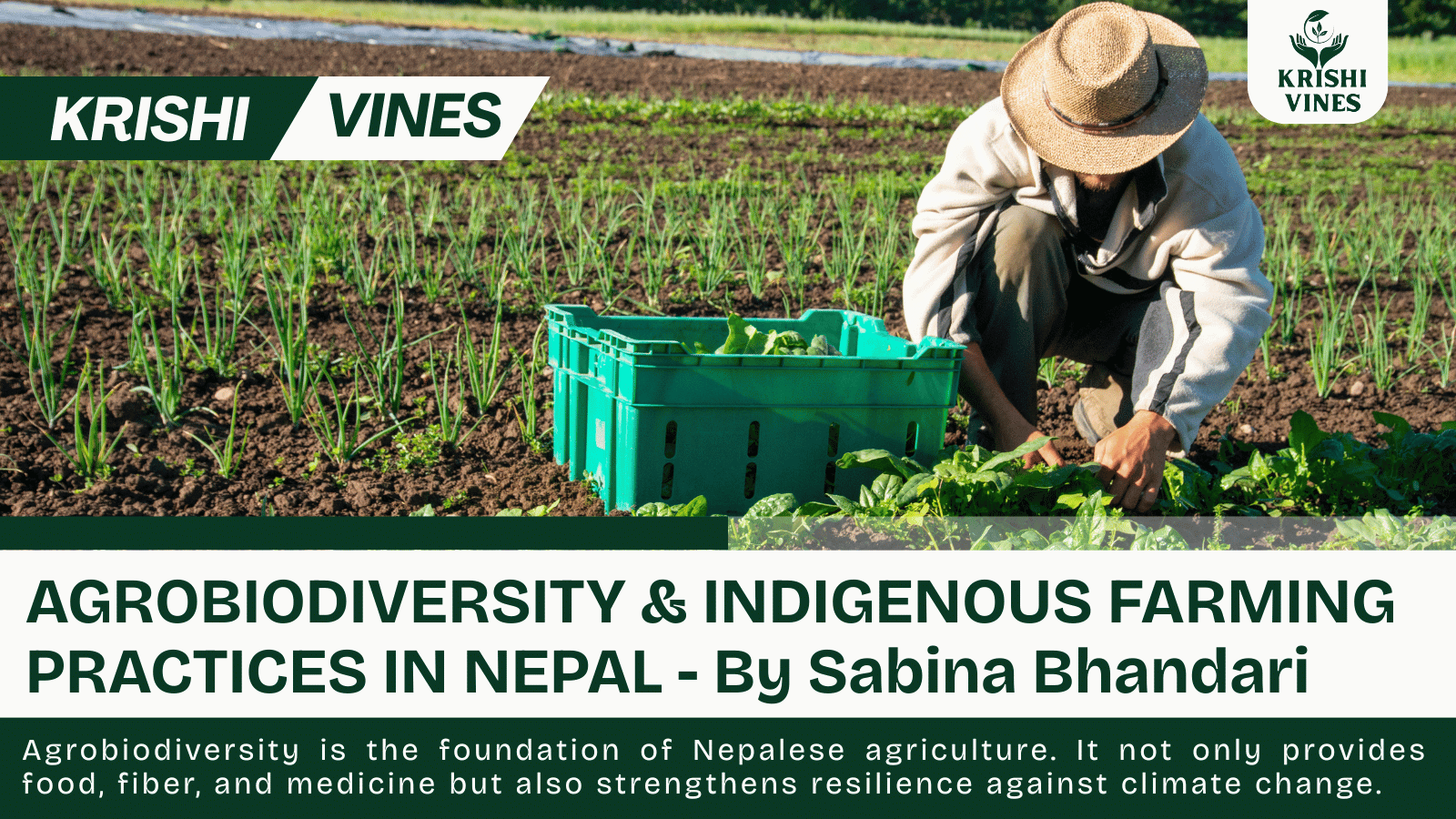
Agrobiodiversity -also known as agricultural biodiversity-is the diversity and variability of plants, animals, and microorganisms which, by direct or indirect use, contribute to food and agriculture. It refers to diversity within species (genetic diversity), between species (species diversity) and of ecosystems (ecosystem diversity).
Nepal is rich in biodiversity and is ranked 49 globally. The country contains 3.2 % of the world’s flora and 1.1% of the world’s known fauna. Over 24,000 species estimated in Nepal, approximately 28% consists of agricultural genetic resources or agricultural diversity .Due to its diverse topography, climate, and traditional farming practices, It is considered rich in agrobiodiversity.
What are the crops with probable origin in Nepal?
Several crops have probable origins in Nepal which include sesame (Sesamum indicum), finger millet (Eleusine coracana), water yam (Dioscorea alata), beans (Phaseolus spp.), and especially for this study, rice (Oryza sativa) and its wild relatives (Oryza spp.). In addition, the country is host to 6973 species of flowering plants that are identified, of which 790 are food value plant species and 577 cultivated plant species which includes forage species. The 577 cultivated species include 484 indigenous species and 93 introduction species including forage species. Eight agro-ecosystems found in the country are rainfed high hill, rainfed mid hill, rainfed Terai, irrigated high hill, irrigated mid hill, irrigated Terai, wetland agriculture and rangeland agriculture(Bardsley & Thomas, 2005) .
Importance of Agrobiodiversity in Nepal:
Agro-biodiversity is crucial for Nepal due to its rich variety of crops, livestock, and other agricultural resources, which are vital for food security, nutrition, and the livelihoods of its people.
1.Food Security and Nutrition: Nepal’s agrobiodiversity is the foundation of both food sources and nutrition. It makes diets healthier, ensures food even in bad years, and keeps cultural traditions alive, all while helping farmers adapt to climate change.
2.Livelihood and Income:
Many people of Nepal depends upon Agriculture and livestock for their livelihoods, also for income and economic stability.
3.Climate change adaptation:
The majority of farming regions in Nepal are also environmentally highly marginal and are probably already experiencing greater risks of land degradation and loss of biodiversity as a consequence of observed climate trends. Found in the likely future availability and use of agrobiodiversity in Nepalese agriculture, especially by smallholder farmers, will be important in overcoming impacts of climate change.
4.Ecosystem Services and Environmental Sustainability:
The maintenance of agrobiodiversity prevents crops from being infected by harmful diseases and pests, enhances the populations of beneficial insects that feed on the harmful ones, maintains healthy soils and regenerates disturbed or degraded soils.
What are the reasons for loss of Agrobiodiversity?
The rapid rate of agrobiodiversity loss is driven by the shifting away from traditional farming, the use of monoculture systems, and the introduction of technologies that therefore benefit only uniformity.
Conservation of Agrobiodiversity:
It can be done by combining different strategies like insitu conservation(in natural environment),ex situ conservation(outside their natural habitat) and community based approaches (enabling farmers to store, exchange and cultivate indigenous seeds, collaborative projects ).
To further reaffirm the national commitment towards agrobiodiversity conservation, the Government of Nepal has declared January 15 (Magh 1 of the Nepali calendar year) as the National Agrobiodiversity Day commencing the fiscal year 2022-23
Conclusion:
Thus to summarize, Agrobiodiversity is a vital resource of Nepal, which supports food security, nutrition, livelihood and environmental sustainability. With the practices like modern agriculture and monoculture, it posses significant threat to country’s diverse ecosystems, traditional knowledge and different conservation initiatives offer hope. So, protecting and sustainability of Agricultural diversity is essential to ensure resilient farming systems and secure resources for future generations.
References:
https://kathmandupost.com/columns/2024/01/18/conserving-agricultural-biodiversity
AgBD_NAPA_report_NEPAL.pdf https://share.google/rwZxIeUHpysoHB9qr
https://kathmandupost.com/columns/2024/01/18/conserving-agricultural-biodiversity
Insights from the International Agrobiodiversity Conference 2024 in Pokhara, Nepal – Local Initiatives for Biodiversity, Research and Development (LI-BIRD) https://share.google/R7t4J1g6ggrsSaogz
Bardsley, D., & Thomas, I. (2005). In situ Agrobiodiversity Conservation for Regional Development in Nepal. GeoJournal, 62(1–2), 27–39. https://doi.org/10.1007/s10708-004-1941-2