Krishi Vines

The Role of Horses in Antivenom Production || By Rashmi Adhikari || Krishi Vines

Introduction Horses play an essential role in creating antivenom, a life-saving treatment for snake bites. Snake venom contains toxic substances that can cause serious health issues, from local tissue damage to dangerous effects on the heart and nerves. Antivenom helps neutralize these toxins, making it crucial for saving lives, especially in areas with high rates…

Read More

The Role of Youth in Agricultural Development in Nepal – By Manushi Sigdel || Krishi Vines

Agriculture remains a cornerstone of Nepal’s economy, employing over 60% of the population and contributing approximately one-quarter of the country’s GDP (Nepal Central Bureau of Statistics, 2021). However, the sector faces significant challenges, including climate change, rural depopulation, and outdated farming practices. In this context, the involvement of youth in agriculture is not just important;…

Read More

The Impact of Fungal Pathogens on Plant Health: A Comprehensive Review – By Upendra Bhusal || Krishi Vines

  Abstract Fungal pathogens significantly affect plant health, leading to substantial economic losses in agriculture and disrupting natural ecosystems. This review synthesizes current research on fungal pathogenicity mechanisms, infection symptoms, and successful management approaches. By understanding the dynamics between fungal pathogens and host plants, we can develop better practices to mitigate their impact.   Introduction…

Read More
AFU

Wake Up AFU

Oh, Agriculture and Forestry University (AFU), how far you’ve fallen! Once a beacon of knowledge, you now resemble a ghost town where the only thing growing is frustration. In a twist of irony, the pursuit of education has been halted by the very forces meant to support it student politics. Let’s take a moment to…

Read More

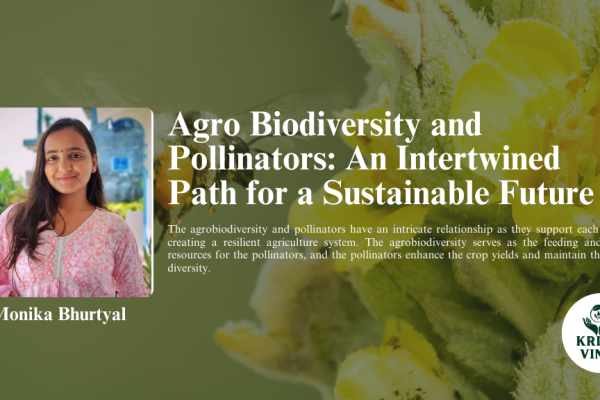
Agro Biodiversity and Pollinators: An Intertwined Path for a Sustainable Future – By Monika Bhurtyal || Krishi Vines

The agrobiodiversity and pollinators have an intricate relationship as they support each other in creating resilient agriculture system. The agrobiodiversity serves as the feeding and nesting resources for the pollinators, and the pollinators enhance the crop yields and maintain the genetic diversity.  Introduction.  The Food and Agriculture Organization, FAO defines agrobiodiversity as the variety and…

Read More

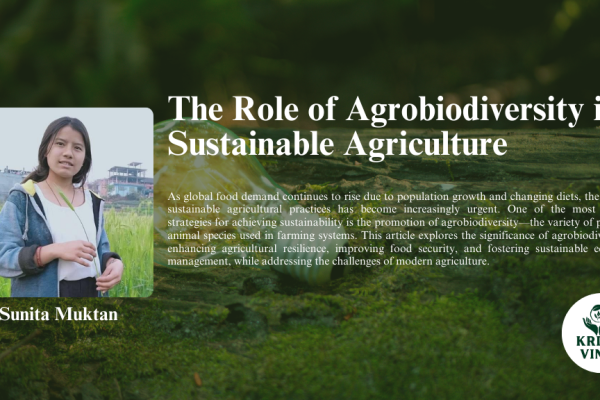
The Role of Agrobiodiversity in Sustainable Agriculture – By Sunita Muktan || Krishi Vines

As global food demand continues to rise due to population growth and changing diets, the need for sustainable agricultural practices has become increasingly urgent. One of the most effective strategies for achieving sustainability is the promotion of agrobiodiversity—the variety of plant and animal species used in farming systems. This article explores the significance of agrobiodiversity…

Read More

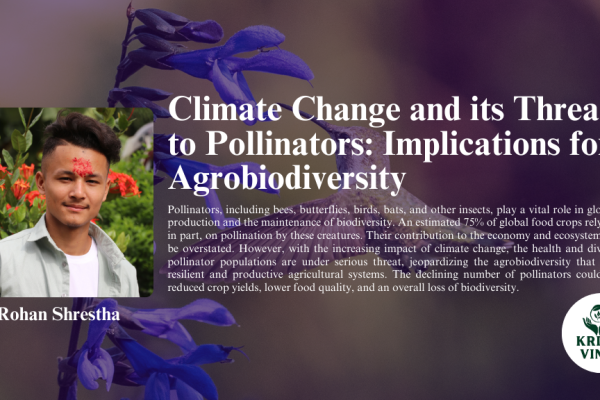
Climate Change and its Threat to Pollinators: Implications for Agrobiodiversity – By Rohan Shrestha || Krishi Vines

Introduction Pollinators, including bees, butterflies, birds, bats, and other insects, play a vital role in global food production and the maintenance of biodiversity. An estimated 75% of global food crops rely, at least in part, on pollination by these creatures. Their contribution to the economy and ecosystems cannot be overstated. However, with the increasing impact…

Read More

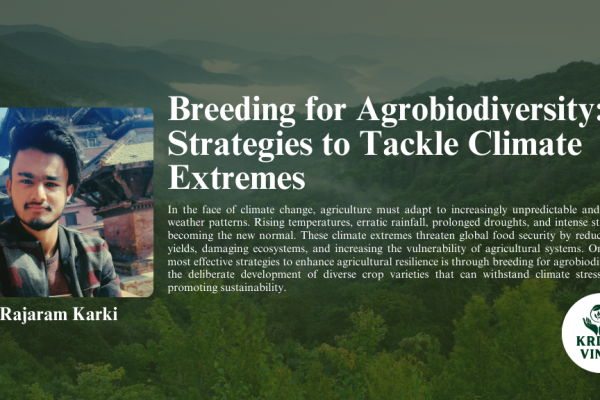
Breeding for Agrobiodiversity: Strategies to Tackle Climate Extremes – By Rajaram Karki || Krishi Vines

Introduction In the face of climate change, agriculture must adapt to increasingly unpredictable and extreme weather patterns. Rising temperatures, erratic rainfall, prolonged droughts, and intense storms are becoming the new normal. These climate extremes threaten global food security by reducing crop yields, damaging ecosystems, and increasing the vulnerability of agricultural systems. One of the most…

Read More

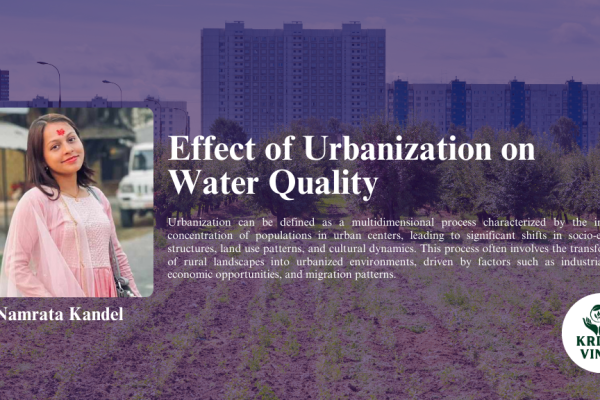
Effect of Urbanization on Water Quality – By Namrata Kandel || Krishi Vines

Urbanization can be defined as a multidimensional process characterized by the increasing concentration of populations in urban centers, leading to significant shifts in socio-economic structures, land use patterns, and cultural dynamics. This process often involves the transformation of rural landscapes into urbanized environments, driven by factors such as industrialization, economic opportunities, and migration patterns.  In…

Read More

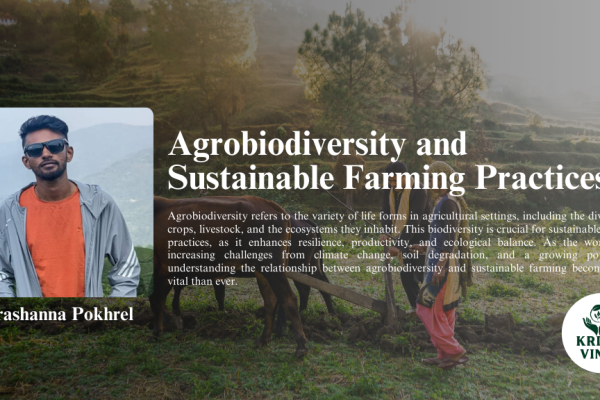
Agrobiodiversity and Sustainable Farming Practices – By Prashanna Pokhrel || Krishi Vines

Introduction Agrobiodiversity refers to the variety of life forms in agricultural settings, including the diversity of crops, livestock, and the ecosystems they inhabit. This biodiversity is crucial for sustainable farming practices, as it enhances resilience, productivity, and ecological balance. As the world faces increasing challenges from climate change, soil degradation, and a growing population, understanding…

Read More
Back To Top