Introduction
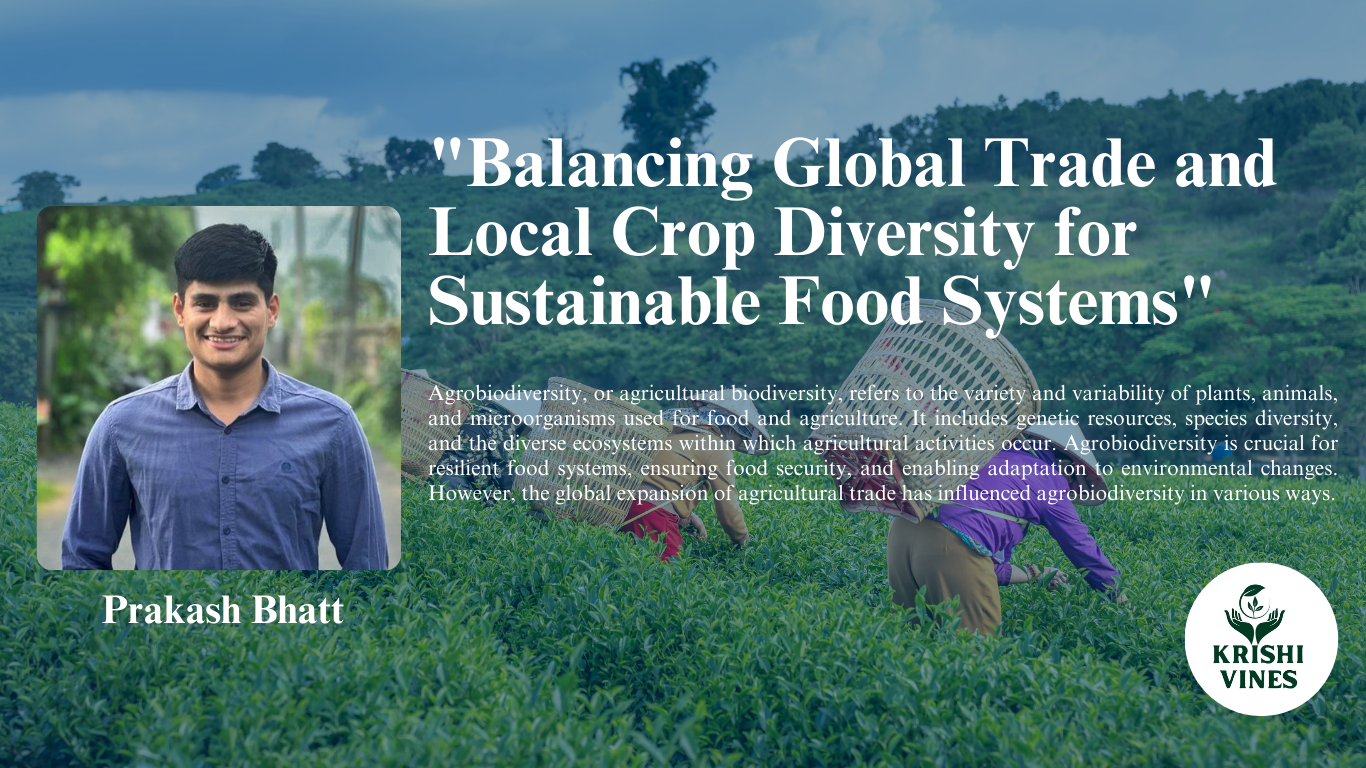
Agrobiodiversity, or agricultural biodiversity, refers to the variety and variability of plants, animals, and microorganisms used for food and agriculture. It includes genetic resources, species diversity, and the diverse ecosystems within which agricultural activities occur. Agrobiodiversity is crucial for resilient food systems, ensuring food security, and enabling adaptation to environmental changes. However, the global expansion of agricultural trade has influenced agrobiodiversity in various ways. While trade policies have facilitated the growth of agricultural markets, they have also posed challenges to maintaining local crop diversity. This article explores the impact of agricultural trade policies on agrobiodiversity and discusses strategies to balance global market demands with the preservation of local crop diversity.
1. Understanding Agricultural Trade Policies and Their Evolution
Agricultural trade policies refer to the rules, regulations, and practices governing the import and export of agricultural products. These policies shape global markets by influencing the availability, prices, and trade flows of food and agricultural commodities. The evolution of agricultural trade policies, from protectionist measures to liberalization, has significantly shaped farming practices worldwide.
- Historical Background: In the past, many countries employed protectionist policies, such as tariffs, subsidies, and import quotas, to safeguard their domestic agriculture. The shift towards trade liberalization in the 20th century, particularly through agreements like the General Agreement on Tariffs and Trade (GATT) and the World Trade Organization (WTO), led to the reduction of trade barriers.
- Current Trends in Trade Policies: Today, agricultural trade is increasingly governed by bilateral, regional, and multilateral trade agreements. These agreements often aim to reduce tariffs, promote exports, and harmonize standards across countries, encouraging the exchange of agricultural goods.
2. The Impact of Trade Liberalization on Agrobiodiversity
While trade liberalization has expanded access to global markets, it has also had significant implications for agrobiodiversity.
- Shift Toward Monoculture Production: To meet the demands of global markets, many farmers have adopted high-yield, commercially valuable monocultures, such as wheat, corn, and soybeans. This shift has resulted in the decline of traditional and diverse crop varieties, as small-scale farmers are incentivized to cultivate cash crops over local or heritage crops.
- Loss of Traditional Crop Varieties: As the focus shifts toward uniform, market-oriented varieties, traditional crops that are less commercially viable often get neglected. This has led to a reduction in the genetic diversity of cultivated crops and an increased vulnerability of food systems to pests, diseases, and climate change.
- Genetic Erosion and Vulnerability: The widespread adoption of genetically uniform crops has made agricultural systems more susceptible to large-scale outbreaks of pests and diseases. This lack of genetic diversity, known as genetic erosion, undermines the resilience of food systems.
3. Positive Impacts of Trade on Agrobiodiversity
Despite the risks, agricultural trade can also benefit agrobiodiversity in certain ways.
- Access to Diverse Genetic Resources: Trade policies that facilitate the exchange of seeds and genetic materials can help farmers access a wider range of crop varieties. This can promote on-farm diversity and improve resilience to environmental stresses.
- Promotion of Niche and Specialty Crops: The rise in consumer demand for organic, non-GMO, and heirloom products in global markets can incentivize farmers to grow traditional or indigenous crop varieties. Exporting specialty crops, such as ancient grains, heritage vegetables, or native fruits, can help preserve agrobiodiversity while providing economic benefits.
- Incentives for Sustainable Farming Practices: Trade agreements that include sustainability standards or incentives for eco-friendly practices can encourage the adoption of farming methods that support agrobiodiversity, such as agroecology or organic farming.
4. The Role of Trade Agreements and International Policies
Trade agreements and international policies play a crucial role in shaping how agricultural trade affects agrobiodiversity.
- The World Trade Organization (WTO): The WTO’s Agreement on Agriculture aims to reduce trade barriers and subsidies that distort market competition. However, the focus on market access and competitiveness can lead to the prioritization of cash crops over traditional varieties.
- The Convention on Biological Diversity (CBD): The CBD emphasizes the need to conserve agrobiodiversity and ensure the sustainable use of genetic resources. It encourages countries to adopt measures that balance agricultural production with biodiversity conservation.
- The International Treaty on Plant Genetic Resources for Food and Agriculture (ITPGRFA): The ITPGRFA facilitates the exchange of plant genetic resources and aims to ensure that benefits arising from the use of these resources are shared equitably. It also supports in-situ and ex-situ conservation efforts, which are essential for maintaining agrobiodiversity.
5. Balancing Global Markets and Local Crop Diversity: Challenges and Solutions
Balancing the demands of global markets with the need to preserve local crop diversity presents several challenges, but also opportunities for sustainable agricultural development.
Challenges:
- Market Pressures: Farmers often face economic pressures to grow high-demand, high-yield crops for export, rather than cultivating diverse traditional varieties.
- Lack of Support for Small-Scale Farmers: Policies may not adequately support small-scale farmers who grow diverse crops, making it difficult for them to compete in global markets.
- Intellectual Property Rights (IPR) Issues: Patents on plant varieties and genetic resources can limit farmers’ access to diverse seeds, restricting the preservation and use of agrobiodiversity.
- Solutions:
- Strengthening Local Markets: Developing local markets for traditional crops can provide economic incentives for farmers to maintain diverse varieties. This can be achieved through farmer cooperatives, local food movements, and value-added products.
- Integrating Agrobiodiversity into Trade Agreements: Incorporating agrobiodiversity-friendly policies into trade agreements can help protect diverse crop varieties. For example, sustainability clauses in trade agreements can promote practices that support biodiversity.
- Supporting Seed Banks and Community Seed Systems: Seed banks and community seed systems can play a crucial role in conserving local crop varieties and providing farmers with access to diverse seeds.
- Promoting Agri-Tourism and Eco-Certification: Agri-tourism initiatives and eco-certification programs can provide additional income sources for farmers who grow diverse crops, creating incentives for the preservation of traditional varieties.
6. Case Studies: The Real-World Impact of Trade Policies on Agrobiodiversity
- The Rise of Quinoa in Global Markets: Quinoa, a traditional Andean grain, gained popularity worldwide due to its nutritional benefits. While the global demand has boosted incomes for some farmers in Peru and Bolivia, it has also led to the displacement of local food crops and changes in traditional farming practices.
- Mexico’s Maize Diversity and NAFTA: The North American Free Trade Agreement (NAFTA) increased imports of genetically modified maize into Mexico, threatening the country’s rich maize diversity. Efforts have since been made to protect native maize varieties through cultural heritage initiatives and local seed networks.
Conclusion
The interaction between agricultural trade policies and agrobiodiversity is complex. While trade can pose risks to local crop diversity by encouraging monocultures and genetic erosion, it can also provide opportunities to promote agrobiodiversity through the exchange of genetic resources and the rise of niche markets. To achieve a balance between global markets and local crop diversity, policies must support sustainable farming practices, strengthen local markets for traditional crops, and ensure the fair distribution of benefits derived from genetic resources. By addressing these challenges, the agricultural sector can move toward a more sustainable and resilient future, where agrobiodiversity thrives alongside global trade.