ABSTRACT
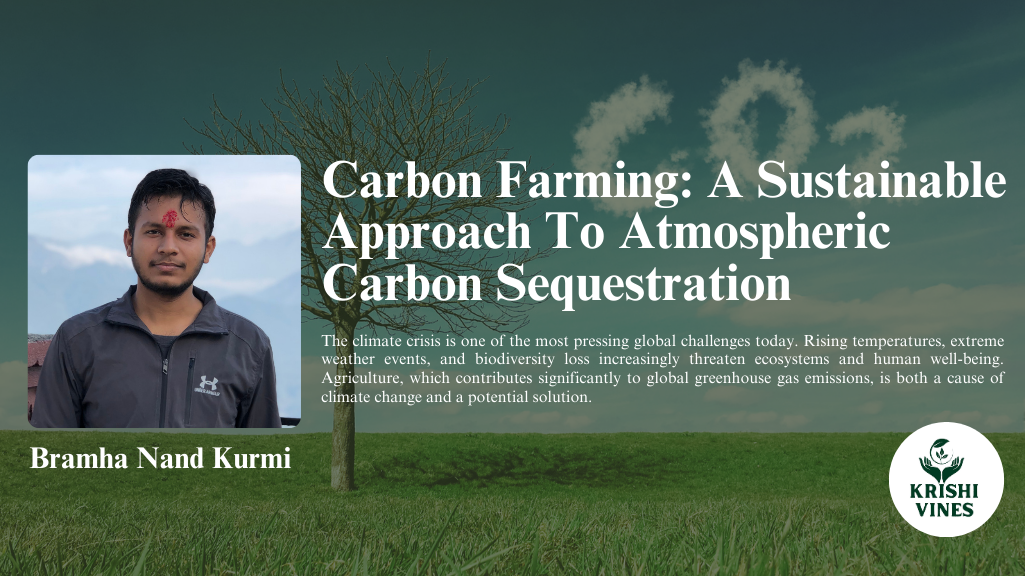
The climate crisis is one of the most pressing global challenges today. Rising temperatures, extreme weather events, and biodiversity loss increasingly threaten ecosystems and human well-being. Agriculture, which contributes significantly to global greenhouse gas emissions, is both a cause of climate change and a potential solution. Carbon farming, a regenerative agricultural practice designed to sequester carbon from the atmosphere, is emerging as a promising approach to climate mitigation. Carbon farming leverages natural processes like photosynthesis and soil management to capture and store carbon in soils and plants. By doing so, it reduces atmospheric carbon dioxide (CO₂) levels, while also promoting biodiversity, improving soil health, and increasing agricultural resilience. This approach transforms agriculture from a net emitter of greenhouse gases into a potential carbon sink, offering significant environmental and economic benefits.
The concept of carbon farming is rooted in the idea of enhancing the capacity of soils and vegetation to sequester carbon, transforming agriculture from a net carbon emitter into a powerful tool for climate change mitigation. This article explores the scientific basis, practices, benefits, challenges, and economic implications of carbon farming, while addressing its potential to revolutionize both agriculture and climate change mitigation.
1. UNDERSTANDING CARBON FARMING: THE BASICS
1.1. What is CARBON SEQUESTRATION?
Carbon sequestration refers to the process of capturing and storing atmospheric CO₂ in plants, soils, oceans, or geological formations. Natural ecosystems especially forests, grasslands, and soils act as carbon sinks, absorbing and holding carbon in both living biomass and soil organic matter. Carbon farming seeks to enhance this natural process through agricultural practices that promote the storage of carbon in soils and plant biomass.
The capacity for carbon sequestration in soil is significant. Soil contains more carbon than the atmosphere and all plant life combined. Approximately 2,500 gigatons (Gt) of carbon are stored in soils globally, compared to about 800 Gt in the atmosphere and 560 Gt in vegetation. However, unsustainable agricultural practices like deforestation, overgrazing, and intensive tillage have led to significant carbon losses from soils, contributing to atmospheric CO₂ levels. Carbon farming aims to reverse this process by adopting practices that rebuild soil organic matter and improve the ability of soils to capture and retain carbon over the long term. Through techniques such as no-till farming, cover cropping, agroforestry, and organic soil amendments, carbon farming enables soils to act as reliable carbon sinks, potentially storing carbon for decades or even centuries.
1.2. The Role of Agriculture in Climate Change
Agriculture is both a contributor to and a victim of climate change. As of 2019, agriculture, forestry, and other land uses accounted for 23% of total global GHG emissions. The primary sources of these emissions include methane (CH₄) from livestock digestion and rice paddies, nitrous oxide (N₂O) from fertilizers and manure, and CO₂ from land-use changes, deforestation, and soil management practices. If current agricultural practices continue, these emissions are likely to increase due to growing global demand for food, fiber, and bioenergy.
However, the agriculture sector also holds tremendous potential for climate change mitigation. By adopting regenerative agricultural practices, carbon farming can reduce emissions, enhance soil fertility, and increase resilience to climate impacts, such as droughts and floods. Through carbon sequestration and emission reductions, agriculture can be transformed from a major contributor to climate change into a key player in climate solutions.
2. THE SCIENCE BEHIND CARBON FARMING
2.1. Photosynthesis and Carbon Sequestration
The process of carbon sequestration in agriculture begins with photosynthesis. During photosynthesis, plants capture CO₂ from the atmosphere and convert it into carbohydrates, which are used to build plant biomass. A portion of the carbon captured through photosynthesis is transferred to the soil as organic matter through root exudation (the release of carbon-rich compounds from plant roots) and the decomposition of plant materials.
While much of the carbon stored in plant biomass is released back into the atmosphere when the plant dies and decomposes, some of it becomes stable in the soil in the form of organic carbon. This soil organic carbon can be stored for decades, even centuries, depending on factors such as soil type, climate, and land management practices.
2.2. Soil as a Carbon Sink
Soils are not only reservoirs for water and nutrients but also for carbon. Soil organic matter, which includes decomposed plant and animal material, plays a key role in sequestering carbon in agricultural systems. Soils can store carbon in two primary forms: organic carbon and inorganic carbon. Organic carbon is derived from living organisms, while inorganic carbon is found in the form of carbonates in certain types of soils, especially in arid and semi-arid regions.
Healthy soils, rich in organic matter, are particularly effective at capturing and storing carbon. The carbon stored in soil organic matter is often protected by soil aggregates—small clusters of soil particles that protect organic matter from microbial decomposition. However, conventional agricultural practices like intensive tillage and overgrazing disrupt these soil aggregates, releasing stored carbon back into the atmosphere. Carbon farming aims to avoid or minimize such disturbances and instead promote practices that build soil organic carbon.
3. KEY PRACTICES IN CARBON FARMING
3.1. Cover Cropping
Cover crops are non-commercial crops grown to cover and protect the soil during periods when it would otherwise lie bare, such as between main cropping seasons. Leguminous plants, grasses, and cereals are commonly used as cover crops. These plants prevent soil erosion, improve soil structure, and enhance carbon sequestration by increasing soil organic matter.
Cover cropping offers several benefits. For example, the roots of cover crops stabilize the soil and prevent erosion, which can lead to carbon loss. In addition, leguminous cover crops, such as clover and vetch, fix atmospheric nitrogen, reducing the need for synthetic nitrogen fertilizers—a significant source of N₂O emissions. Furthermore, cover crops contribute to soil organic carbon by adding biomass to the soil, promoting long-term carbon storage.
3.2. No-Till or Reduced Tillage
Tillage is a common agricultural practice that involves turning and breaking the soil to prepare it for planting. While tillage helps control weeds and incorporate fertilizers into the soil, it also disrupts soil structure, accelerates the decomposition of organic matter, and leads to the release of stored carbon as CO₂.
No-till or reduced-tillage farming, in contrast, minimizes soil disturbance. Seeds are planted directly into the soil with minimal or no tilling. By leaving crop residues on the soil surface and avoiding mechanical disturbance, no-till farming helps maintain soil structure, reduce erosion, and enhance the capacity of soils to sequester carbon. Over time, this practice can significantly increase the amount of carbon stored in soils, while also improving water retention and soil fertility.
3.3. Agroforestry
Agroforestry is the practice of integrating trees and shrubs into agricultural systems. Trees are highly effective at sequestering carbon, as they capture CO₂ through photosynthesis and store it in their biomass (trunks, branches, leaves, and roots). By incorporating trees into crop and livestock systems, agroforestry significantly increases the amount of carbon stored on farms. In addition to their carbon sequestration benefits, trees in agroforestry systems provide shade for livestock, reduce wind erosion, improve water retention, and enhance biodiversity. Common forms of agroforestry include alley cropping, where rows of trees are planted between crops, and silvo-pasture, where trees are integrated into livestock grazing systems. These systems are particularly effective at sequestering carbon while maintaining or even increasing agricultural productivity.
3.4. Crop Rotation and Polyculture
Crop rotation, the practice of growing different crops in a sequence on the same piece of land, helps maintain soil fertility and reduce the buildup of pests and diseases. It also promotes soil carbon sequestration by increasing root biomass and improving soil organic matter. Polyculture, the simultaneous cultivation of multiple crops in the same space, enhances biodiversity, supports ecosystem resilience, and contributes to long-term carbon storage.
Crop rotation is particularly important for maintaining soil structure and preventing soil degradation. Rotating deep-rooted crops, such as legumes, with shallow-rooted crops can enhance soil carbon storage by encouraging the development of complex root systems that deposit carbon deeper into the soil.
3.5 Composting and Biochar
Composting is the process of decomposing organic materials, such as crop residues, manure, and food waste, into a nutrient-rich soil amendment known as compost. Compost adds organic matter to the soil, improves soil fertility, and enhances the ability of soils to sequester carbon. Composting also reduces methane emissions from organic waste, which would otherwise be emitted from landfills.
Biochar, a stable form of carbon produced by heating organic material in a low-oxygen environment (a process known as pyrolysis), is another important soil amendment. When added to soils, biochar increases soil organic carbon and can store carbon for hundreds to thousands of years. Biochar also improves soil fertility, increases water retention, and promotes microbial activity, making it a valuable tool for carbon farming.
4. BENEFITS OF CARBON FARMING
4.1. Climate Change Mitigation
The primary benefit of carbon farming is its potential to mitigate climate change by reducing atmospheric CO₂ levels. According to the Intergovernmental Panel on Climate Change (IPCC), sustainable land management practices, including carbon farming, could sequester up to 2.6 gigatonnes of CO₂ per year by 2050. This is equivalent to removing the annual emissions of over 500 million passenger cars from the road. Carbon farming also has the potential to reduce emissions of other GHGs, such as methane and nitrous oxide, by improving livestock management, reducing the use of synthetic fertilizers, and enhancing soil health.
4.2. Soil Health and Fertility
Carbon farming practices, such as cover cropping, composting, and no-till farming, improve soil health by increasing soil organic matter, promoting beneficial microbial activity, and enhancing nutrient cycling. Soils rich in organic matter are more fertile, retain water more effectively, and are better able to withstand extreme weather events, such as droughts and floods. Improved soil health also leads to increased crop yields and reduced reliance on chemical inputs, such as synthetic fertilizers and pesticides, which further reduces the environmental footprint of agriculture.
4.3. Biodiversity and Ecosystem Health
By promoting practices like agroforestry, polyculture, and cover cropping, carbon farming enhances biodiversity and ecosystem services. Diverse agricultural systems are more resilient to pests, diseases, and climate variability. Additionally, carbon farming can restore degraded ecosystems, improve water quality, and provide habitats for wildlife.
For example, agroforestry systems create diverse habitats for pollinators, birds, and other wildlife, while also providing ecosystem services such as water filtration and erosion control. By restoring ecosystem function, carbon farming contributes to long-term environmental sustainability.
4.4. Economic Benefits for Farmers
In addition to its environmental benefits, carbon farming can provide economic opportunities for farmers. Healthy soils and improved ecosystem function lead to higher crop yields, reduced input costs, and greater resilience to climate shocks. Additionally, farmers who adopt carbon farming practices may be able to participate in carbon markets by earning carbon credits for the carbon they sequester.
Carbon credits represent a quantified amount of carbon that has been sequestered or emissions that have been reduced. These credits can be sold to companies or governments looking to offset their emissions, providing an additional income stream for farmers. As the demand for carbon credits grows, carbon farming could become an increasingly profitable enterprise for agricultural producers.
5. CHALLENGES AND BARRIERS TO ADOPTION
5.1. Measurement and Verification
One of the main challenges facing carbon farming is the accurate measurement and verification of carbon sequestration. Carbon sequestration rates vary widely depending on soil type, climate, land management practices, and the time frame considered. Developing reliable and cost-effective systems for measuring and verifying carbon sequestration is crucial for farmers to access carbon markets and earn carbon credits. Technological advances, such as remote sensing, satellite imagery, and soil carbon measurement tools, are improving the ability to measure soil carbon levels. However, challenges remain in scaling these technologies and ensuring that measurement systems are transparent, accurate, and accessible to farmers around the world.
5.2. Long-Term Commitment
Carbon farming requires a long-term commitment, as many of the benefits, such as improved soil health and increased carbon sequestration, take years to fully materialize. Farmers must be willing to invest time, effort, and resources into transitioning to regenerative practices, which may not yield immediate financial returns.
The long-term nature of carbon sequestration also raises questions about permanence. Carbon stored in soils can be released back into the atmosphere through changes in land management, such as plowing or land conversion. Ensuring the permanence of carbon sequestration is a critical challenge for the success of carbon farming.
5.3. Economic and Policy Incentives
While carbon markets offer economic opportunities for farmers, access to these markets can be limited, particularly for smallholder farmers and those in developing countries. Many carbon markets require sophisticated measurement and verification systems, which can be expensive and difficult to implement on small farms. Government policies and subsidies that support sustainable agriculture and carbon sequestration are essential for scaling carbon farming. Financial incentives, such as payments for ecosystem services, subsidies for regenerative practices, and access to carbon credits, will be crucial for promoting the widespread adoption of carbon farming.
5.4. Technical Knowledge and Resources
Transitioning to carbon farming requires technical knowledge and resources, including specialized equipment, soil testing services, and access to markets for carbon credits. Many smallholders, particularly in developing countries, may lack the resources needed to implement these practices effectively. Building capacity among farmers, providing access to education and training, and supporting the development of local agricultural extension services will be essential for the success of carbon farming.
6. CARBON CREDITS AND ECONOMIC IMPLICATIONS
Carbon credits are a key economic mechanism for incentivizing carbon farming. A carbon credit represents one ton of CO₂ or its equivalent GHGs that has been removed from the atmosphere or avoided through emission reductions. Carbon credits can be traded in carbon markets, where companies, governments, or individuals purchase credits to offset their emissions. Farmers who adopt carbon farming practices can earn carbon credits for the carbon they sequester in their soils or for reducing emissions through improved land management. These credits can be sold to companies or organizations seeking to offset their emissions, providing an additional income stream for farmers.
The voluntary carbon market is growing, as more businesses and governments set net-zero targets and seek to offset their emissions. According to the State of the Voluntary Carbon Markets report, the market for carbon credits exceeded $1 billion in 2021, with demand for nature-based solutions, such as carbon farming, on the rise. However, challenges remain in standardizing measurement and verification processes and ensuring that smallholder farmers can participate and benefit from carbon markets.
In addition to voluntary markets, some governments are implementing regulatory carbon markets or carbon pricing schemes that could further incentivize carbon farming. For example, the European Union’s Emissions Trading System (ETS) and California’s Cap-and-Trade Program provide frameworks for the inclusion of carbon farming in carbon credit systems.
7. THE FUTURE OF CARBON FARMING
7.1. Technological Innovations
The future of carbon farming will be shaped by technological innovations that improve the ability to measure, monitor, and manage carbon sequestration in agricultural systems. Advances in remote sensing, soil carbon monitoring, and data analytics are making it easier to track carbon sequestration over time and verify carbon credits. For example, new soil carbon measurement technologies, such as laser-induced breakdown spectroscopy (LIBS) and in-field sensors, are improving the accuracy and affordability of soil carbon measurements. These innovations will facilitate the scaling of carbon farming and ensure that farmers are fairly compensated for their contributions to climate mitigation.
7.2. Policy and Regulatory Support
Government policies and international agreements will play a critical role in the future of carbon farming. Policies that support sustainable agriculture, promote regenerative practices, and incentivize carbon sequestration will be essential for scaling carbon farming. This includes subsidies for regenerative agriculture, payments for ecosystem services, and the development of accessible carbon credit systems. International agreements, such as the Paris Agreement, emphasize the importance of sustainable land use in meeting global climate goals. Carbon farming aligns with these goals by offering a scalable solution for reducing GHG emissions and enhancing food security. As countries update their Nationally Determined Contributions (NDCs) under the Paris Agreement, carbon farming could play a key role in achieving global climate targets.
7.3. Education and Outreach
Education and outreach will be critical for promoting carbon farming and ensuring that farmers have the knowledge and resources to implement regenerative practices. Agricultural extension services, research institutions, and non-governmental organizations (NGOs) can play key roles in supporting farmers’ transition to carbon farming. In addition, consumer awareness and demand for sustainably produced food could drive the adoption of carbon farming. As consumers become more conscious of the environmental impacts of their food choices, they may seek out products that are grown using carbon farming practices, creating new market opportunities for farmers.
7.4. Global Collaboration
Addressing climate change requires global cooperation, and carbon farming has the potential to be a key part of international climate solutions. Collaborative efforts between governments, international organizations, the private sector, and civil society will be essential for scaling carbon farming and ensuring that it contributes to global climate and food security goals. For example, initiatives such as the “4 per 1000” program, launched at the 2015 Paris Climate Conference, aim to increase soil organic carbon by 0.4% annually to help mitigate climate change. These global initiatives highlight the potential of carbon farming to contribute to both climate mitigation and agricultural resilience.
CONCLUSION
Carbon farming offers a sustainable and scalable solution to climate change by enhancing the capacity of agricultural systems to sequester carbon. Through regenerative practices such as cover cropping, agroforestry, no-till farming, and composting, carbon farming can reduce atmospheric CO₂ levels, improve soil health, enhance biodiversity, and provide economic opportunities for farmers. While challenges remain in terms of measurement, long-term commitment, and economic incentives, the benefits of carbon farming are substantial. With technological advancements, policy support, and global collaboration, carbon farming has the potential to transform agriculture from a major source of emissions into a powerful tool for climate mitigation and sustainability. As the world faces the growing impacts of climate change, carbon farming represents a hopeful path forward—one where agriculture plays a central role in both nourishing people and healing the planet.
REFERENCES
FAO. (2021). Agriculture and Climate Change: Reducing Emissions through Sustainable Practices.
Gao, Y., Cabrera Serrenho, A. Greenhouse gas emissions from nitrogen fertilizers could be reduced by up to one-fifth of current levels by 2050 with combined interventions. Nat Food 4, 170–178 (2023). https://doi.org/10.1038/s43016-023-00698-w
IPCC. (2019). Climate Change and Land: An IPCC Special Report on Climate Change, Desertification, Land Degradation, Sustainable Land Management, Food Security, and Greenhouse Gas Fluxes in Terrestrial Ecosystems.
Lal, R. (2004). Soil Carbon Sequestration Impacts on Global Climate Change and Food Security. Science, 304(5677), 1623–1627. https://doi.org/10.1126/science.1097396
Paustian, K., Lehmann, J., Ogle, S. et al. Climate-smart soils. Nature 532, 49–57 (2016). https://doi.org/10.1038/nature17174
Smith, P. (2012). Soils and climate change. Current Opinion in Environmental Sustainability, 4(5), 539-544. https://doi.org/10.1016/j.cosust.2012.06.005
Vermeulen, S. J., Campbell, B. M., & Ingram, J. S. I. (2012). Climate Change and Food Systems. Annual Review of Environmental Resources, 37, 195-222.
https://doi.org/10.1146/annurev-environ-020411-130608
“State of the Voluntary Carbon Markets 2021” Report by Ecosystem Marketplace.