


Article
The article categories in an agriculture website encompass a wide range of topics relevant to the agricultural industry. These categories often cover areas such as crop cultivation techniques, livestock management, agricultural machinery and technology, organic farming practices, soil health and fertility, pest and disease management, agricultural economics and markets, agricultural policy and regulations, sustainable agriculture, climate-smart farming, and agricultural research and innovation. These categories serve as a repository of valuable information and resources for farmers, agronomists, researchers, and individuals interested in various aspects of agriculture.
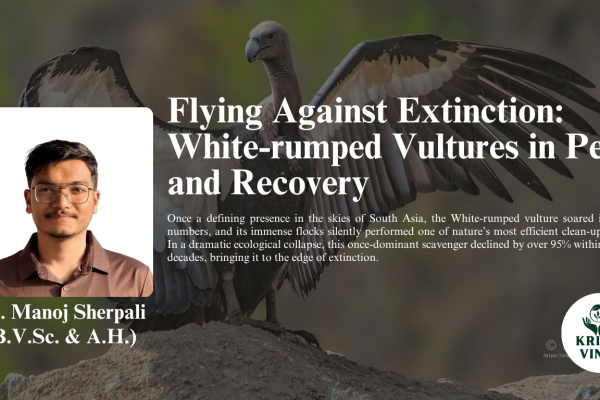
Flying Against Extinction: White-rumped Vultures in Peril and Recovery: Dr. Manoj Sherpali (B.V.Sc. & A.H.)
Once a defining presence in the skies of South Asia, the White-rumped vulture soared in vast numbers, and its immense flocks silently performed one of nature’s most efficient clean-up roles. In a dramatic ecological collapse, this once-dominant scavenger declined by over 95% within a few decades, bringing it to the edge of extinction. White-rumped vulture (Gyps…
Climate-Resilient Agriculture for Ensuring Food Security – By Shubas Kumar || Krishi Vines
Introduction Agriculture is the sector most directly exposed to climate variability, as temperature extremes, erratic rainfall, flooding, and drought reduce yields and destabilize food supply chains (Aryal et al., 2024). The FAO estimates that climate-induced shocks have already lowered productivity in regions of Africa, Asia, and Latin America, threatening food security for millions of smallholder…
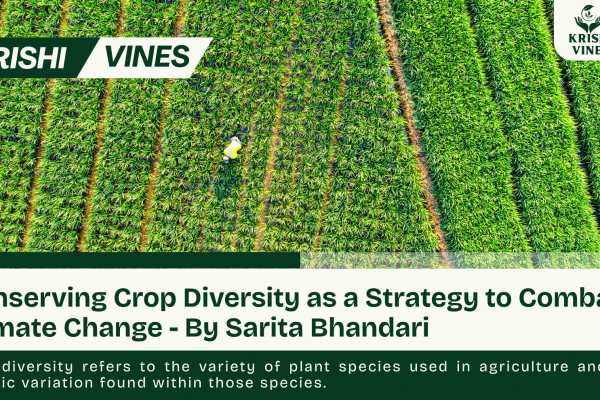
Conserving Crop Diversity as a Strategy to Combat Climate Change – By Sarita Bhandari || Krishi Vines
Introduction Crop diversity refers to the variety of plant species used in agriculture and the genetic variation found within those species. It exists at two main levels: Between species and Within species. With the changing pattern of climate, it is threatening biodiversity through changing ecosystems, shrinking habitats of wild crops relatives, and by increasing the…
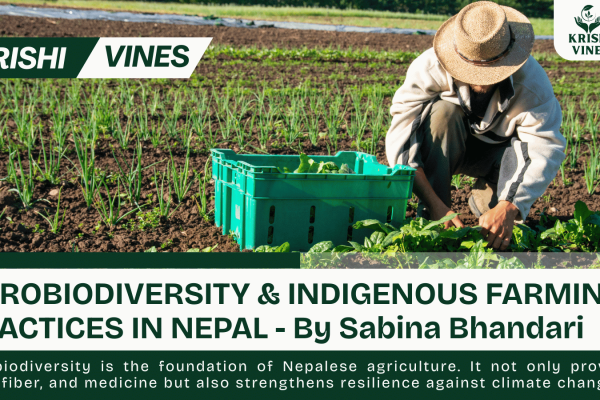
AGROBIODIVERSITY & INDIGENOUS FARMING PRACTICES IN NEPAL – By Sabina Bhandari || Krishi Vines
Nepal is an agricultural country consisting of about 30million population. Among 30 millions, about 60% of the population is engaged in agriculture. Nepal has diverse topography and climatic conditions and is home to a rich variety of crops and livestock as well as farming practices. This agricultural diversity is known as agrobiodiversity and it has…
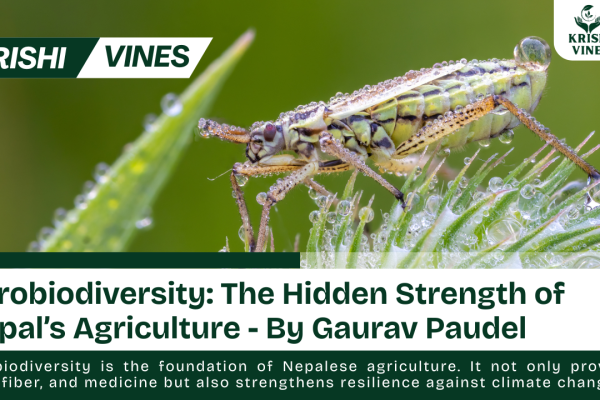
Agrobiodiversity: The Hidden Strength of Nepal’s Agriculture – Gaurav Paudel || Krishi Vines
Introduction Nepal is a small but ecologically diverse country, stretching from 60 meters above sea level in the Terai to the towering peaks of the Himalayas over 8,000 meters. This unique topography and climatic variation have made the nation a global hotspot of agrobiodiversity — the variety and variability of plants, animals, and microorganisms that…
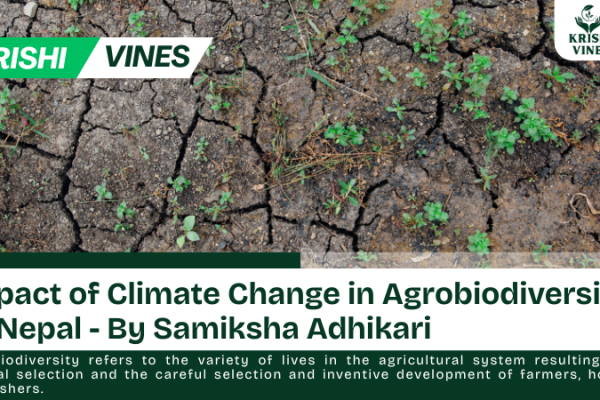
Impact of Climate Change in Agrobiodiversity of Nepal – By Samiksha Adhikari || Krishi Vines
Keyword: Agrobiodiversity, Climate Change, Policy, Resilience Introduction Agrobiodiversity refers to the variety of lives in the agricultural system resulting from natural selection and the careful selection and inventive development of farmers, holders and fishers. Agro biodiversity is the result of the interaction between the environment’s genetic resources and management system and practices used by…
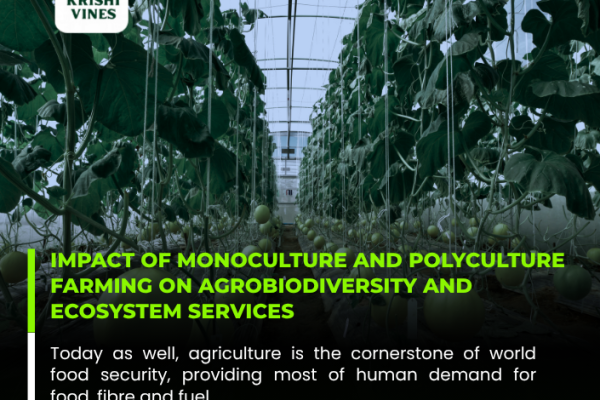
Impact of Monoculture and Polyculture Farming on Agrobiodiversity and Ecosystem Services – Bishnu Pandey || Krishi Vines
Introduction Today as well, agriculture is the cornerstone of world food security, providing most of human demand for food, fibre and fuel. Aside from its central position in production, agriculture is also inextricably intertwined with biodiversity and ecosystem health and function. Agricultural landscapes are composed of an assemblage of heterogeneous other and plant species in…
A step towards a climate resilient society ||Krishi Vines||
IntroductionThe problems associated with climate change are becoming more widely recognized by governments, corporations, and the general people worldwide. While certain climate changes may have detrimental socioeconomic effects never seen before, others may have advantages if enough preparation and notice are given.Climate resilience denotes the ability to anticipate and reduce risk to climate variability and…
Agrobiodiversity in Nepal ||Krishi Vines||
Agrobiodiversity -also known as agricultural biodiversity-is the diversity and variability of plants, animals, and microorganisms which, by direct or indirect use, contribute to food and agriculture. It refers to diversity within species (genetic diversity), between species (species diversity) and of ecosystems (ecosystem diversity).Nepal is rich in biodiversity and is ranked 49 globally. The country contains…
Nepal’s Conservation Crossroads: Saving Tigers and Rhinos in the Shadow of Progress || Saqib Shamim || Krishi Vines
Nepal’s journey in conservation has been filled with remarkable accomplishments. In recent years, the combined efforts have led to the doubled tiger populations and revived the number of the iconic one- horned rhinoceros. However, these successes are under threat from remaining challenges such as habitat loss, escalating huma-wildlife conflicts and always present danger of illegal…
