

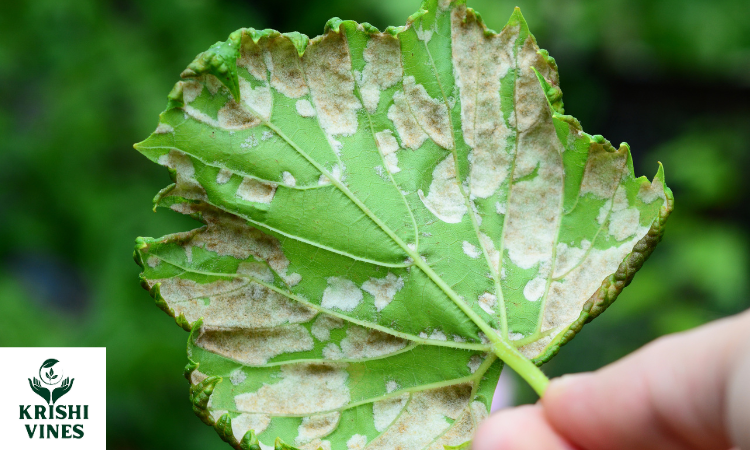
Article
The article categories in an agriculture website encompass a wide range of topics relevant to the agricultural industry. These categories often cover areas such as crop cultivation techniques, livestock management, agricultural machinery and technology, organic farming practices, soil health and fertility, pest and disease management, agricultural economics and markets, agricultural policy and regulations, sustainable agriculture, climate-smart farming, and agricultural research and innovation. These categories serve as a repository of valuable information and resources for farmers, agronomists, researchers, and individuals interested in various aspects of agriculture.
Agro Biodiversity and Pollinators: An Intertwined Path for a Sustainable Future – By Monika Bhurtyal || Krishi Vines
The agrobiodiversity and pollinators have an intricate relationship as they support each other in creating resilient agriculture system. The agrobiodiversity serves as the feeding and nesting resources for the pollinators, and the pollinators enhance the crop yields and maintain the genetic diversity. Introduction. The Food and Agriculture Organization, FAO defines agrobiodiversity as the variety and…
Emerging Plant Pathogens in Nepal: What Farmers Need to Know – By Upendra Bhusal || Krishi Vines
Introduction Agriculture is the backbone of Nepal’s economy, providing livelihoods for about two-thirds of the population. However, the emergence of new plant pathogens threatens crop health and food security. Understanding these pathogens, their potential impacts, and management strategies is crucial for farmers and agricultural stakeholders. Recent Discoveries of Emerging Pathogens Recent research has highlighted several…
The Role of Agrobiodiversity in Sustainable Agriculture – By Sunita Muktan || Krishi Vines
As global food demand continues to rise due to population growth and changing diets, the need for sustainable agricultural practices has become increasingly urgent. One of the most effective strategies for achieving sustainability is the promotion of agrobiodiversity—the variety of plant and animal species used in farming systems. This article explores the significance of agrobiodiversity…
Climate Change and its Threat to Pollinators: Implications for Agrobiodiversity – By Rohan Shrestha || Krishi Vines
Introduction Pollinators, including bees, butterflies, birds, bats, and other insects, play a vital role in global food production and the maintenance of biodiversity. An estimated 75% of global food crops rely, at least in part, on pollination by these creatures. Their contribution to the economy and ecosystems cannot be overstated. However, with the increasing impact…
Breeding for Agrobiodiversity: Strategies to Tackle Climate Extremes – By Rajaram Karki || Krishi Vines
Introduction In the face of climate change, agriculture must adapt to increasingly unpredictable and extreme weather patterns. Rising temperatures, erratic rainfall, prolonged droughts, and intense storms are becoming the new normal. These climate extremes threaten global food security by reducing crop yields, damaging ecosystems, and increasing the vulnerability of agricultural systems. One of the most…
Effect of Urbanization on Water Quality – By Namrata Kandel || Krishi Vines
Urbanization can be defined as a multidimensional process characterized by the increasing concentration of populations in urban centers, leading to significant shifts in socio-economic structures, land use patterns, and cultural dynamics. This process often involves the transformation of rural landscapes into urbanized environments, driven by factors such as industrialization, economic opportunities, and migration patterns. In…
Agrobiodiversity and Sustainable Farming Practices – By Prashanna Pokhrel || Krishi Vines
Introduction Agrobiodiversity refers to the variety of life forms in agricultural settings, including the diversity of crops, livestock, and the ecosystems they inhabit. This biodiversity is crucial for sustainable farming practices, as it enhances resilience, productivity, and ecological balance. As the world faces increasing challenges from climate change, soil degradation, and a growing population, understanding…
Biodiversity Financing for Cities and Regions – By Ruplal BC || Krishi Vines
In the 21st century, cities and regions are not only hubs of human activity but also key players in the conservation of biodiversity. With the growing threats of climate change, urban expansion, and environmental degradation, it has become crucial to address how we can finance and sustain biodiversity in these areas. Biodiversity, which includes the…
Lamjung’s Fragnant Future In Peril: Climate Change Threatens Large Cardamom – By Sabunam Subba || Krishi Vines
Climate Change and Its Impact The demand for large cardamom has been increasing in the global market but cardamom farming difficulty has also increased due to the climate change and its impact (Mishra & Gurung, 2023). Climate change is the long-term shift in global temperatures and weather patterns, primarily caused by human activities, resulting in…
Phytoremediation: A Natural Approach to Environmental Cleanup – Sagar Poudel || Krishi Vines
Phytoremediation is a cutting-edge, environmentally friendly technique that utilizes plants and their associated microorganisms to eliminate, reduce, or neutralize environmental contaminants from soil, water, sediments, and even air. This sustainable method presents a natural alternative for dealing with pollution caused by persistent organic pollutants (POPs), such as pesticides, pharmaceuticals, petroleum hydrocarbons, and polychlorinated biphenyls (PCBs)….
