Introduction
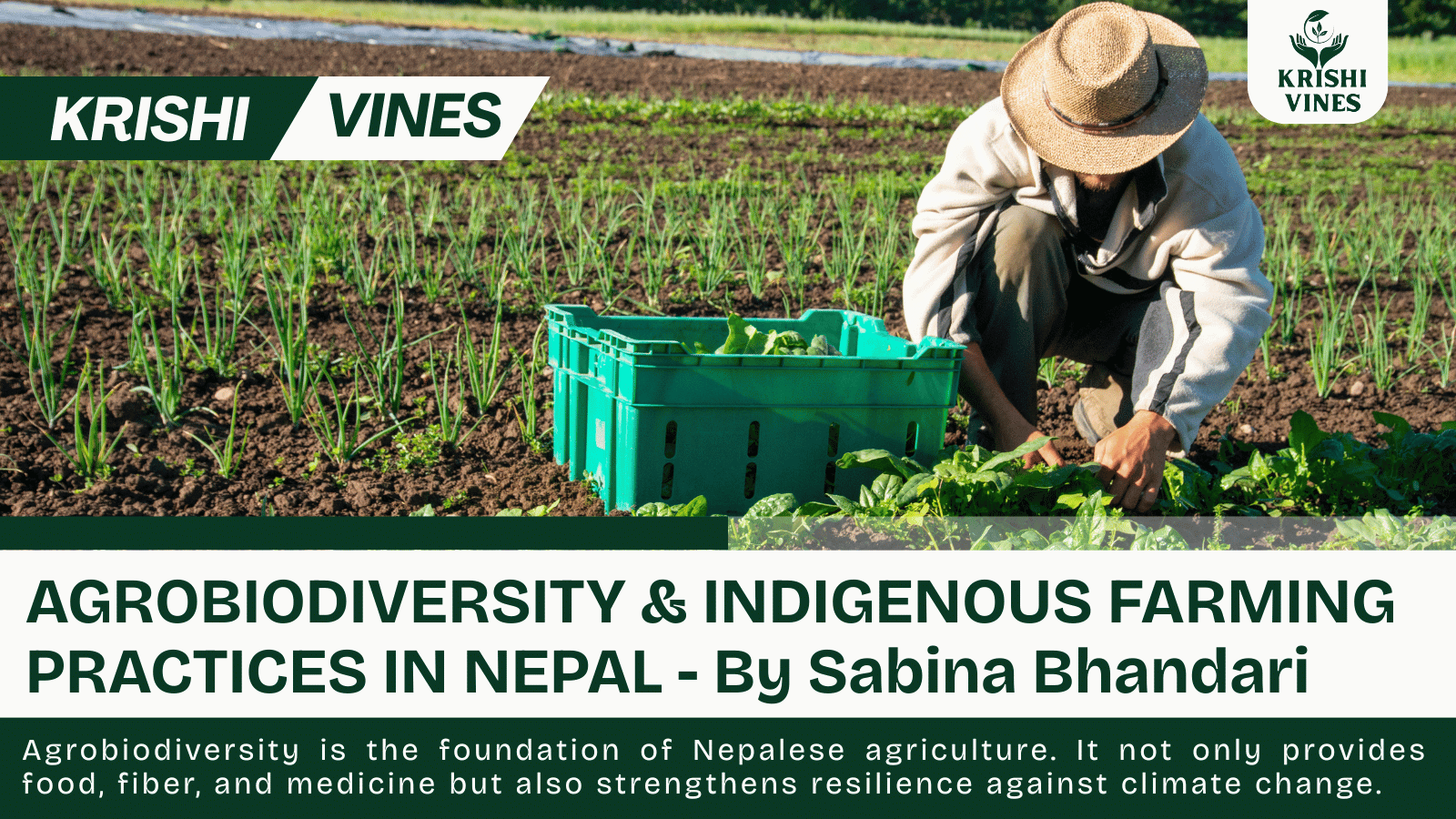
About 80% of the Nepalese population depend on agriculture for their livelihood, which is based on a rich diversity of useful species. The diversity of livestock (both improved and indigenous breeds) also plays a major role in contributing to the well-being of Nepalese communities. Agrobiodiversity, which is a vital sub-set of biodiversity playing a key role in food security, is increasingly threatened by climate change worldwide. In recent years, biodiversity loss is one of the challenging issues which are affected by climate change. Climate change is affecting the agro-biodiversity, decline in food security and weakening the livelihood assets of poor and marginalized communities.
Climate change has had a great impact on forest and agriculture in last decades.
Extreme temperature, erratic rainfall, unequal distribution of precipitation changes the production of agricultural as well as non-agricultural crops.
Nepal’s agro-biodiversity faces many challenges due to climate related variability like:
- Rising annual temperatures particularly at higher elevations leads to reduction in snow and ice coverage leads to climate induced disasters like floods and droughts; causing an uneven precipitation distribution. Arable land is lost to flood and erosion, disappearing forests in some areas; invasion of exotic species, affecting crop growth cycles and reducing crop yield and productivity.
- Changes in monsoon patterns trigger physical loss of fertile soil and sedimentation problems. The delay in monsoon season experienced in Nepal has changed the cropping pattern and crop maturity period. Thousands of hectares of farm land fallow and reduced production due to lack of water.
- Extreme events change land use patterns and contribute to desertification and acidification. Soil degradation exacerbated by climate change increases the difficulty of achieving food security for the growing population.
- The use of modern and hybrid varieties creates conditions where local traditional varieties are at risk of extinction. Narrowing down of genetic resource base and higher dependency on external seeds causes increased vulnerability among the resource poor farmers.
- Outbreaks and extension of minor diseases, pests and unwanted weeds cause major problems in crop and livestock sectors. Vector borne diseases in livestock are increasing.
Climate change mitigation for conservation of agro-biodiversity
- Mitigation actions aim at decreasing emissions of GHGs or
at enhancing carbon sinks.
- Need for new crop varieties, livestock breeds and fish types that can resist or tolerate higher temperatures and changing moisture availability.
- Research and development programmes especially for local landraces, wild relatives and neglected or underutilized species.
- Change in cropping patterns and land use practices to cope with the changing climate.
- Searching and exchanging drought-resistant seeds and other abiotic stress-tolerant crop varieties
- Adopting and practicing specific soil and water management practices for marginal areas.
- Providing training to farmers to cope with the changing climate.
Conclusion:
Agrobiodiversity conservation is necessary to sustain the lives of local people. Climate variability and risks have always been a part of agriculture, due to which farmers have developed many ways of managing risks. The unprecedented rate and magnitude of climate change presents great challenges to farmers, researchers and policymakers. Therefore, all need to collaborate at national and international level to address this problem. There is abundant scientific evidence that conservation of agrobiodiversity could play an important role in climate change adaptation.