Introduction
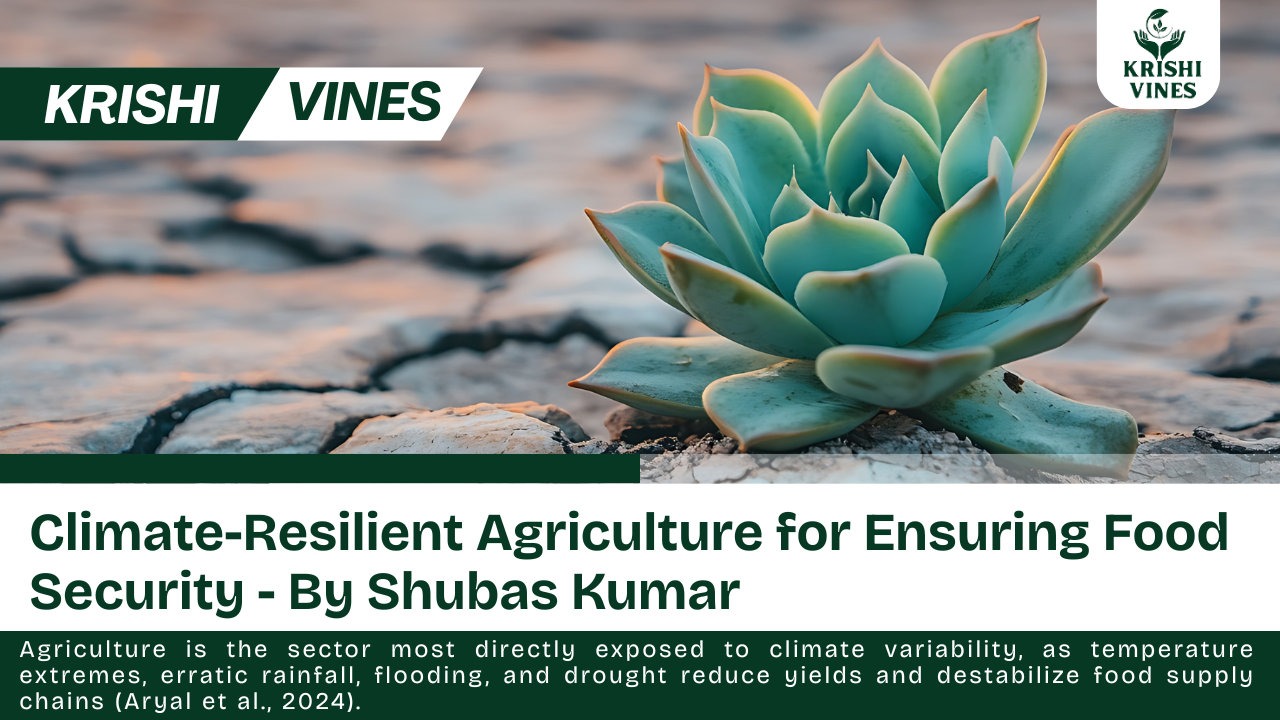
Agriculture is the sector most directly exposed to climate variability, as temperature extremes, erratic rainfall, flooding, and drought reduce yields and destabilize food supply chains (Aryal et al., 2024). The FAO estimates that climate-induced shocks have already lowered productivity in regions of Africa, Asia, and Latin America, threatening food security for millions of smallholder households (FAO/UN, 2024). Without adaptation, staple crop yields such as maize, rice, and wheat are projected to decline significantly by mid-century (Kopeć, 2024).
In this context, climate-resilient agriculture (CRA) has emerged as a comprehensive strategy that integrates adaptation, mitigation, and sustainable productivity. It promotes resilient crop varieties, water-smart farming, digital agriculture, and diversified production systems to help farmers cope with climatic stress while maintaining livelihoods (Prado, 2025). However, challenges such as financial barriers, weak seed systems, and policy fragmentation hinder its full adoption, requiring urgent policy and institutional interventions (Jat, 2025).
Principles of Climate-Resilient Agriculture
CRA builds upon three interlinked pillars (i) Adaptation, (ii) Mitigation and (iii) Food security. Adaptation in terms of enhancing the capacity of farming systems to withstand climatic shocks (e.g., drought-tolerant crops, water harvesting). Mitigation for reducing greenhouse gas emissions from agriculture through improved practices (e.g., agroforestry, efficient fertilizer use) and food Security for sustaining yields and farmer livelihoods under changing climate conditions.
Global Trends in CRA
- Resilient Crop Varieties: Development of drought- and flood-tolerant maize and rice in Africa and South Asia is improving smallholder resilience (Aryal et al., 2024).
- Sustainable Land Management: Practices like conservation agriculture, rainwater harvesting, and precision irrigation enhance soil and water efficiency.
- Digital Agriculture: Mobile apps and climate advisory systems provide localized information to guide farmer decisions (FAO/UN, 2024).
- Agro-ecology and Diversification: Mixed cropping, agroforestry, and integrated livestock systems buffer against shocks while conserving biodiversity.
- Climate Finance and Insurance: Innovative tools such as index-based crop insurance reduce risk exposure but face affordability and access barriers (Jat, 2025).
Challenges in Adoption
- Limited farmer access to technology and resilient seeds.
- Weak extension and knowledge systems.
- High upfront investment requirements.
- Fragmented policies between agriculture, climate, and environment sectors.
- Gender and equity gaps in resource access (Prado, 2025).
Policy Recommendations
- Increase R&D investment in crop breeding and climate-smart practices.
- Strengthen seed systems and last-mile delivery.
- Expand digital extension and climate services.
- Provide financial incentives, credit, and insurance tailored to CRA.
- Mainstream CRA into national adaptation policies and NDCs.
- Ensure inclusive participation of women, youth, and marginalized farmers.
Conclusion
Climate-resilient agriculture is critical to sustaining food systems in the face of climate change. Global trends in resilient crops, digital tools, and agro-ecology are promising, but widespread adoption requires robust policy, finance, and inclusive approaches. Strengthening institutional frameworks and farmer-centered innovations will ensure CRA fulfills its potential to secure global food security.
References
Aryal, J.P., et al. (2024). Review of climate-resilient agriculture for ensuring food security. Science Direct.
FAO/UN. (2024). Global food production at increased risk from excess salt in soil, UN report warns. The Guardian.
Jat, R.K. (2025). Bridging the gap: challenges and adoption of climate-resilient agricultural technologies. Frontiers in Sustainable Food Systems.
Kopeć, P. (2024). Climate Change— The Rise of Climate-Resilient Crops. PMC/Frontiers.
Prado, K. (2025). Building climate-resilient crops: genetic, environmental, and management factors. Journal of Experimental Botany.