Abstract
As global agricultural systems face escalating threats from climate change, Nepal’s unique geography and rich cultural heritage highlight the urgency for adaptive practices. This article explores the principles of Climate-Smart Agriculture (CSA) and emphasizes the critical role of agrobiodiversity in enhancing the resilience and sustainability of farming systems in Nepal. By implementing integrated agricultural strategies, farmers can boost productivity, adapt to changing environmental conditions, and enhance food security.
Introduction
The ramifications of climate change are becoming increasingly pronounced, creating substantial challenges for agricultural systems around the world. In Nepal, characterized by its diverse landscapes—from the fertile Terai plains to the majestic Himalayas—there is an urgent need for innovative agricultural strategies. Climate-smart agriculture (CSA) presents a viable solution for improving productivity while incorporating agrobiodiversity, ensuring that farming systems can withstand climate-related challenges. This article investigates the CSA concept and its transformative potential for Nepal’s agricultural practices.
Understanding Climate-Smart Agriculture
Climate-smart agriculture is a comprehensive approach focused on three main objectives:
- Increasing Productivity: Boosting agricultural output to fulfill the needs of a growing population.
- Enhancing Resilience: Developing farming systems that can endure climate shocks, thereby safeguarding the livelihoods of farmers.
- Reducing Emissions: Adopting practices that decrease greenhouse gas emissions, contributing to global climate change mitigation efforts (FAO, 2013).
In Nepal, where agriculture is essential to the economy and the livelihoods of millions, implementing CSA can facilitate sustainable development and improve environmental management.
The Importance of Agrobiodiversity
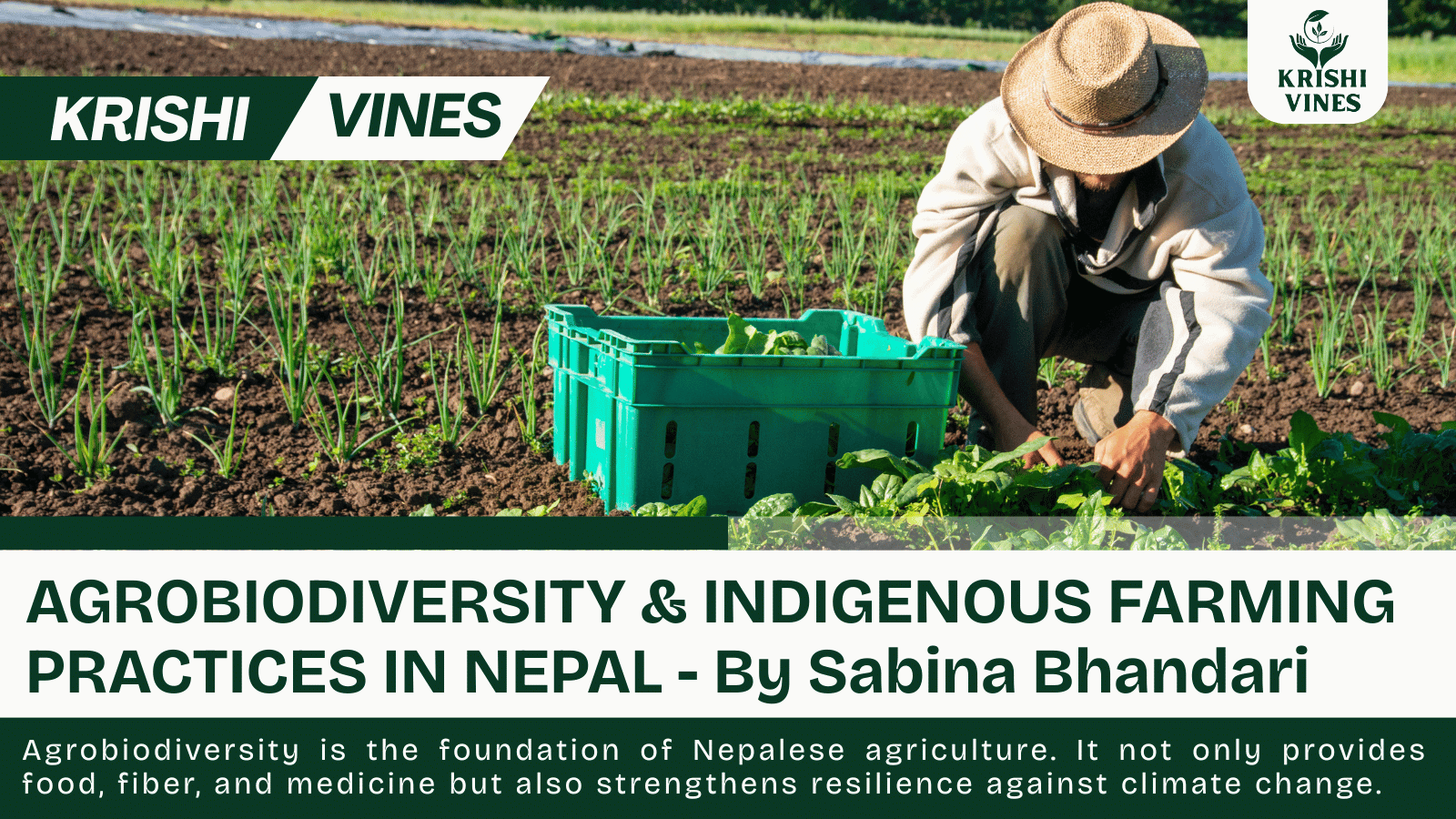
Agrobiodiversity encompasses the range of crops, livestock, and other organisms cultivated by farmers. Traditional farming practices in Nepal have resulted in a rich diversity of agrobiodiversity, which is vital for ensuring food security and building resilience to climate change. Varied crop types are better suited to withstand environmental stresses such as droughts, floods, and pest infestations (Shrestha, Sharma, & Thapa, 2019). By integrating agrobiodiversity into CSA, farmers can create resilient agricultural systems that are better equipped to adapt to shifting environmental conditions.
Strategies for Integrating Agrobiodiversity into CSA
1. Crop Rotation and Diversification
Utilizing crop rotation and intercropping techniques enhances soil health and minimizes pest outbreaks, thereby increasing overall farm resilience (Bhatta, Ghimire, & Yadav, 2022).
2. Conservation Agriculture
This approach focuses on minimizing soil disturbance and practicing crop rotation, promoting biodiversity and improving water retention, which enhances resilience against climate extremes (Thapa, Chaudhary, & Shrestha, 2020).
3. Use of Indigenous Varieties
Encouraging the cultivation of indigenous crop varieties that are well-suited to local conditions can enhance resilience. These traditional varieties often possess traits that allow them to thrive in adverse environments, ensuring food security and preserving cultural heritage (Khanal, Kafle, & Chhetri, 2021).
4. Agroforestry Systems
Integrating trees into agricultural landscapes creates multifunctional environments that provide shade, improve soil fertility, and enhance biodiversity. Agroforestry systems also contribute to carbon sequestration, aiding climate change mitigation efforts (Paudel, Raut, & Rai, 2021).
Challenges and Opportunities
Although integrating agrobiodiversity into CSA offers numerous benefits, several challenges remain. Limited access to resources, inadequate knowledge transfer, and market pressures favoring monoculture crops can impede the adoption of CSA practices. Nevertheless, community-driven initiatives, such as seed banks and educational programs, can help address these barriers and promote sustainable agricultural practices (Gautam, Kafle, & Timilsina, 2023).
Effective policy frameworks are also essential for successful implementation. Collaboration among governmental bodies, NGOs, and local communities can significantly enhance the execution of CSA strategies, paving the way for more sustainable agricultural practices.
Conclusion
Integrating agrobiodiversity into climate-smart agriculture represents a promising strategy for enhancing resilience and sustainability within Nepal’s farming systems. By embracing diverse agricultural practices, farmers can boost productivity, protect biodiversity, and actively contribute to climate change mitigation. As Nepal grapples with the challenges posed by climate impacts, the incorporation of CSA principles and agrobiodiversity will be crucial for ensuring food security and promoting sustainable development for future generations.
References
- Food and Agriculture Organization. (2013). Climate-smart agriculture: Sourcebook. Food and Agriculture Organization of the United Nations.
- Shrestha, J., Sharma, R., & Thapa, R. (2019). Agrobiodiversity and its role in climate resilience in the Himalayas. Environmental Science and Policy, 101, 134-142.
- Khanal, R., Kafle, K., & Chhetri, R. (2021). The role of agrobiodiversity in food and nutrition security in Nepal. Journal of Food Security, 13(3), 145-159.
- Paudel, R., Raut, S., & Rai, B. (2021). Agroforestry systems and their role in climate change mitigation in Nepal. Forestry Research Journal, 29(4), 312-326.
- Bhatta, R., Ghimire, R., & Yadav, R. (2022). Enhancing agricultural resilience through crop diversification in Nepal. Journal of Sustainable Agriculture, 34(2), 245-260.
- Gautam, D., Kafle, B., & Timilsina, N. (2023). Community-based seed banks: A model for promoting agrobiodiversity in Nepal. Nepal Journal of Agriculture, 15(1), 55-68.
- Thapa, R., Chaudhary, S., & Shrestha, M. (2020). Ecosystem services and agricultural sustainability in the context of climate change: A case study from Nepal. Journal of Environmental Management, 265, 110570.