Introduction
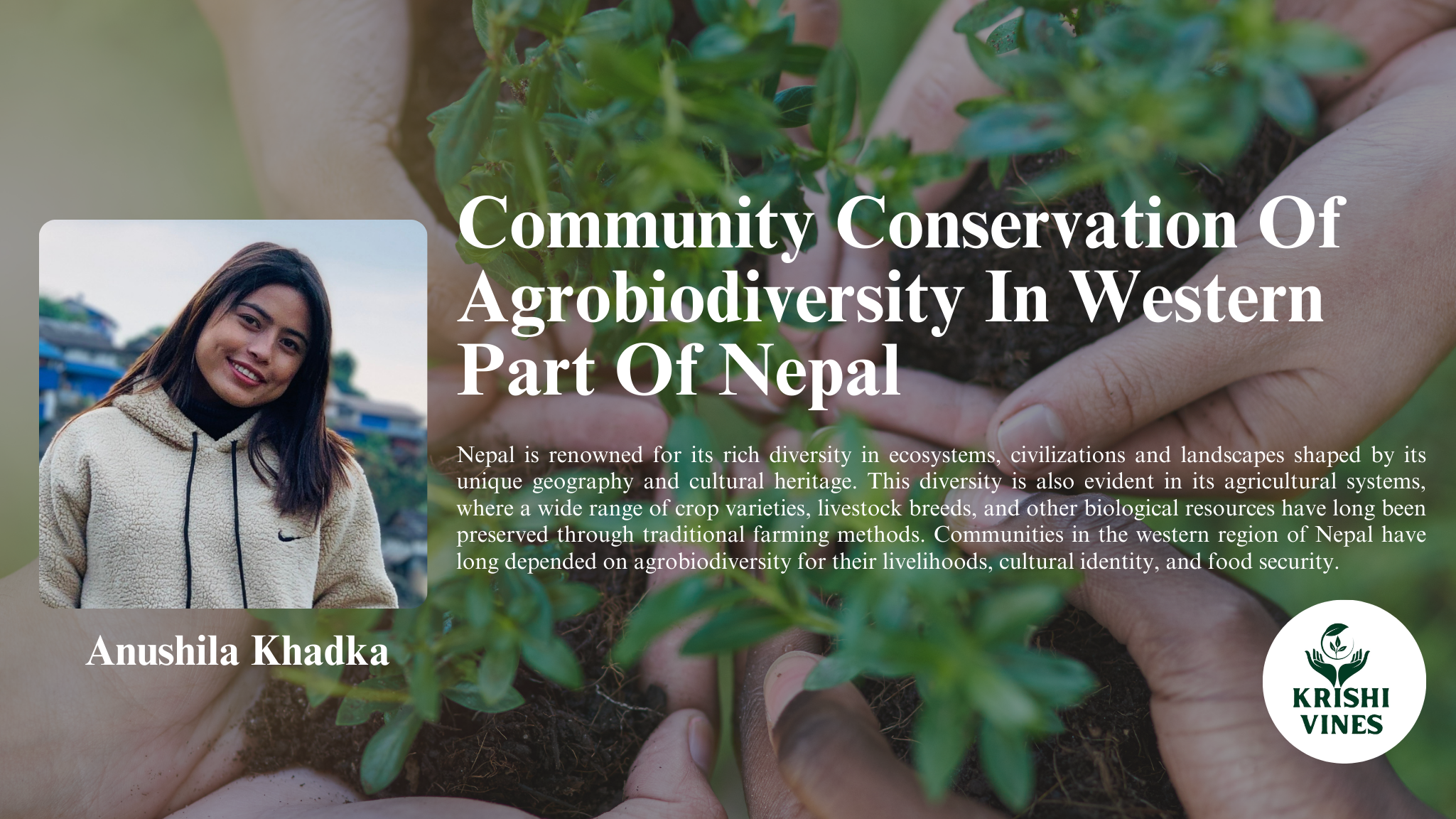
Nepal is renowned for its rich diversity in ecosystems, civilizations and landscapes shaped by its unique geography and cultural heritage. This diversity is also evident in its agricultural systems, where a wide range of crop varieties, livestock breeds, and other biological resources have long been preserved through traditional farming methods. Communities in the western region of Nepal have long depended on agrobiodiversity for their livelihoods, cultural identity, and food security. Climate change, industrial agriculture, and the loss of traditional wisdom are the three main problems facing the region today. To preserve this priceless resource for future generations, local people are taking the initiative to conserve agrobiodiversity through community-based conservation initiatives.
The Importance of Agrobiodiversity
Agrobiodiversity refers to the variety and variability of plants, animals, and micro-organisms that are used in agricultural production systems. This includes everything from the diverse crop varieties grown in fields to the livestock breeds raised in farms. In Nepal’s western regions, agrobiodiversity plays a critical role in maintaining food security, supporting sustainable farming, and preserving traditional knowledge systems that have been passed down through generations.
The western part of Nepal, which encompasses the hilly and mountainous regions, has been a hub for traditional agricultural practices. The farming communities here cultivate a wide range of crops—ranging from staple foods like rice, maize, millet, and wheat to high-value crops such as apples, ginger, and medicinal plants. These crops are not only important for local consumption but also form the basis of traditional livelihoods, including local handicrafts, rituals, and festivals.
Threats to Agrobiodiversity
Despite its significance, agrobiodiversity in the western parts of Nepal is under threat. Several factors contribute to this decline:
- Climate Change: Changes in temperature, erratic rainfall, and unpredictable weather patterns are affecting crop growth and yields. This uncertainty leads farmers to abandon traditional varieties in favor of more uniform, commercial crops that may not be as well-adapted to local conditions.
- Monocropping and Commercialization: The shift towards monocropping—where farmers grow a single crop over large areas—has resulted in the loss of diverse traditional varieties. The growing influence of market demands encourages farmers to adopt high-yielding varieties of crops, reducing the genetic diversity of their farms.
- Outmigration: Economic migration, particularly among the youth, has led to a decline in traditional farming practices. With younger generations moving to cities or abroad for work, elderly farmers are left with fewer resources to manage their farms and conserve local crop varieties.
- Loss of Traditional Knowledge: As younger generations migrate and modernize, there is a risk that traditional knowledge about crop cultivation, seed saving, and agricultural biodiversity may be lost.
Community-Based Conservation: A Path Forward
Amid these challenges, the western regions of Nepal have witnessed an inspiring surge in community-based efforts to conserve agrobiodiversity. Local farmers, supported by NGOs, government bodies, and international organizations, are reviving traditional agricultural practices that not only ensure food security but also protect and preserve agrobiodiversity.
1. Seed Banks and Community Seed Banks
One of the most effective strategies for conserving agrobiodiversity has been the establishment of community seed banks. These are local initiatives where farmers collect, save, and exchange traditional seeds. The seed banks serve as repositories for indigenous crop varieties, which can be redistributed to farmers in times of need or when they want to return to traditional cultivation methods.
For instance, in the district of Achham, local communities have established seed banks that store a wide variety of traditional crops, including indigenous rice varieties, millets, and lentils. These seed banks not only provide farmers with access to diverse seeds but also act as educational centers for younger generations to learn about traditional farming methods and crop diversity.
2. Participatory Plant Breeding and Crop Improvement
Participatory plant breeding involves the active participation of local farmers in the development of crop varieties that are adapted to their specific environmental conditions. This approach ensures that new crop varieties are not only high-yielding but also resistant to local pests, diseases, and climatic fluctuations.
In the western hills of Nepal, participatory plant breeding has been applied to improve traditional rice varieties, enhancing their resilience to changing weather patterns. Through this method, farmers have been able to collaborate with researchers to develop rice varieties that have improved resistance to drought and pests, while retaining the genetic diversity of traditional crops.
3. Agroforestry and Integrated Farming Systems
Agroforestry, the practice of integrating trees into farming systems, is another conservation strategy gaining traction in the western regions. Trees provide multiple benefits, such as improving soil fertility, offering shade for crops, and serving as a source of fodder and firewood. They also help in the conservation of indigenous plant species, contributing to overall biodiversity.
Farmers in areas like Doti and Bajura have adopted integrated farming systems that combine crop cultivation with livestock farming and agroforestry practices. This holistic approach not only enhances agricultural productivity but also ensures the conservation of agrobiodiversity by promoting diverse ecosystems within agricultural landscapes.
4. Revival of Traditional Farming Practices
Traditional farming practices, such as crop rotation, intercropping, and mixed cropping, are being revived as part of community efforts to conserve agrobiodiversity. These methods, which were once common in Nepal’s western regions, involve planting different crops together or alternating crops in the same field to maintain soil fertility and control pests naturally.
For example, in Kailali, farmers have started using traditional intercropping techniques to grow crops like maize, beans, and vegetables in the same field. This not only supports biodiversity but also minimizes the risk of crop failure due to pest infestations or poor weather conditions.
5. Education and Awareness Campaigns
Local NGOs and government bodies have been running educational programs to raise awareness about the importance of agrobiodiversity and the need for its conservation. These campaigns target farmers, young people, and local policymakers, emphasizing the role of biodiversity in ensuring long-term food security and environmental sustainability.
Through workshops, training programs, and field demonstrations, communities in places like Baglung and Palpa are learning about the significance of preserving local seeds, promoting organic farming, and adopting climate-resilient practices. These efforts not only encourage active participation but also help build a sense of ownership and pride in conserving traditional agricultural knowledge and biodiversity.
The Way Forward: Strengthening Community Conservation Efforts
The community-driven conservation of agrobiodiversity in western Nepal is a model of resilience, demonstrating how local knowledge and grassroots efforts can protect vital natural resources. However, these initiatives must be supported through policy changes, financial investment, and capacity-building efforts to ensure their long-term sustainability.
Key steps forward include:
- Policy Support: Government policies must prioritize the conservation of agrobiodiversity by providing incentives for farmers to maintain traditional crop varieties and sustainable farming practices.
- Research and Extension Services: Strengthening the links between research institutions and farmers can promote the adoption of climate-resilient farming technologies while preserving agrobiodiversity.
- Market Linkages: Developing markets for organic, traditional crops can provide farmers with an economic incentive to conserve agrobiodiversity, helping to bridge the gap between conservation and livelihoods.
Conclusion
In the western part of Nepal, communities are proving that conservation of agrobiodiversity is not just about protecting nature, but about preserving a way of life. Through community seed banks, participatory breeding, agroforestry, and the revival of traditional farming practices, local farmers are safeguarding the genetic diversity of their crops for future generations. This model of community-based conservation offers valuable lessons for other regions facing similar threats to their agricultural biodiversity, showing that with the right support, it is possible to strike a balance between modern agriculture and the protection of traditional ecological systems.