Introduction
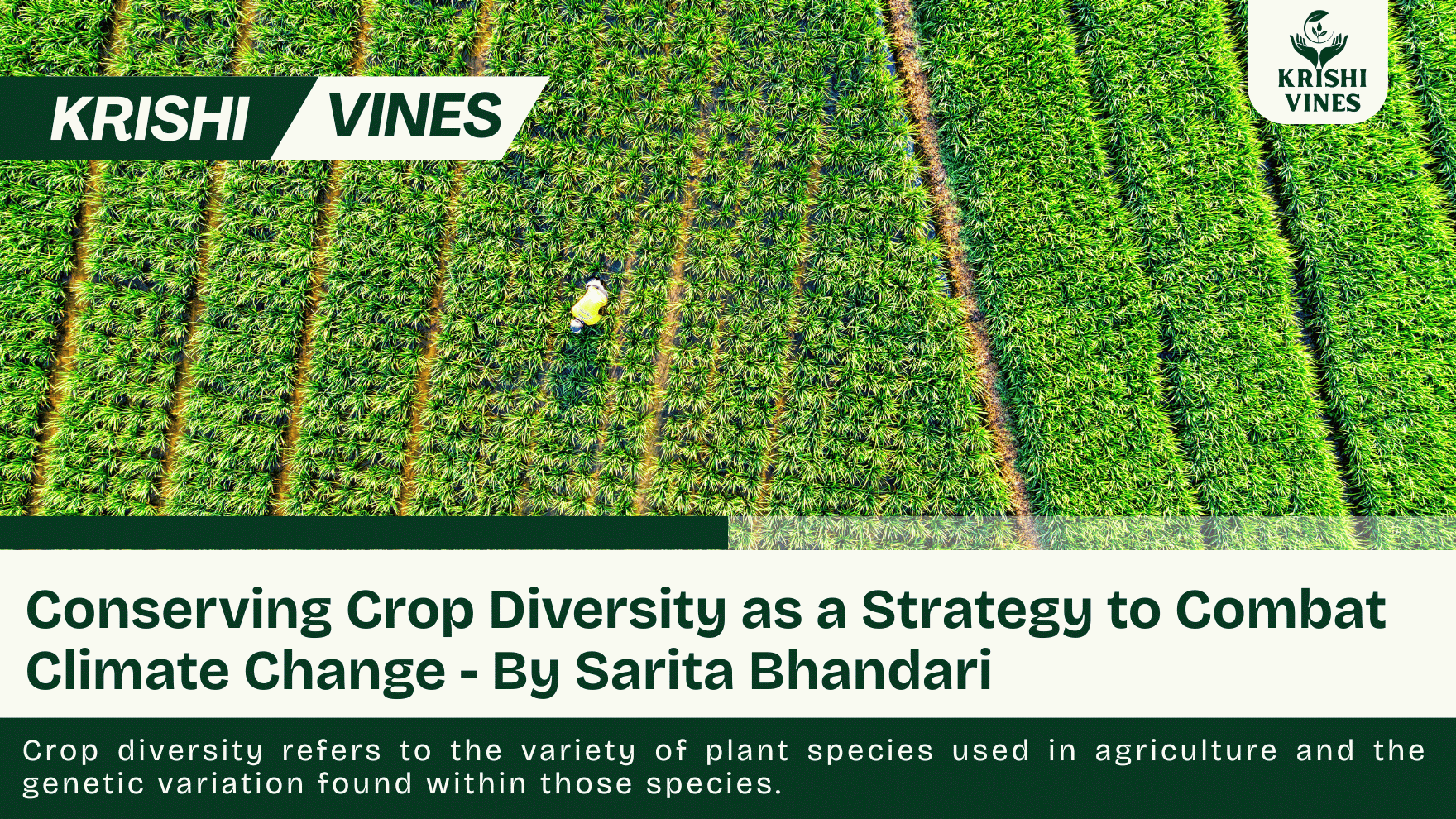
Crop diversity refers to the variety of plant species used in agriculture and the genetic variation found within those species. It exists at two main levels: Between species and Within species. With the changing pattern of climate, it is threatening biodiversity through changing ecosystems, shrinking habitats of wild crops relatives, and by increasing the threat of genetic erosion in traditional varieties. The significance of conserving crop diversity to ensure climate resilience is that it provides food producers with the biological resources needed to cope with and adapt to environmental stresses, mitigations land variability are varied with more diversity, on top of increasing yields. Different crops and varieties provide tolerance to drought, excessive heat, floods, and pests, while reducing the risk to total crop failure (agriculture), and making sure a nutritious diet is stable and not at risk under unknown climatic conditions can further protect food security by ensuring a limit of diversity constraints. If both traditional and modern crop diversity can be sustained; farming systems can adapt to new unknown fragmentation threats that may affect a livelihood for future generations.
Impact of climate change in agriculture
Nepal’s economy is heavily reliant on agriculture. Nepal’s total area is 147,181 km2 and is made up of mountains (35%), hills (42%), and terai (23%) where there is a total cultivated area of 3091000 ha for agriculture; it contributing 38.15% of the gross domestic product (GDP), while it is also a disaster-prone country (including flash flood, GLOF, and melting snow in the mountains and droughts in the terai(Malla, 2009).
There are several ways the climate is affecting agriculture, many of them are hampering agricultural operations from contributing to global food security. Increased air temperatures and changes to seasonal weather patterns are leadings signify decreases in crop yields due to the water scarcity from droughts, heat waves, and flooding. An atmosphere at higher CO2 concentrations, would be expected to have increased net photosynthesis rates, and also have a decreased transpiration for plants at higher CO2 concentrations because the stomate, the small openings in the leaves where CO2 and water vapour are exchanged with the atmosphere, would be at a smaller size(Mahato, n.d.). Observations of regional and globally averaged precipitation and air temperature demonstrate remarkable speeds of changes to the climate system globally, that will likely be related to any changes to groundwater and underground water recharge as well(Praveen & Sharma, 2019).
Importance of Crop Diversity
- Genetic resilience – diverse crops are able to withstand stresses such as drought, heat, or pests.
- Food security – different varieties ensure stable supply of food.
- Ecosystem services – soil health, pollinator support, nutrient cycling.
- Cultural and traditional values of local crops.
Diversity as a Climate Change Adaptation Strategy
In agriculture, diversity, both crop and varietal, helps mitigate some of the impacts of climate change by providing traits such as drought tolerance, heat resistance, and pest resistance. Planting different crop types and varieties reduces the chances of catastrophic crop failure when extreme (and even moderate) events occur. Cultivars of traditional crops, like millets, sorghum, and quinoa, as well as wild relatives, offer a plethora of genetic information for breeders to use to produce varieties that will be resistant to climate change. Diversity contributes to food security, and increases the chances that farming systems will be stable in a changing climate.
Crop Diversity in Climate Change Mitigation
Agricultural diversity is not just a way to adapt to climate change, but it can also lessen the impact, too. For example: alfalfa is an important crop that still gives livestock quality food, even on dry farms. Diversity in farming systems, such as crop rotations, intercropping and using agroforestry systems, strengthen soil health and improve carbon storage. Perennial crops are more insulated in the soil, meaning they store more carbon, and deep rooted crops sequester even more carbon. Growing their own food as mixed cropping will also mean they will not need to import as many chemical inputs – thus decreasing greenhouse gas emissions. By conserving the diversity of many agricultural and horticultural crops, agriculture can continue to develop ways of reducing impacts to climate whilst building better food systems.
Conservation:
It can be conserved either in-situ (On-farm diversity, community seed banks, home gardens) or Ex-situ conservation: Gene banks, botanical gardens etc.. Role of farmers, indigenous knowledge, and policy support also plays an important role in its conservation.
Conclusion
Protecting crop diversity is important for climate-resilient agriculture. Crop diversity promotes genetic resilience that helps ensure food security, supports healthy ecosystems, and enables adaptations to droughts, heat, floods, and pests. Crop diversity supports climate change mitigation by improving soil health, sequestering carbon, and reducing the use of chemicals. To be effective, in-situ and ex-situ conservation, along with farmers and policies that recognize farmers’ many different types of knowledge, is important to sustain agricultural diversity, and feed future generations.
References
Mahato, A. (n.d.). Climate Change and its Impact on Agriculture.
Malla, G. (2009). Climate Change and Its Impact on Nepalese Agriculture. Journal of Agriculture and Environment, 9, 62–71. https://doi.org/10.3126/aej.v9i0.2119
Praveen, B., & Sharma, P. (2019). A review of literature on climate change and its impacts on agriculture productivity. Journal of Public Affairs, 19(4), e1960. https://doi.org/10.1002/pa.1960