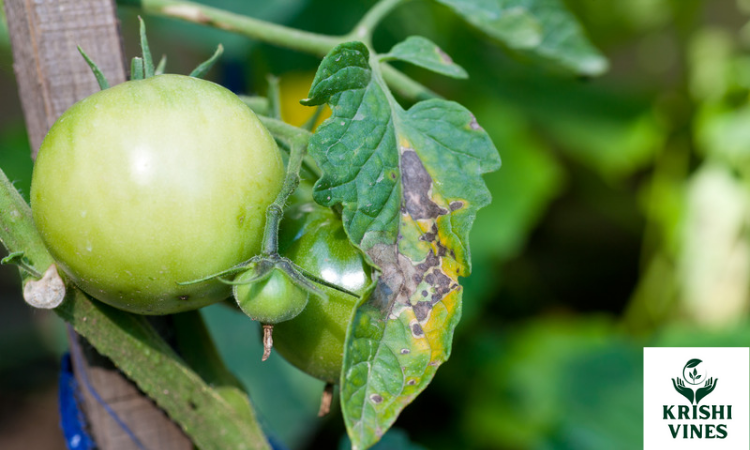
Early Blight of Tomato
Early Blight of Tomatoes is a common disease for crops like tomatoes and potatoes. Terai to Hilly regions mainly was attracted by the early blight diseases. This disease reduces crop yield by about 5-10%.
Causative Agent: The Causative agent of this disease is the Alternaria solani
Morphology of Alternaria

Alternaria solani produces distinctive “bullseye” patterned leaf spots and can also cause stem lesions and fruit rot on tomatoes and tuber blight on potatoes. Discussing its structure, It is separate, branched, and Hyaline. Hyaline later turns into a darker color. Conidiophores are short and produce fusiform and ob clavate shapes (Elongated, narrowing toward the apex, and gradually thickened or expanded toward the base) conidia. Conidia has vertical and horizontal septation at the end.
Symptoms: The symptoms of Early Blight disease impact every part of the plants. It affects Leaves, Stem, Fruits, and also tuber in the case of potato.
Leaves: A Dark spot first forms on the older foliage near the ground. Those dark spots are round and brown, growing up to half an inch in diameter, increasingly large targets like concentric rings. Around those spots, Tissue will turn yellow. Infected leaves will turn brown and fall off, whereas dried leaves cling to the stem.

Stem: Seedling’s stems are infected and turn brown, sunk, and dry. If the infection girdles the branch, then at that time, seedlings will wilt and die.
Fruits: At any stage of maturity, fruit might be affected. Spots on the fruits are leathery and black, with raised concentric ridges near the stem. In the case of potato tubers, Circular open spots look from brown to black.

Management:
There are specific measures to follow for the management of this disease. First, Late varieties of tomatoes and potatoes should be grown so that A. Soani won’t affect the crops. Following Crop rotation for two years with a non-hosting crop will also help limit the causative agent’s attractiveness. One more thing to add: At the early stage, Fungicides are not preferable; They should apply when the infection level is >15%.