Once a defining presence in the skies of South Asia, the White-rumped vulture soared in vast numbers, and its immense flocks silently performed one of nature’s most efficient clean-up roles. In a dramatic ecological collapse, this once-dominant scavenger declined by over 95% within a few decades, bringing it to the edge of extinction.
White-rumped vulture (Gyps bengalensis) is an Old-World vulture native to South and Southeast Asia. It has been Critically Endangered on the IUCN Red List since 2000, as it has suffered an extremely rapid population decline. The rapid population decline is associated with feeding carcasses of animals treated with the veterinary drug Diclofenac.
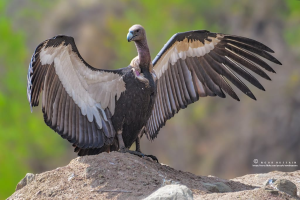
Figure 1. White-rumped vulture
Importance of the White-rumped vulture
Vultures play a vital role in ecology. They are nature’s scavengers that clean up carcasses, help control diseases like rabies, anthrax, and brucella indirectly by removing decomposing remains, and similarly limit the rise of feral dog and rat populations. In South Asia, as part of traditional beliefs, vultures are associated with purification and natural recycling. The practice of feeding human remains to vultures is associated with Tibetan Buddhist communities in Himalayan regions and the Zoroastrian community in parts of India and Iran. This funeral ritual is called sky burial (jhatar in Tibetan) or exposure in a Tower of Silence (dakhma). In recent times, vulture watching and conservation have promoted local tourism in different regions of Nepal. Vulture is also considered an indicator species, as its healthy population indicates veterinary drug safety and livestock management practices.
Population overview
White-rumped vultures were formerly described as one of the most abundant large birds of prey, with a global population almost certainly numbering several million individuals before the 1990s. During the 1990s, this species suffered a dramatic population decline across its range. There are now estimated to be 6000 individuals in India (Prakash et al., 2012), <2,000 individuals in Nepal (Bhusal et al., 2018), 100 individuals in Cambodia (Loveridge et al., 2019), 260 individuals in Bangladesh (Alam & White, 2015) and 250-350 individuals in Bhutan and Pakistan (Naidoo et al., 2017). The total population is therefore estimated to be 6,000-9,000 individuals, equating to 4,000-6,000 mature individuals (Year of estimate 2021).
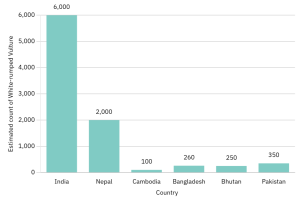
Figure 2. Estimated Count of White-rumped vultures in South Asia (2021)
Causes of decline
During the twentieth century, intensive hunting pressure led to over-harvesting of large ungulates in South Asia. This resulted in a marked decline in the population of the species due to food scarcity. In the 1990s, widespread use of the veterinary drug Diclofenac across the Indian subcontinent alarmingly declined the population by 99% within three generations. Diclofenac came out as a poison for vultures, causing failure of the renal system and causing death of vultures through the carcasses treated with it. Evidence from more recent monitoring in India indicates that this downward trend had halted by around 2010, with numbers subsequently remaining stable or showing a modest increase in population (Prakash et al., 2019).
Emerging threats
Despite conservation efforts, the Gyps bengalensis continues to face significant threats, including pesticide exposure (e.g., DDT, HCH), environmental contamination, poisoning, and reduced food availability. Habitat loss, electrocution, aircraft strikes, and changes in livestock management further increase risks. Toxic veterinary drugs such as ketoprofen and aceclofenac remain a concern, while breeding success is hindered by low nest occupancy, reduced fertility, and colony instability. Additional pressures from climate change, parasites, and heavy metal toxicity continue to delay population recovery, highlighting the need for integrated conservation strategies.
Conservation
Veterinary diclofenac was identified as the primary source of vulture population decline, leading to its ban in India, Nepal, and Pakistan in 2006 and Bangladesh in 2010. This action contributed to reduced use of the drug and provided a basis for population restoration. Similarly, the introduction of safe NSAID alternatives like Meloxicam also reduced poisoning risks to vultures. Vulture Safe Zones (VSZs) are established to create safe foraging areas and are supported by supplementary feeding. Similarly, captive breeding programs led by different authorities have played a significant role in population restoration.
Conserving vultures requires protecting nesting and roosting habitats, monitoring populations and threats, raising public awareness, controlling pollution and disease, and coordinating actions across governments, NGOs, and local communities to ensure their long-term recovery. Key organizations such as SAVE, BNHS, Bird Conservation Nepal, BirdLife International, and RSPB have played a central role in coordinating research, policy advocacy, captive breeding, and field-based conservation efforts for vultures across South Asia and globally.
Conclusion
The White-rumped Vulture, once abundant across South Asia, experienced severe declines due to human-induced threats such as toxic drugs and habitat loss. Targeted conservation measures, including habitat protection, safe veterinary practices, captive breeding, and public awareness initiatives, have begun to stabilize populations. Continued, coordinated efforts are essential to secure the long-term survival and ecological role of this critically endangered species.