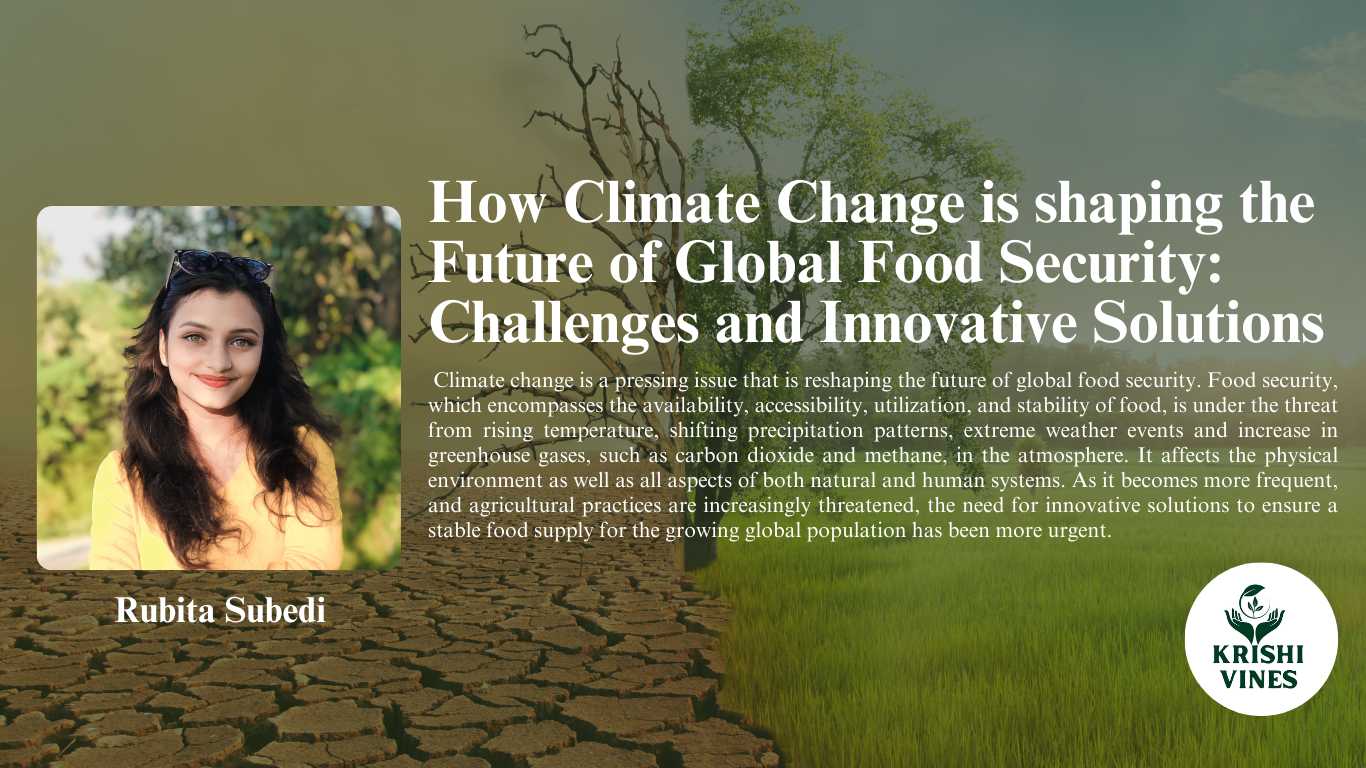
Climate change is a pressing issue that is reshaping the future of global food security. Food security, which encompasses the availability, accessibility, utilization, and stability of food, is under the threat from rising temperature, shifting precipitation patterns, extreme weather events and increase in greenhouse gases, such as carbon dioxide and methane, in the atmosphere. It affects the physical environment as well as all aspects of both natural and human systems. As it becomes more frequent, and agricultural practices are increasingly threatened, the need for innovative solutions to ensure a stable food supply for the growing global population has been more urgent.
One of the biggest challenges posed by climate change is its impact on crop yields. Rising temperatures and changing precipitation patterns can lead to decreased productivity, jeopardizing food security for millions of people around the world. In addition, extreme weather events such as droughts, floods, storms and heat waves are becoming more frequent and severe, leading to crop failures, food shortages, and price spikes which disrupt supply chains, and further exacerbating food insecurity. In recent years, we have seen the devastating effects of these events on food production. Climate change also affects livestock and fisheries. Higher temperatures can lead to heat stress in animals, reducing their productivity and affecting their health. Similarly, changing ocean temperatures and acidification can impact fish populations and marine ecosystems, which are crucial sources of protein for many communities around the world. The economic implications of climate change on food security are profound. Climate change is also affecting the availability of water for agriculture. As glaciers melt and rainfall patterns change, water scarcity is becoming a major issue for farmers around the world. As crop yields decrease and food prices rise, access to food becomes more challenging, particularly for vulnerable populations. Rising food prices can lead to increased poverty and malnutrition, exacerbating existing inequalities and social issues.
In order to address the challenges posed by climate change to global food security, it is crucial that we take action to mitigate its effects and adapt to the changes that are already underway. One promising approach is the development of climate-resilient crops that can withstand extreme weather conditions and pests. For example, scientists are working on breeding drought-tolerant varieties of staple crops such as rice, wheat, and maize, which could help farmers maintain productivity even in the face of water scarcity.
Another innovative solution is the use of precision agriculture techniques to optimize resource use and minimize environmental impact. By using data analytics, sensors, and other technologies, farmers can make more informed decisions about when and where to plant, fertilize, and irrigate their crops, leading to higher yields and lower input costs. This not only improves food security but also reduces greenhouse gas emissions and conserves natural resources. In addition, exploring alternative proteins and food sources can reduce the strain on traditional agriculture and diversify food options. Innovations such as lab-grown meat, plant-based proteins, and insect farming offer sustainable alternatives to conventional animal agriculture, which is often resource-intensive and contributes to greenhouse gas emissions. Efficient water management is also essential for adapting to climate change impacts. Techniques such as rainwater harvesting, drip irrigation, and soil moisture monitoring can help optimize water use and improve crop resilience. Integrated water management strategies ensure that water resources are used efficiently and sustainably.
Furthermore, promoting sustainable farming practices such as agro forestry, conservation agriculture, and organic farming can help mitigate the effects of climate change on food production. These approaches not only improve soil health, water quality, and biodiversity but also increase resilience to extreme weather events and reduce the need for synthetic inputs that contribute to greenhouse gas emissions.
In conclusion, the challenges are significant, but with concerted effort and creativity, we can navigate the complexities of climate change and work towards a future where food security is safeguarded for generations to come. By investing in research and development, promoting sustainable agriculture practices, and supporting smallholder farmers in developing countries, we can build a more resilient food system that can feed the world’s growing population in a changing climate. It is crucial that we act now to ensure a sustainable future for food security and protect the well-being of people around the world.