Introduction
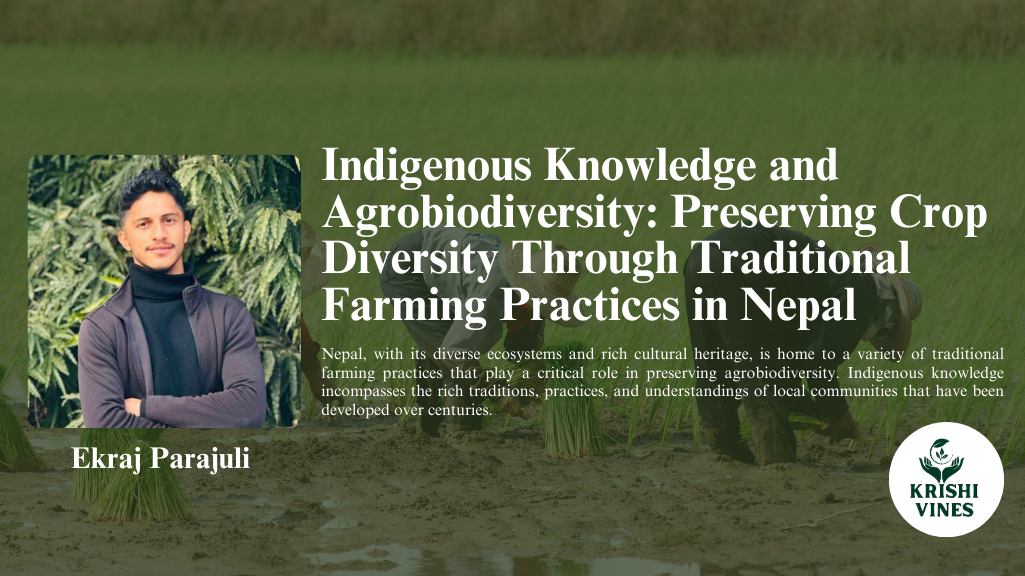
Agrobiodiversity, defined as the variety of plants, animals, and microorganisms essential for sustaining agricultural ecosystems is vital for resilience against environmental changes, food security, and ecological balance (FAO, 2020). Nepal, with its diverse ecosystems and rich cultural heritage, is home to a variety of traditional farming practices that play a critical role in preserving agrobiodiversity. Indigenous knowledge encompasses the rich traditions, practices, and understandings of local communities that have been developed over centuries. Indigenous knowledge, passed down through generations, enables local farmers to cultivate a wide array of crops that are adapted to their specific environments. This knowledge plays a crucial role in promoting agrobiodiversity, which is essential for sustainable agriculture, food security, and ecosystem health.
The Importance of Agrobiodiversity
Agrobiodiversity, the variety and variability of crops and livestock within agricultural systems, holds significant importance for Nepal due to its unique ecological, cultural, and economic contexts. It supports ecosystem services, enhances soil health, and contributes to the nutritional diversity of food systems (Duncan, 2021). Diverse cropping systems can better withstand pests and diseases, adapt to climate variability, and reduce reliance on chemical inputs (Altieri, 2018). Thus, maintaining agrobiodiversity is essential for sustainable agricultural practices and global food.
Traditional Farming Practices
Nepal’s traditional farming systems, shaped by its diverse geography and rich cultural heritage, play a vital role in preserving agrobiodiversity. These systems incorporate indigenous knowledge and practices that have been honed over generations, fostering a wide variety of crops and livestock. Traditional farming systems in Nepal are crucial for preserving agrobiodiversity, providing food security, and sustaining local cultures. By maintaining diverse crop varieties and utilizing sustainable practices, these systems enhance resilience against environmental changes and promote ecological balance. Supporting and revitalizing traditional agricultural practices is essential for the future of Nepal’s agricultural landscape and its rich biodiversity.
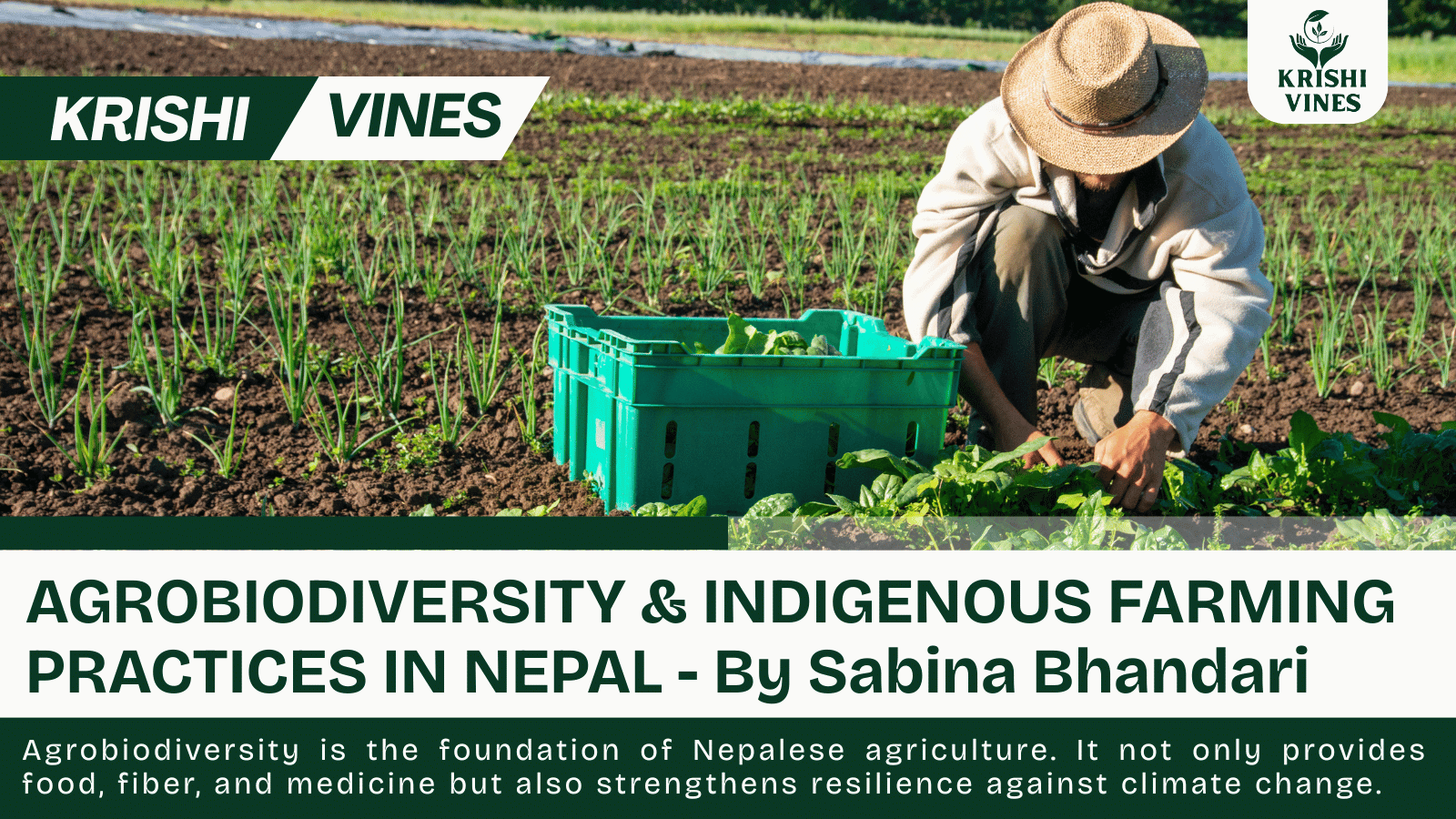
Indigenous farmers in Nepal employ a variety of traditional farming techniques that are well-suited to the local context. Methods such as intercropping (growing multiple crops in proximity), crop rotation, and the use of organic fertilizers not only enhance soil health but also promote biodiversity. These practices help mitigate the impact of pests and diseases, reducing reliance on chemical inputs.
Indigenous communities worldwide utilize various traditional farming practices that foster agrobiodiversity:
- Seed Saving and Sharing
Indigenous farmers often engage in seed saving, preserving heirloom varieties that are adapted to local conditions. This practice ensures genetic diversity and enhances resilience to environmental changes (Kloppenburg, 2018). - Intercropping and Companion Planting
Traditional systems frequently employ intercropping and companion planting, where multiple crops are grown together. This approach maximizes land use, enhances biodiversity, improves soil health, and reduces pest pressures (Naylor, 2020). - Agroforestry
Integrating trees and shrubs into agricultural landscapes, agroforestry systems promote biodiversity while providing additional resources such as fruits, nuts, and timber (Smith et al., 2019). - Cultural Practices and Rituals
Many indigenous cultures incorporate spiritual and cultural practices that respect the land and its resources, fostering a deep connection to agricultural biodiversity (Davis, 2020).
Challenges to Indigenous Practices and Agrobiodiversity
Despite their importance, traditional farming systems in Nepal face several significant challenges that threaten agrobiodiversity.
- Modernization and Industrial Agriculture
The shift towards monoculture and synthetic inputs undermines the diversity inherent in traditional systems (Pretty, 2018). - Climate Change
Changing climate conditions threaten the viability of traditional crops and practices, posing risks to food security (IPCC, 2021). - Loss of Indigenous Knowledge
Urbanization and globalization contribute to the erosion of indigenous agricultural practices and knowledge systems (Berkes, 2018).
Preservation of Indigenous Knowledge
To preserve agrobiodiversity, several strategies can be implemented:
- Support Local Communities
Empowering indigenous communities through policy frameworks that recognize their rights, and knowledge is crucial for sustainable practices (FAO, 2020). - Integrate Traditional Practices into Modern Agriculture
Combining indigenous methods with scientific research can lead to sustainable agricultural practices that benefit both farmers and ecosystems (Morrison, 2019). - Education and Awareness
Promoting awareness of the value of traditional practices among younger generations is essential for their continuation (Haverkort & Millar, 2020). - Community-Based Initiatives
Local organizations are working to document traditional farming practices and promote the cultivation of diverse crops. These initiatives empower communities to take charge of their agricultural heritage.
- Policy Support
Government policies can play a significant role in encouraging the preservation of traditional farming practices. Providing incentives for sustainable agriculture and protecting indigenous seeds can bolster efforts to maintain agrobiodiversity.
Conclusion
Indigenous knowledge offers invaluable insights into sustainable agricultural practices that promote agrobiodiversity. The preservation of crop diversity through traditional farming practices in Nepal is essential for food security and cultural heritage. Celebrating and preserving agrobiodiversity is not just about conserving nature; it is about sustaining the livelihoods and cultures of indigenous peoples around the world. By integrating indigenous knowledge with modern agricultural approaches, Nepal can enhance its resilience to climate change and market pressures. Protecting agrobiodiversity not only sustains local communities but also contributes to global efforts in achieving sustainable development and food security.
References
- Altieri, M. A. (2018). Agroecology: The Science of Sustainable Agriculture. CRC Press.
- Berkes, F. (2018). Sacred Ecology. Routledge.
- Davis, M. A. (2020). Indigenous perspectives on agricultural biodiversity. Journal of Ethnobiology, 40(3), 482-498.
- Duncan, M. (2021). The role of biodiversity in sustainable food systems. Sustainability, 13(4), 2246.
- FAO. (2020). The State of the World’s Biodiversity for Food and Agriculture. Food and Agriculture Organization of the United Nations.
- Haverkort, B., & Millar, D. (2020). The role of education in preserving indigenous knowledge. Indigenous Knowledge and Research, 12(1), 23-38.
- IPCC. (2021). Climate Change 2021: The Physical Science Basis. Intergovernmental Panel on Climate Change.
- Kloppenburg, J. (2018). The impacts of seed sovereignty on biodiversity. Agricultural and Human Values, 35(2), 269-280.
- Morrison, J. (2019). Integrating indigenous practices into modern agriculture. Agriculture and Human Values, 36(2), 253-265.
- Naylor, R. L. (2020). Intercropping and its role in sustainable agriculture. Ecological Applications, 30(5), e02147.
Pretty, J. (2018). Sustainable Intensification in Agricultural Systems. Springer.