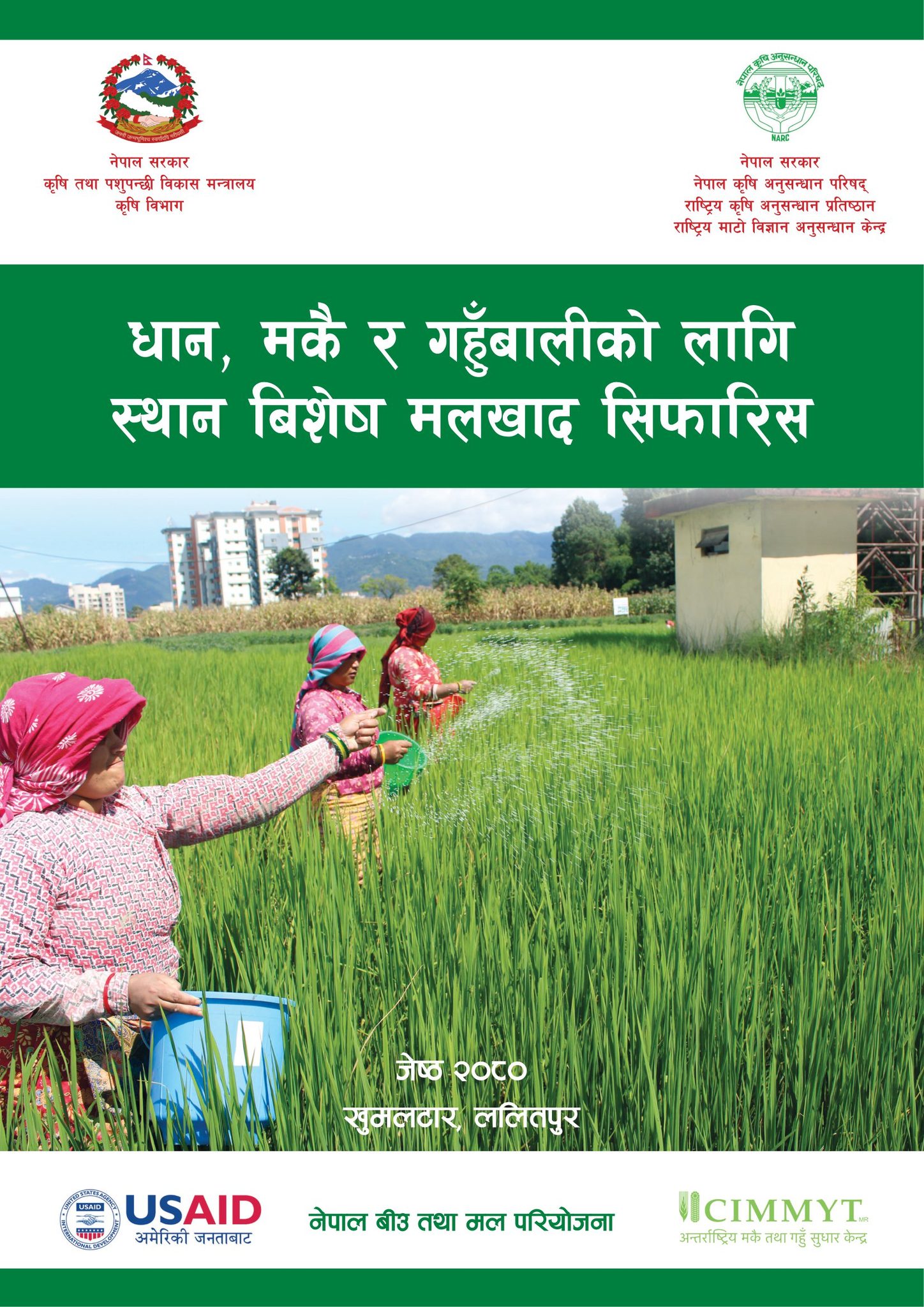
Introduction: An innovative and updated site-specific recommended nutrient dose (RDF) method should implement to grow rice, maize, and wheat, marking a significant advancement in Nepal’s agricultural industry. This ground-breaking strategy aims to transform farming methods, maximize crop yields, and guarantee nationwide sustainable agricultural growth.
Optimizing Nutrient Management: Recognizing the crucial role that nutrients play in crop production, researchers and agricultural specialists in Nepal have worked together to create a new site-specific RDF system that is suited to the unique needs of the crops that are grown there, including rice, maize, and wheat. This complex method considers several variables, such as crop characteristics, climatic circumstances, and soil composition, to give farmers accurate and personalized nutrition recommendations.
Increased Crop Yields: Farmers may now optimize the use of fertilizers and other nutrient inputs, reducing waste and maximizing the efficiency of crop nutrient uptake by putting this cutting-edge site-specific RDF technique into practice. This tailored strategy guarantees that each field receives the correct quantity and mix of fertilizers, improving crop yields and increasing overall output.
Promotion of Sustainable Agricultural Practices in Nepal: Introducing site-specific RDF is a critical step in that direction. The technique helps prevent nitrogen imbalances, eliminates excessive fertilizer use, and reduces environmental effects, including nutrient runoff and soil degradation, by customizing nutrient administration to the unique needs of each field. This strategy benefits long-term agricultural sustainability and the preservation of soil fertility and biodiversity.
Collaborative Work: In Nepal, agricultural research institutions, governmental organizations, and farming communities worked together to construct the updated site-specific RDF system. The RDF guidelines have been developed and validated by specialists from various sectors, including agronomy, soil science, and agricultural engineering, through extensive field experiments and research investigations.
Farmers in Nepal will gain from installing this cutting-edge nutrient management system in several ways. By implementing site-specific RDF, farmers can anticipate better crop output, improved product quality, lower input costs, and fewer environmental effects. This method equips farmers with the information and resources needed to improve their agricultural operations, make informed decisions, and use the available resources best.
Future Possibilities:
The new site-specific RDF system for rice, maize, and wheat will successfully implement, which will pave the way for further improvements in precision agriculture in Nepal. It paves the path for developing comparable tailored nitrogen management strategies for other crops, encouraging effective and sustainable farming methods nationwide. Agriculture in Nepal has a bright future if technology, data-driven decision-making, and scientific knowledge are combined.
Implementing an upgraded site-specific RDF system for wheat, maize, and rice represents a crucial turning point for Nepal’s agricultural industry. This ground-breaking strategy aims to revolutionize fertilizer management, boost agricultural yields, and advance environmentally friendly farming methods. With the cooperation of all parties and the use of cutting-edge techniques, Nepal is ready to realize its agricultural sector’s full potential and ensure its farming community’s prosperity.