Impact of change of biodiversity on agriculture in Nepal – By Sundar Adhikari || Krishi Vines

Changes in biodiversity significantly impact agriculture in Nepal, where farming is closely connected to the country’s ecosystems. Nepal’s landscape, from the lowland Terai plains to the Himalayan mountains, supports a rich variety of species that influence agricultural productivity. Here’s how shifts in biodiversity affect farming: 1. Decline of Pollinators Pollinators like bees, butterflies, and other…
Read More

Impact of Climate Change on Agro-Biodiversity in Nepal – By Samraksha Ghimire || Krishi Vines

Introduction Nepal, with its diverse topography and climate, hosts a rich array of agro-biodiversity. This diversity includes various crops, livestock, and traditional farming practices that have evolved over centuries. However, climate change poses significant threats to this invaluable resource. Rising temperatures, erratic rainfall patterns, and increased frequency of extreme weather events jeopardize agricultural productivity and…

Read More

How Monoculture is Threatening Agrobiodiversity and Our Future ? – By Upendra Bhusal || Krishi Vines

Introduction In fields across the world, a quiet but dangerous trend is spreading. As far as the eye can see, rows upon rows of identical crops dominate the landscape—fields of corn, wheat, rice, or soybeans stretch endlessly. This practice, known as monoculture, involves growing the same crop year after year on the same land. While…

Read More

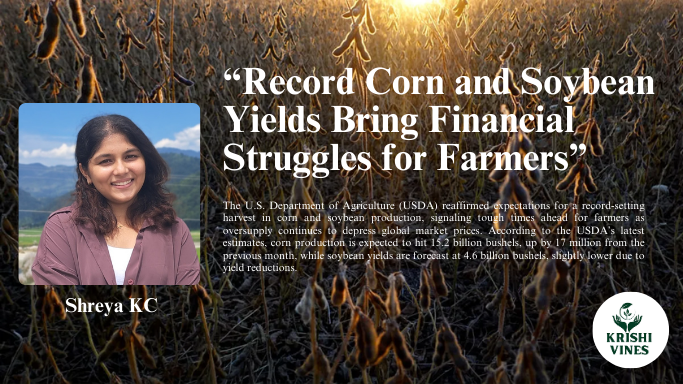
Record Corn and Soybean Yields Bring Financial Struggles for Farmers – By Shreya KC || Krishi Vines

The U.S. Department of Agriculture (USDA) reaffirmed expectations for a record-setting harvest in corn and soybean production, signaling tough times ahead for farmers as oversupply continues to depress global market prices. According to the USDA’s latest estimates, corn production is expected to hit 15.2 billion bushels, up by 17 million from the previous month, while…

Read More

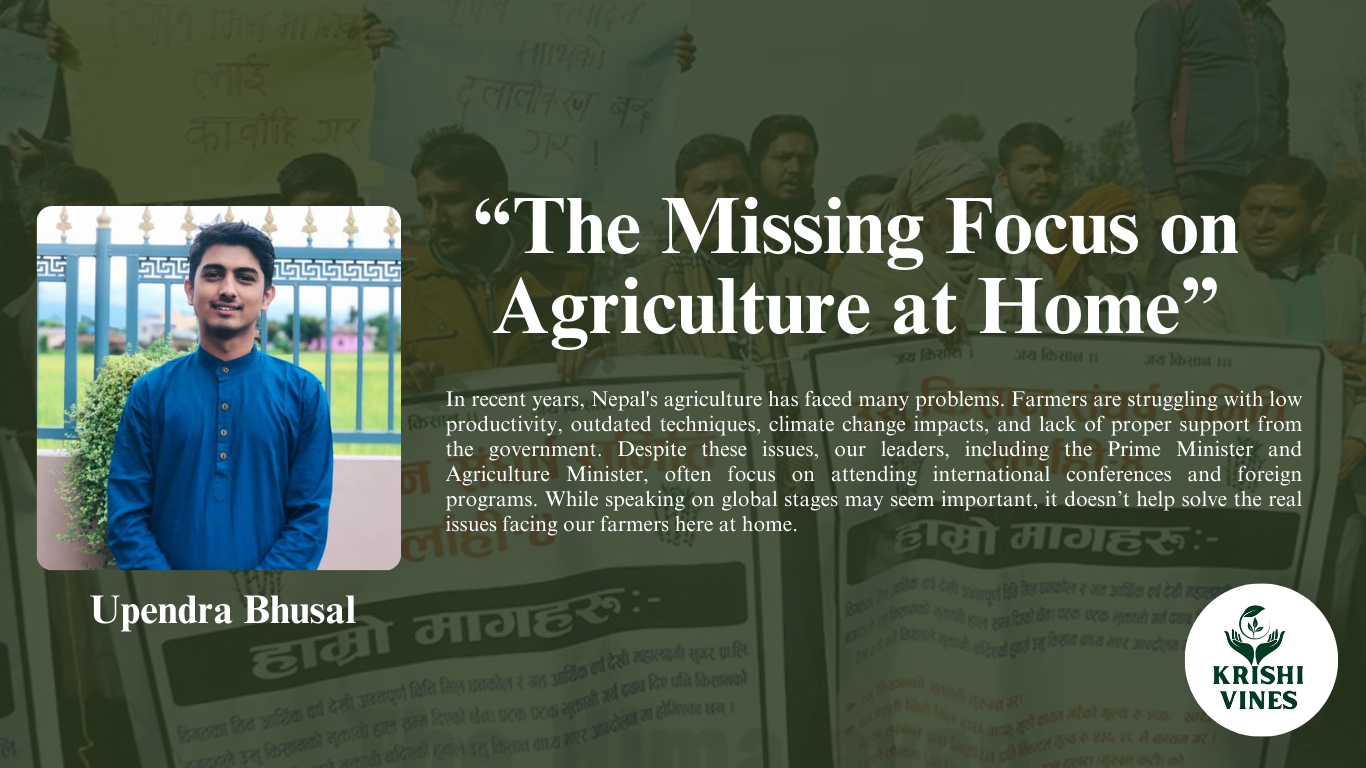
“The Missing Focus on Agriculture at Home” – By Upendra Bhusal

In recent years, Nepal’s agriculture has faced many problems. Farmers are struggling with low productivity, outdated techniques, climate change impacts, and lack of proper support from the government. Despite these issues, our leaders, including the Prime Minister and Agriculture Minister, often focus on attending international conferences and foreign programs. While speaking on global stages may…

Read More
Innovation, Irrigation

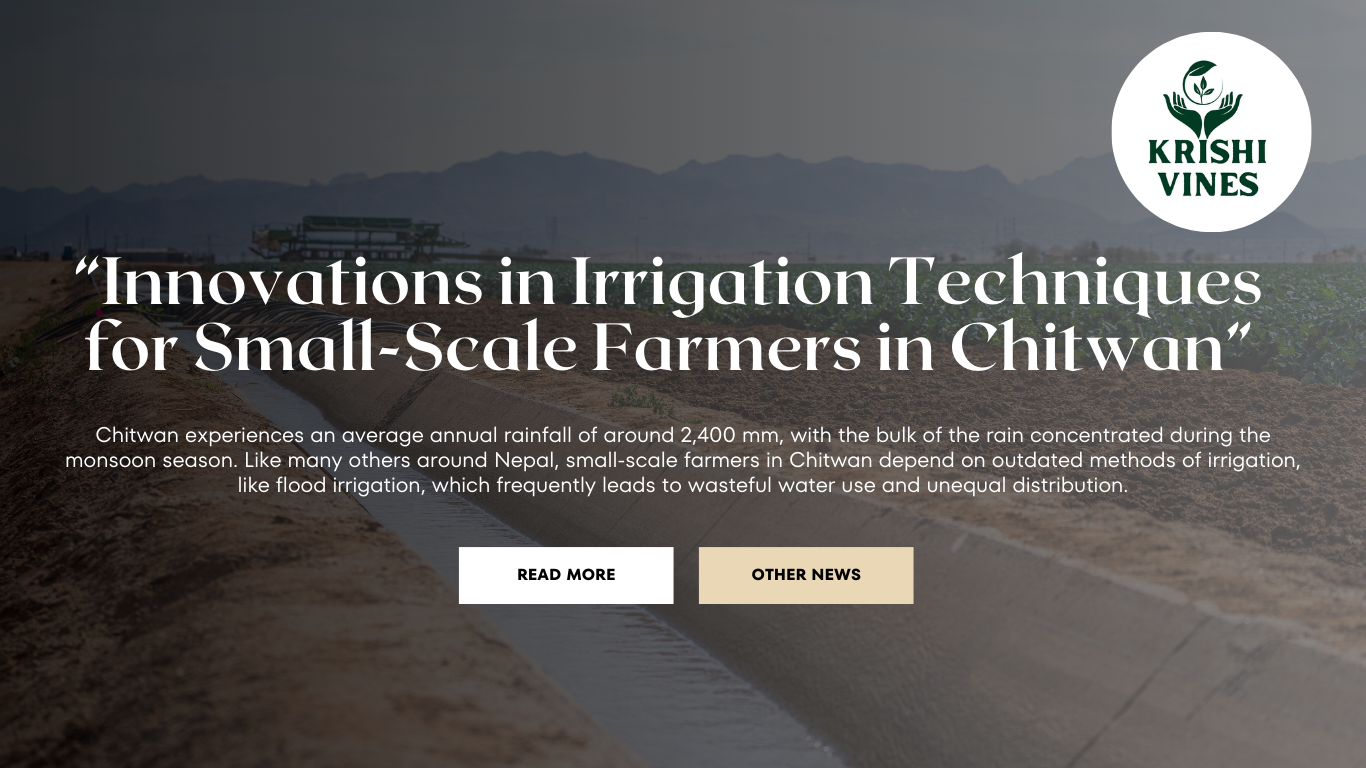
Innovations in Irrigation Techniques for Small-Scale Farmers in Chitwan – By Avishek Rimal || Krishi Vines

Introduction For small-scale farmers in Nepal, especially in the Terai region where irrigation is crucial to agriculture, one of the biggest concerns is managing water resources. Smallholder farmers in Chitwan, which is renowned for its fertile soil and varied crop output, frequently clash with water scarcity and ineffective irrigation infrastructure, which reduce agricultural productivity. The…

Read More
Krishi Vines

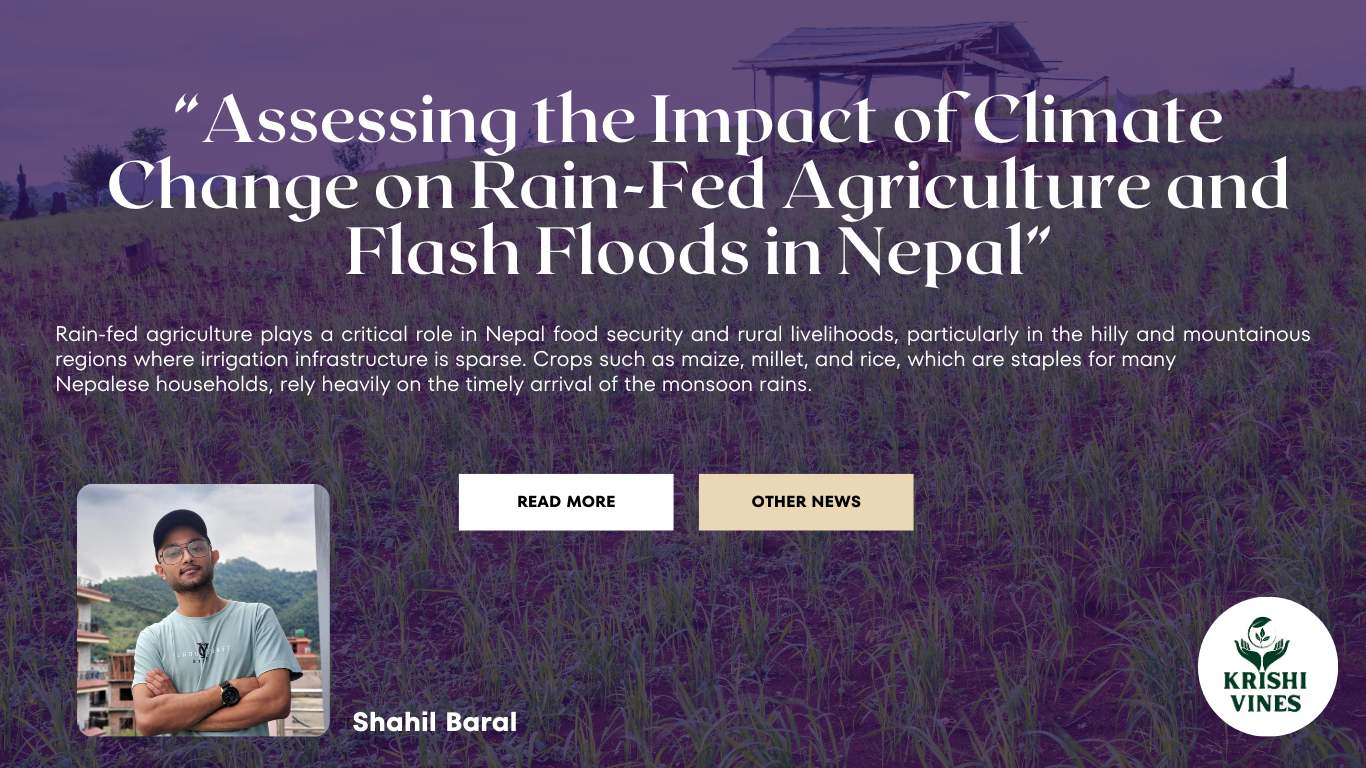
“Assessing the Impact of Climate Change on Rain-Fed Agriculture and Flash Floods in Nepal” – By Shahil Baral || Krishi Vines

IntroductionNepal relies heavily on agriculture, with more than 60% of its population depending on farming. The majority practice rain-fed agriculture, which is particularly vulnerable to climate change. Recent shifts in weather, such as inconsistent rainfall and more frequent flash floods, are beginning to disrupt traditional farming methods (Ministry of Agriculture Development, 2019; ICIMOD, 2021). These…

Read More

Bhakimli Farmers Launch Commercial Akabare Chilli Farming – By Upendra Bhusal || Krishi Vines

Farmers in Bhakimli, Beni Municipality-3, Myagdi, have initiated the district’s first commercial-scale cultivation of the Akabare (Dalle) variety of chili peppers. According to Sanjeev Bastola, the head of the Agricultural Knowledge Center Myagdi, both individual farmers and farmer collectives in Bhakimli are now engaged in the systematic cultivation of Akabare chilies. He highlighted the region’s…

Read More

IAAS INDIA to conduct Thrilling Conference on Millets: Transforming Food Systems and Climate Resilience

The United Nations General Assembly has declared 2023 as the International Year of Millets (IYM 2023), recognizing the importance of these small-seeded grasses in global agriculture. Millets serve as vital cereal crops and grains for both animal feed and human consumption, with significant cultivation taking place in the semiarid tropics of Asia and Africa. Given…

Read More

“French Farmers Advocate for Holistic Approach to Mitigate CO2 Emissions in Agriculture”

Introduction: In a recent article published on Euronews, French farmers have emphasized that simply reducing the number of cows is not an effective solution for curbing CO2 emissions. These farmers argue that a more comprehensive approach is necessary to address the environmental impact of agriculture and mitigate greenhouse gas emissions effectively. The Complexity of CO2…

Read More
Back To Top