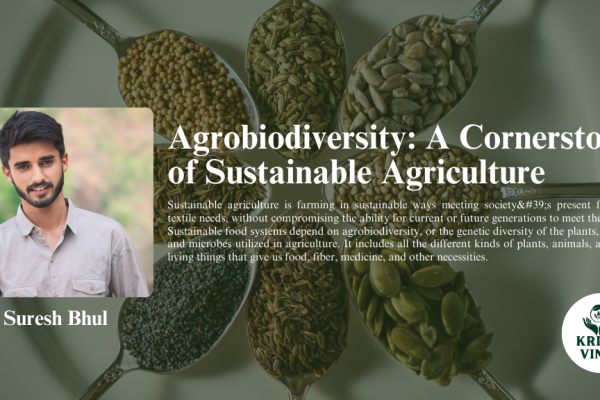
Agrobiodiversity: A Cornerstone of Sustainable Agriculture – By Suresh Bhul || Krishi Vines

Introduction: Sustainable agriculture is farming in sustainable ways meeting society’s present food and textile needs, without compromising the ability for current or future generations to meet their needs. Sustainable food systems depend on agrobiodiversity, or the genetic diversity of the plants, animals, and microbes utilized in agriculture. It includes all the different kinds of plants, animals, and other living things…

Read More

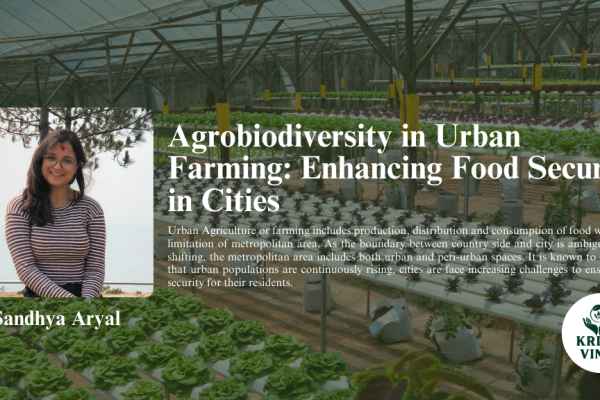
Agrobiodiversity in Urban Farming: Enhancing Food Security in Cities – By Sandhya Aryal || Krishi Vines

Urban Agriculture or farming includes production, distribution and consumption of food within the limitations of metropolitan areas. As the boundary between countryside and city is ambiguous and shifting, the metropolitan area includes both urban and peri-urban spaces. It is known to everyone that urban populations are continuously rising, and cities are facing increasing challenges to…

Read More

“Sustainable Agriculture and Agro biodiversity: Pathways to Reducing Nepal’s Carbon Footprint” – By Chandra Dev Pathak || Krishi Vines

Abstract Nepal, a largely agricultural nation, faces the challenges of climate change and environmental degradation, with agriculture contributing to its carbon footprint. However, by adopting sustainable farming practices that promote agro biodiversity, the country can mitigate carbon emissions while enhancing resilience to climate impacts. Sustainable agriculture such as agroforestry, organic farming, and conservation tillage can…

Read More
Krishi Vines

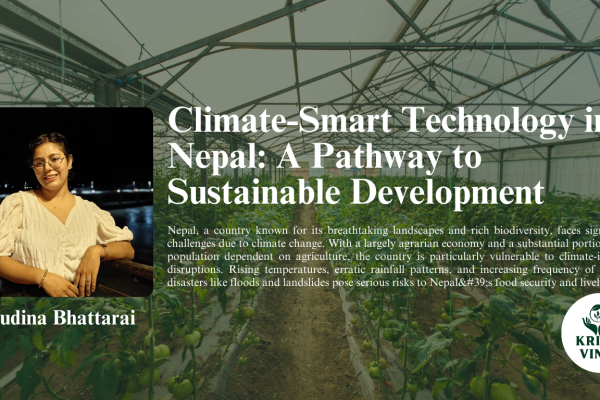
Climate-Smart Technology in Nepal: A Pathway to Sustainable Development – By Rudina Bhattarai || Krishi Vines

Introduction Nepal, a country known for its breathtaking landscapes and rich biodiversity, faces significant challenges due to climate change. With a largely agrarian economy and a substantial portion of its population dependent on agriculture, the country is particularly vulnerable to climate-induced disruptions. Rising temperatures, erratic rainfall patterns, and increasing frequency of natural disasters like floods…

Read More

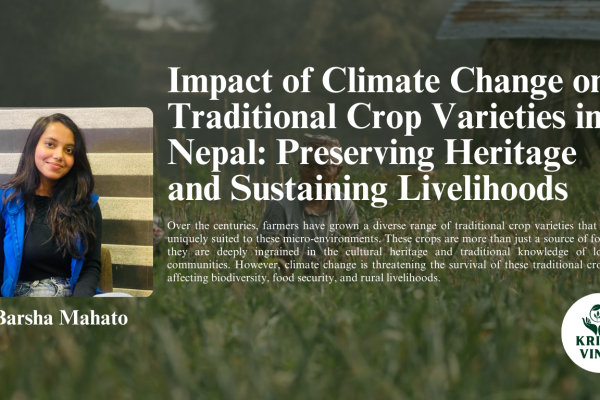
Impact of Climate Change on Traditional Crop Varieties in Nepal: Preserving Heritage and Sustaining Livelihoods – By Barsha Mahato || Krishi Vines

Nepal’s agricultural landscape is rich and diverse, shaped by its diverse topography and climate, which ranges from the subtropical Terai plains to the temperate hills and frigid mountain regions. Over the centuries, farmers have grown a diverse range of traditional crop varieties that are uniquely suited to these micro-environments. These crops are more than just…

Read More

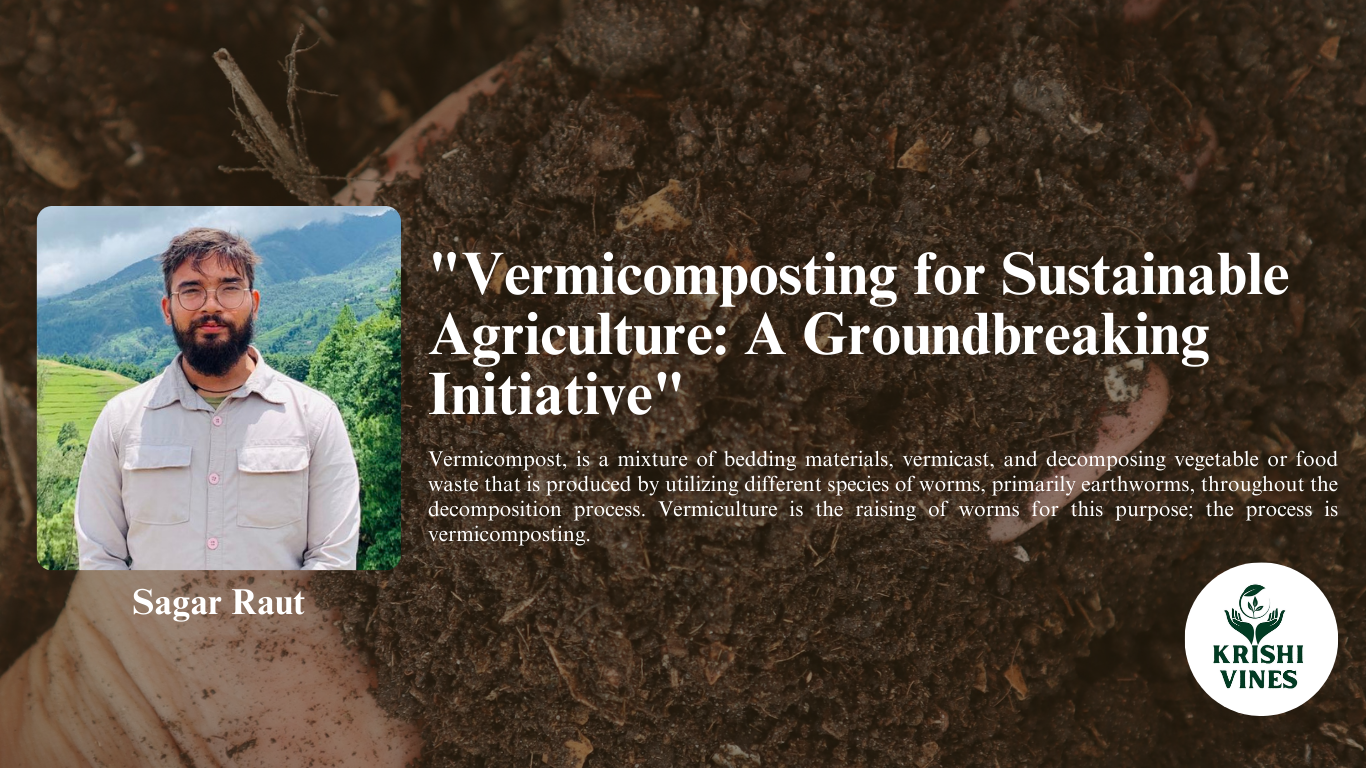
“Vermicomposting for Sustainable Agriculture: A Groundbreaking Initiative” – By Sagar Raut || Krishi Vines

Vermicompost, is a mixture of bedding materials, vermicast, and decomposing vegetable or food waste that is produced by utilizing different species of worms, primarily earthworms, throughout the decomposition process. Vermiculture is the raising of worms for this purpose; the process is vermicomposting. An eco-friendly, low-tech method for handling organic waste is called vermicomposting(Wachob et al.,…

Read More

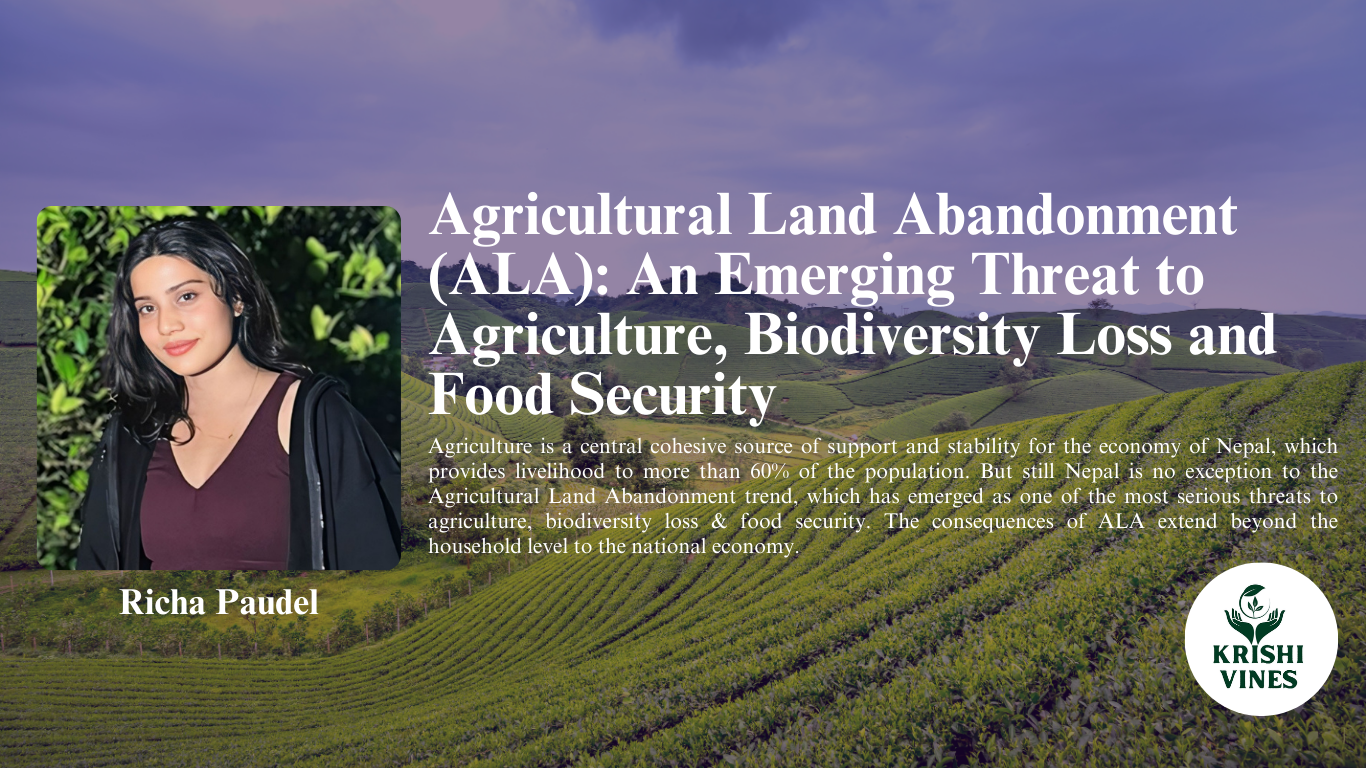
Agricultural Land Abandonment (ALA): An Emerging Threat to Agriculture, Biodiversity Loss and Food Security – By Richa Paudel || Krishi Vines

Agriculture is a central cohesive source of support and stability for the economy of Nepal, which provides livelihood to more than 60% of the population. But still Nepal is no exception to the Agricultural Land Abandonment trend, which has emerged as one of the most serious threats to agriculture, biodiversity loss & food security. The…

Read More

Rising Temperatures, Falling Yields: The Climate Change-Food Security Nexus – By Prabhat Gautam || Krishi Vines

Climate change poses a significant threat to global food security, impacting the availability, access, utilization, and stability of food systems. As temperatures rise and weather patterns become increasingly unpredictable, the agricultural sector faces numerous challenges that jeopardize food production and exacerbate hunger, particularly in vulnerable communities. The Current State of Food Security The number of…

Read More

The Role of Pollinators in Agrobiodiversity: Protecting Bees, Butterflies, and Beyond – By Ujjwal Gurung || Krishi Vines

Introduction Pollinators—bees, butterflies, moths, birds, bats, and even some small mammals—play a crucial, often overlooked role in maintaining biodiversity and ensuring the productivity of agricultural systems worldwide. In fact, over 75% of flowering plants, including about 35% of food crops, rely on pollinators for reproduction. As the global population grows and food demand increases, maintaining…

Read More

Climate Change in Nepal: Consequences, Causes, and Solutions – By Mamta Banstola || Krishi Vines

Nepal, a country rich in natural resources, faces countless damages from natural disasters. During the monsoon season, floods, landslides, and forest fires caused by excessive flows of rivers like the Rapti and Koshi inundate human settlements and farmland, resulting in significant losses every year. The issues related to these natural disasters are exacerbated by climate…

Read More
Back To Top