Introduction
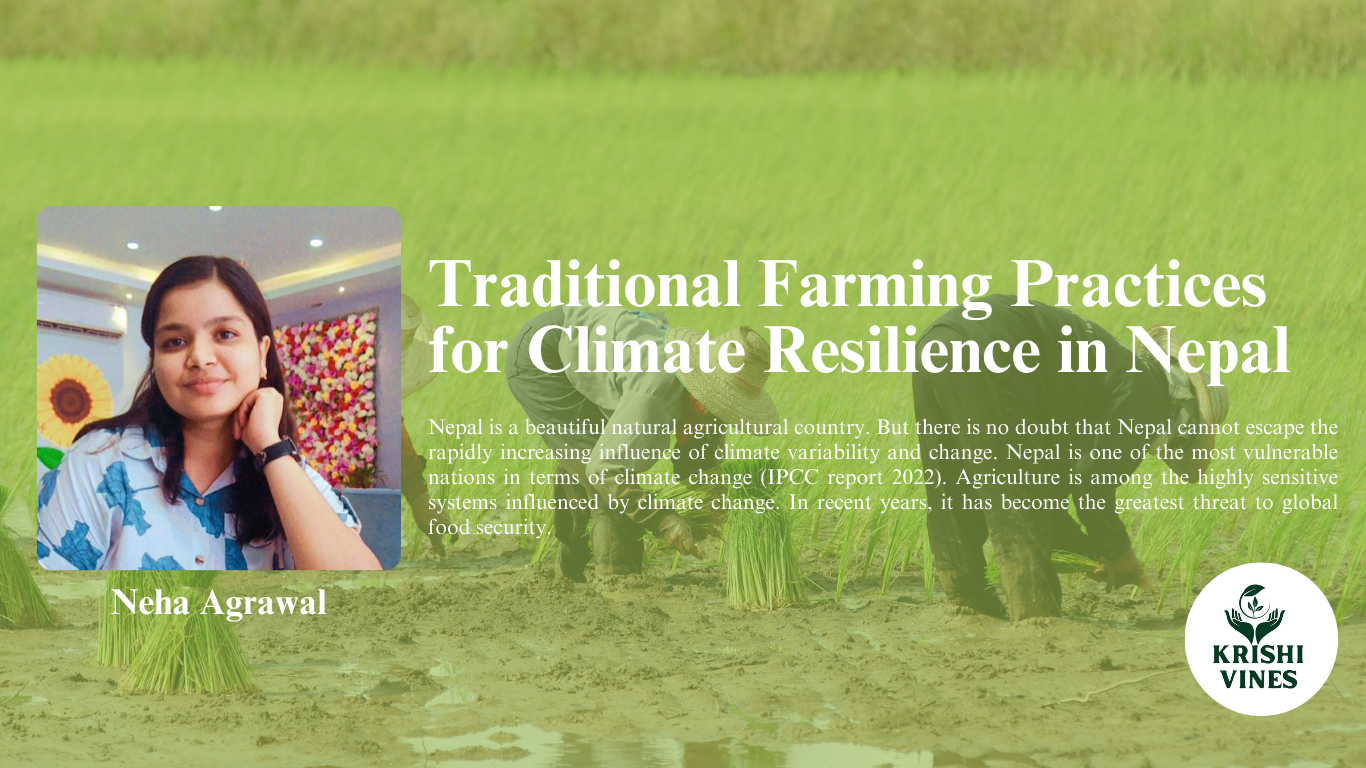
Nepal is a beautiful natural agricultural country. But there is no doubt that Nepal cannot escape the rapidly increasing influence of climate variability and change. Nepal is one of the most vulnerable nations in terms of climate change (IPCC report 2022). Agriculture is among the highly sensitive systems influenced by climate change. In recent years, it has become the greatest threat to global food security. Climate change results in a decline in food production and consequently rising food prices and decreasing people’s economics. To adapt to these climate change risks, our traditional agriculture practices help local communities a lot. Traditional agriculture practices have regained the increased attention worldwide as a climate-smart approach. High productivity, biodiversity conservation, low energy inputs are some salient features of the traditional agriculture systems. Traditional agroecosystems are recognized as the time-tested models of modern sustainable agriculture.
Some traditional agriculture practices:
Traditional farming in Nepal is characterized by a deep understanding of local biodiversity and ecosystems. These practices not only sustain livelihoods but also preserve cultural heritage and enhance agricultural resilience. Some of them are as follow:
- Agroforestry: Agroforestry is a practice of planting trees with crops to exploit the ecological and economic interactions of different components. Indigenous forestry practices help in conservation of forest species and ecosystem. It helps to induce animal husbandry. Trees are the most beneficial element of nature. It helps in carbon sequestration, water retention, reduces the severity of extreme weather events, as windbreaks and shelterbelt and many more.
- Crop Diversity: In Nepal, farmers grow a broad range of crops, such as different vegetables and legumes, as well as staple grains like rice, maize, and millet. The chance of a complete crop failure as a result of pests, diseases, or climate fluctuation is decreased by this diversity.
- Agroecological Practices: Conventional methods including agroforestry, mixed cropping, and intercropping are frequently used. These methods strengthen soil health, encourage biodiversity, and make people more resilient to harsh weather.
- Indigenous Knowledge: Local farmers have important information about crop varieties that are suitable for certain microclimates, soil types, and seasonal variations. Because of this knowledge, they can modify their farming methods in response to environmental variables that are detected.
Important Conventional Methods for Climate Resilience
- Terrace farming is a common practice that lowers soil erosion and water runoff in Nepal’s hilly regions. Farmers may maintain soil moisture and grow a variety of crops on sloped terrain by leveling the ground, guaranteeing food security and preserving soil resources.
- Crop rotation and intercropping: To preserve soil fertility and break pest cycles, farmers frequently rotate their crops. Growing several crops at once, or intercropping, improves resilience and biodiversity. For instance, when maize and beans are grown together, the beans are able to fix nitrogen in the soil, which is advantageous to both crops.
- Traditional Seed Saving: By conserving heirloom cultivars that are more suited to regional conditions, many communities practice seed saving. In addition to promoting genetic variety, this approach guarantees farmers access to crop types that are adaptable to climate change.
- Organic Fertilization: To improve the soil’s structure and nutrient content, farmers apply organic fertilizers like compost and animal dung. During dry seasons, crop productivity depends on these natural additives’ ability to improve soil health and retain moisture.
- Water Management Techniques: In areas where water shortage is becoming a greater concern, traditional water management techniques such check dam construction and rainfall harvesting are essential. By capturing and storing water for irrigation, these methods help guarantee that crops may flourish even in arid seasons.
Examples of Nepalese Indigenous Customs
The Rice-Wheat System: Many native farmers in Nepal’s mid-hills use a rice-wheat rotation that makes use of regional cultivars that are suited to particular microclimates. This method promotes biodiversity, increases soil fertility, and guarantees a consistent supply of food.
Agroforestry in the Terai: Indigenous groups in the Terai region use fruit trees, like guava and mango, as part of their agricultural practices. This agroforestry method improves soil health and promotes wildlife habitats in addition to offering more food sources.
The Kathmandu Valley’s Newars: The Newar people use their traditional understanding of the microclimates in the area to cultivate rice and vegetables in a distinctive way. By emphasizing crop rotation and biodiversity, this approach enables farmers to sustain yields in the face of shifting weather patterns.
The Tharu Community in the Terai: The Tharu people use agroforestry and permaculture concepts together with a combination of traditional and contemporary methods. In addition to increasing resistance to pests and diseases, growing a variety of fruit trees alongside crops offers extra food and revenue streams.
The Tamang Community: The Tamang people in the Langtang area have created a mixed farming system that consists of crops, cattle, and medicinal herbs. This integration lessens susceptibility to climate-related shocks and permits a varied revenue source.
Challenges to Traditional Knowledge and practices
Although traditional methods have their advantages, Nepal’s indigenous farming systems confront a number of difficulties, such as:
Climate Change: Crop yields and traditional livelihoods are under risk due to more unpredictable weather patterns and catastrophic events.
Land Use Changes: Traditional farming regions are being encroached upon by urbanization and industrial agriculture, which is resulting in the loss of cultural practices and biodiversity.
Policy Neglect: Local knowledge systems are undermined by government policies that frequently favor contemporary farming methods over traditional ones.
Conclusion
Biodiversity and traditional knowledge are priceless resources for tackling Nepal’s climate issues. Generation-old indigenous farming methods provide practical approaches to resilience and adaptability. Policymakers and development organizations can contribute to the preservation of biodiversity and the cultural legacy of Nepal’s indigenous populations by acknowledging and promoting these activities. Integrating ancient knowledge with contemporary agricultural techniques may be essential to guaranteeing food security and sustainability for future generations in a fast-changing climate.