Abstract
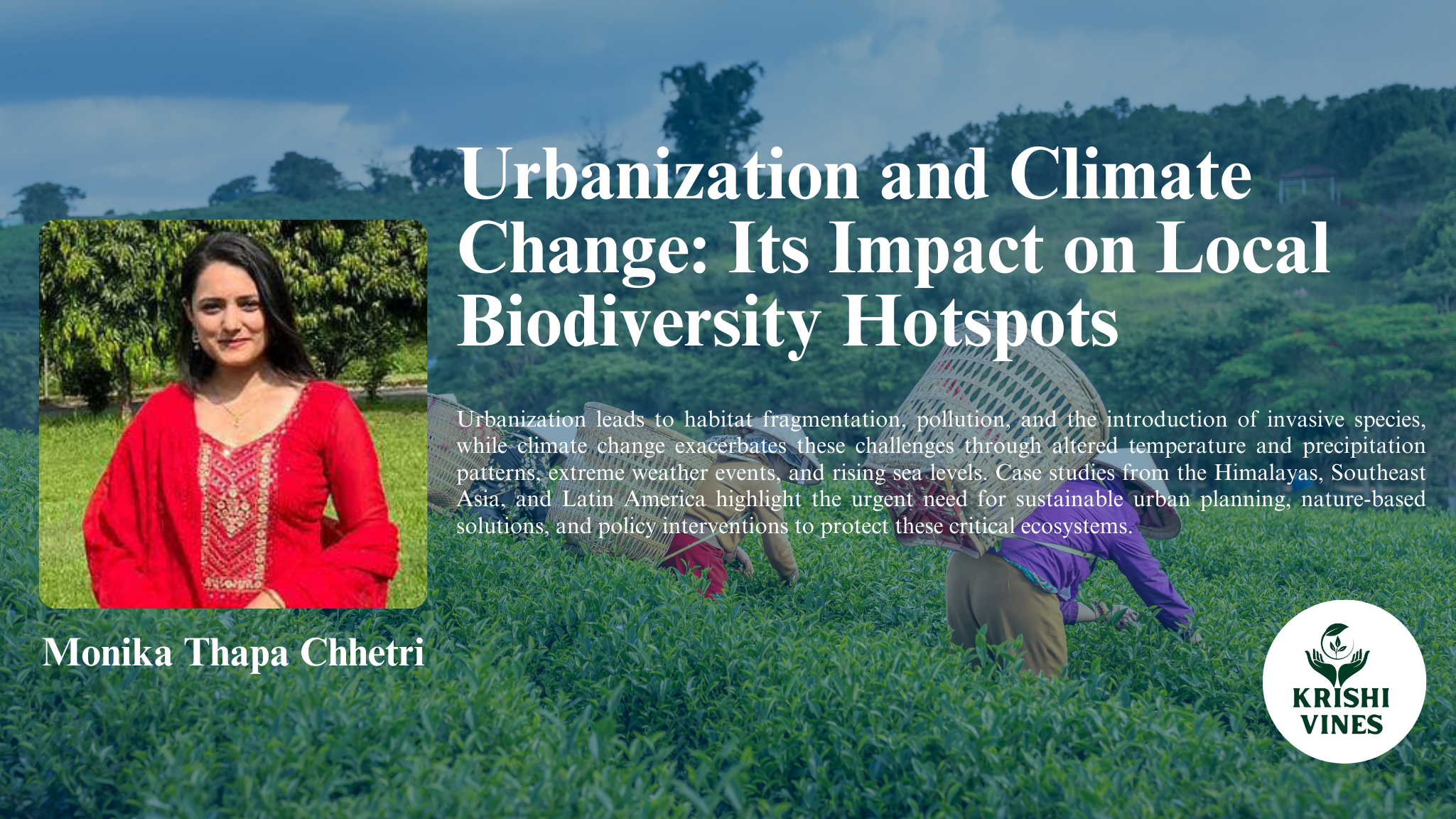
Urbanization leads to habitat fragmentation, pollution, and the introduction of invasive species, while climate change exacerbates these challenges through altered temperature and precipitation patterns, extreme weather events, and rising sea levels. Case studies from the Himalayas, Southeast Asia, and Latin America highlight the urgent need for sustainable urban planning, nature-based solutions, and policy interventions to protect these critical ecosystems. Immediate action is required to preserve biodiversity and ensure the continued provision of essential ecosystem services.
I. Introduction
Urbanization, the process by which cities grow and rural areas are developed, has accelerated dramatically over the past few decades. As more people move into cities, the demand for land, infrastructure, and resources increases, leading to widespread land-use changes. Climate change, caused by the accumulation of greenhouse gases in the atmosphere, is also having profound effects on the natural world, altering ecosystems and threatening the survival of many species.
Biodiversity hotspots, areas that are rich in species diversity and endemic species but are also under severe threat, are particularly vulnerable to these changes. As urbanization expands into these areas and the effects of climate change intensify, the consequences for biodiversity are profound. This article explores how the combination of urbanization and climate change is impacting biodiversity hotspots around the world, with an emphasis on the need for sustainable solutions to mitigate these effects.
II. Urbanization and Its Effects on Biodiversity
A. Habitat Fragmentation
One of the primary ways urbanization impacts biodiversity is through habitat fragmentation. As cities expand, natural habitats are broken up into smaller, isolated patches. This fragmentation prevents species from moving freely across landscapes, reduces genetic diversity, and increases the risk of extinction. For example, many species require large, continuous territories for hunting, mating, or migration. When habitats are divided by urban development, these species lose access to critical resources and face increased competition and predation.
B. Pollution
Urbanization also introduces various forms of pollution that affect local biodiversity. Air pollution from vehicles and industries can alter plant physiology and reduce the health of ecosystems, while water pollution from runoff and sewage can degrade freshwater habitats, leading to declines in aquatic species. Light pollution disrupts nocturnal wildlife, interfering with animal behavior, such as navigation, hunting, and mating. Noise pollution similarly affects species that rely on vocal communication, such as birds and amphibians.
C. Invasive Species
Urban areas often act as hubs for the introduction of invasive species. Non-native plants and animals introduced through trade, tourism, or landscaping can outcompete native species for resources. For example, urban gardens and parks may introduce ornamental plants that escape into the wild and displace local flora. Invasive species disrupt local ecosystems by altering food webs, preying on native species, or introducing diseases.
D. Loss of Ecosystem Services
Ecosystem services, such as pollination, water purification, and carbon sequestration, are essential for human survival and the health of the planet. Urbanization reduces these services by degrading natural habitats. For example, the loss of forests and wetlands decreases the ability of ecosystems to store carbon, which contributes to global warming. The decline of pollinators, such as bees, in urban areas threatens food security, as many crops depend on pollination for fruit and seed production.
III. Impact of Climate Change on Biodiversity Hotspots
A. Changes in Temperature and Precipitation Patterns
Climate change is altering temperature and precipitation patterns across the globe, with significant effects on biodiversity hotspots. Species that are adapted to specific climate conditions may struggle to survive as their environments change. For instance, rising temperatures in tropical biodiversity hotspots, such as the Amazon rainforest, are leading to the migration of species to cooler areas. However, not all species can migrate, and those that cannot adapt quickly enough face extinction.
B. Increased Frequency of Extreme Weather Events
Extreme weather events, such as hurricanes, floods, droughts, and wildfires, are becoming more frequent and intense due to climate change. These events can devastate ecosystems, wiping out species and destroying habitats. In coral reef hotspots, for example, rising sea temperatures lead to coral bleaching, while extreme storms can physically damage reefs. Terrestrial hotspots, such as the Mediterranean, are experiencing more frequent wildfires, which can destroy large areas of forest and kill wildlife.
C. Ocean Acidification and Rising Sea Levels
For coastal biodiversity hotspots, climate change presents additional challenges, including ocean acidification and rising sea levels. Ocean acidification, caused by increased carbon dioxide absorption, affects marine species like mollusks and corals, which rely on calcium carbonate to build their shells and skeletons. Rising sea levels threaten coastal ecosystems, such as mangroves and salt marshes, which provide important habitat for many species and act as buffers against storm surges.
IV. Synergistic Effects of Urbanization and Climate Change on Biodiversity
A. Compounding Impacts on Habitat Loss
Urbanization and climate change together amplify habitat loss in biodiversity hotspots. Urban expansion reduces available natural areas, while climate change alters the remaining habitats. For example, urban heat islands—areas where temperatures are higher due to human activities—can make cities inhospitable for many species. When combined with habitat loss due to urbanization, this creates a double burden for wildlife.
B. Changes in Species Behavior and Migration Patterns
Species are being forced to adapt to the combined pressures of urbanization and climate change. Some animals are changing their behavior, such as altering migration patterns or shifting their active hours, to avoid the heat or human disturbances. Birds, for example, are migrating earlier in the year in response to changing climates, but in urban areas, they may struggle to find suitable habitats or food sources.
C. Disruption of Ecosystem Connectivity
Urban sprawl disrupts ecosystem connectivity by breaking up wildlife corridors, which are essential for species migration and genetic exchange. As climate change forces species to move to new areas, the fragmentation caused by cities makes it harder for them to find suitable habitats. This increases the risk of local extinctions, particularly for species that require large, connected territories.
V. Case Studies of Local Biodiversity Hotspots Impacted by Urbanization and Climate Change
A. Example 1: Himalayan Biodiversity under Threat
The Himalayas are one of the world’s most biodiverse regions, home to many endemic species. However, urbanization in foothill regions, combined with climate change-induced glacial melting and shifting monsoon patterns, is threatening species like the snow leopard and Himalayan blue poppy. Habitat loss due to expanding infrastructure projects exacerbates the pressures these species face.
B. Example 2: Coastal Biodiversity in Southeast Asia
In Southeast Asia, rapid urban development along coastlines is endangering marine biodiversity hotspots. Coral reefs and mangrove forests are being destroyed to make way for tourist resorts and urban infrastructure. Simultaneously, rising sea levels and ocean acidification are further threatening these fragile ecosystems, leading to declines in fish populations that are vital for local economies and food security.
C. Example 3: Tropical Rainforests and Urban Encroachment in Latin America
Tropical rainforests in Latin America, particularly the Amazon, are under increasing threat from urban encroachment and deforestation. Cities are expanding into these biodiversity-rich areas, and combined with the effects of climate change—such as prolonged droughts and fires—the rainforests are losing their capacity to support wildlife. Iconic species like jaguars and toucans are losing their habitats at an alarming rate.
VI. Conservation Strategies to Mitigate Urbanization and Climate Change Impacts
A. Sustainable Urban Planning
To reduce the impact of urbanization on biodiversity, cities can implement sustainable urban planning practices. This includes designing cities with green spaces, wildlife corridors, and nature reserves integrated into the urban landscape. Urban planners can also prioritize eco-friendly infrastructure, such as green roofs, permeable surfaces, and sustainable transportation systems, to reduce the environmental footprint of cities.
B. Nature-Based Solutions
Nature-based solutions, such as reforestation, wetland restoration, and urban greening projects, offer promising ways to combat both urbanization and climate change. These solutions help restore biodiversity, mitigate climate change impacts, and provide ecosystem services like water filtration and carbon storage. For example, planting trees in urban areas can reduce heat islands and provide habitat for local wildlife.
C. Policy Interventions
Governments and international organizations must enforce policies that promote urban sustainability while protecting biodiversity. Policies that regulate land use, prevent illegal deforestation, and support conservation efforts are essential. The creation of protected areas and biodiversity corridors, especially in biodiversity hotspots, can help safeguard species against the pressures of urbanization and climate change.
D. Role of Local Communities and Indigenous Knowledge
Local communities and indigenous peoples are often the best stewards of biodiversity. Incorporating their knowledge and practices into conservation strategies can lead to more sustainable and culturally appropriate solutions. Community-driven conservation initiatives, such as managing local forests or creating community-protected areas, have been successful in preserving biodiversity while promoting livelihoods.
VII. Conclusion
The combined forces of urbanization and climate change are putting immense pressure on biodiversity hotspots around the world. Habitat loss, pollution, invasive species, and changing climate conditions are threatening species at an unprecedented rate. However, through sustainable urban planning, nature-based solutions, effective policy interventions, and the involvement of local communities, it is possible to mitigate these impacts and protect the world’s most valuable ecosystems.
Safeguarding biodiversity hotspots is not only essential for preserving the planet’s natural heritage but also for maintaining the ecosystem services that humans rely on. Immediate and concerted action is needed to address the challenges posed by urbanization and climate change, ensuring a future where both nature and people can thrive.