Introduction
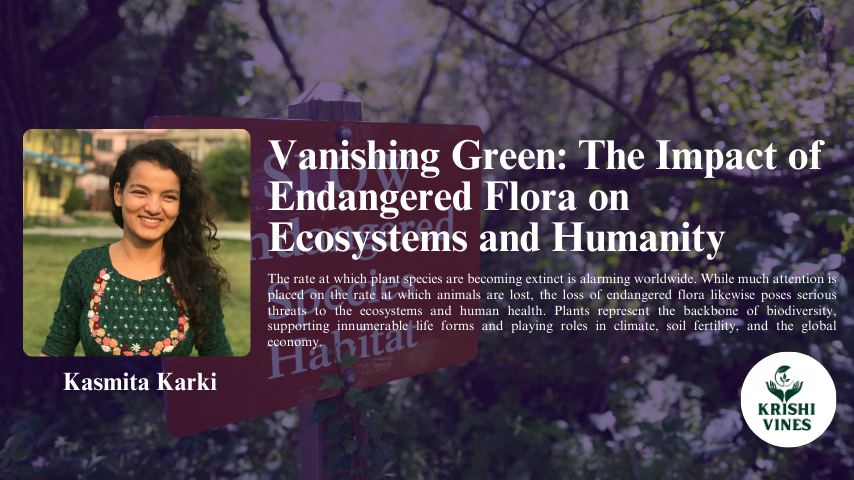
The rate at which plant species are becoming extinct is alarming worldwide. While much attention is placed on the rate at which animals are lost, the loss of endangered flora likewise poses serious threats to the ecosystems and human health. Plants represent the backbone of biodiversity, supporting innumerable life forms and playing roles in climate, soil fertility, and the global economy. The wanton and continuing destruction of endangered flora threatens to unravel complete ecosystems and destabilize human societies dependent on these plants for food, medicine, and livelihood. This article considers the integral role played by endangered flora, the causes of their demise, and the wide-reaching effects of their loss.
The Ecological Importance of the Endangered Flora
These plants are important in maintaining the health of the ecosystems through vital functions that support other species, including humans.
Ecosystem Balance: Plants are the primary food chain providers, standing at the bottom of the ladder in energy flow; they feed herbivores, which in turn feed carnivorous and omnivorous species. Plants are members of complex food chains; therefore, their removal can disrupt such chains, resulting in losses in the food web. For instance, the extinction of plant species which are sources of nectar for pollinators would have inevitable population declines in those bees responsible for important pollination functions for other plant species.
Soil and Water Conservation: Vegetation, through the use of their roots, prevents or reduces soil erosion and plays an important role in the regulation of the water cycle. With the eradication of plants, especially in rainforests and wetlands, land becomes degraded and deserts appear, causing a decrease in the rate of water retention and consequently affecting agriculture and the supply of freshwater.
Climate Control: Most especially, plants play a very critical role in the sequestration of the greenhouse gas carbon dioxide that contributes to global warming. Forests, but most especially tropical rainforests, are major sinks of carbon and are being destroyed, thereby accelerating climate change.
The Economic and Medicinal Value of Endangered Plants
Another critical reason for taking fast and serious measures toward conservation is the immense economic and medicinal value that lies with the endangered flora.
Medicinal Plants: More than one-quarter of all modern medicines are plant-based. The endangered species, such as the Pacific yew tree, that provided the anticancer drug Taxol, serves as only one example of the vast unrecognized potential of plants in pharmaceutical applications. Many plant species may go extinct before their medicinal properties are fully known, thus preventing the discovery of future lifesaving drugs.
Agriculture and Livelihoods: Many of the threatened plants with extinction form part of traditional agriculture and, by extension, the local economy. In many cases where local communities rely on certain species of plants for food, shelter, and economic reasons, the loss of such species threatens a way of life.
Ecotourism: Plant diversity, especially in hotspots of biodiversity, improves ecotourism-a sector with economic benefits for the local communities. The loss of unique flora may reduce a region’s ecological attraction; thus, there is reduced tourism revenue.
Causes of Flora Destruction
Human activities are to blame for such rapid decline in plant species. Several elements come together to cause this ongoing loss. Some of the major reasons are:
Deforestation and Urbanization: This refers to the large-scale clearing of forests for agriculture, wood, and for the expansion of cities. This leads to the destruction of habitats, which is considered the leading cause of plant extinction. The conversion of forested areas into farms or cities reduces the number of habitats where plant species can survive, hence causing fragmentation in ecosystems.
Climate Change: Due to the increase in temperature and weather anomalies, plants do not evolve fast enough to outlive the rapid change. All changes to the rainfall pattern, together with the increase in frequent drouths, are pushing some of these species towards extinction. In areas like alpine and arctic regions, warming up of temperature is driving species towards higher altitudes, where they get exhausted with suitable habitat.
Illegal Harvesting and Exploitation: The most influential factor affecting the rare plant species is their illegal collection due to their rarity and commercial value. This was applied to orchids, cacti, and medicinal plants, which are being collected unsustainably and resulting in population decline.
Pollution and Habitat Degradation: Those industrial activities causing pollution of air, water, and soil ultimately result in negative impacts on plant health. For example, contaminants such as heavy metals and pesticides can reduce a plant’s ability to grow, reproduce, and resist disease.
Wide-Ranging Effects on Ecosystems and Humans
Loss of any kind of endangered flora is never a factor that exists in isolation; it, in fact, creates a ripple effect both within ecosystems and human societies.
Ecosystem Collapse: The loss of even a single plant species can cascade through an ecosystem. For example, the extinction of a so-called keystone species, a plant that other species depend on, can even lead to the collapse of whole food webs.
Impact on Agriculture and Food Security: Loss of plant diversity affects crop resilience, thus making agricultural systems more susceptible to diseases, pests, and climate change. Wild relatives, a store of genes against diseases and for the tolerance of crops under adverse climatic conditions, have begun to disappear before they could be utilized to build resilience into agriculture.
Cultural and Spiritual Loss: Most of the threatened plants provide traditional or spiritual value for indigenous peoples. Their disappearance will be result in the loss of traditional knowledge and erosion of culture. Besides, the economic losses of the destruction of plant-rich ecosystems, like rainforests and wetlands, are long-term, and industries dependent upon them, from pharmaceuticals to ecotourism, eventually will be hurt as biodiversity is reduced.
Conservation Initiatives and Remedies
Despite the gloomy prognosis, there are still efforts to rescue endangered plants, and some of them sound promising:
Conservation Reserves and Protected Areas: Isolation of plant habitats from human activity through protected areas like national parks and nature reserves contributes a great deal in the conservation of biodiversity.
Seed Banks and Botanical Gardens: The Millennium Seed Bank is one such project which saves the seeds of plants that are considered to be threatened; these can then be used to procreate those plants for the next generation.
Agroforestry and permaculture go hand in hand with planting trees to increase yields in agriculture and soil health, at the same time encouraging biodiversity.
International Agreements: Conventions such as CITES, Convention on International Trade in Endangered Species, and CBD, Convention on Biological Diversity, attempt to regularize the use of endangered flora and extend the conservation effort across borders.
Conclusion
It has been a catastrophe that involves ecosystems, economics, and cultures worldwide. It is not simply an environmental issue, as plants are at the very core of life on Earth; their loss has dramatic effects on all aspects of human life. However, coordinated conservation efforts, combined with sustainable practices and collaboration across borders, can slow or even reverse the damage. As the fate of nature and mankind are intertwined, care and protection of the plants in danger would be tantamount to preserving life for everybody.
References
1. Ecological Society of America. “The Importance of Plants in Ecosystems.”
2. Pollinator Partnership. “The Role of Pollinators in Biodiversity.”
3. World Wildlife Fund. “Forest Loss and Its Impact on Soil and Water.”
4. Intergovernmental Panel on Climate Change (IPCC). “The Role of Forests in Climate Regulation.”
5. National Institutes of Health. “Medicinal Plants and Their Role in Modern Medicine.”
6. World Health Organization. “Endangered Plants and Their Potential Medicinal Uses.”
7. United Nations Development Programme. “Indigenous Communities and Biodiversity Conservation.”
8. International Ecotourism Society. “Economic Benefits of Biodiversity Hotspots.”
9. Global Forest Watch. “Deforestation and Its Drivers.”
10. NASA Earth Observatory. “The Effects of Climate Change on Plant Habitats.”
11. National Geographic. “Alpine Plant Species and Climate Change.”
12. International Union for Conservation of Nature (IUCN). “Illegal Harvesting of Endangered Plants.”
13. Environmental Protection Agency (EPA). “The Impact of Pollution on Plant Life.”
14. Smithsonian Institution. “The Ecological Role of Keystone Species.”
15. Food and Agriculture Organization (FAO). “Biodiversity and Food Security.”
16. Conservation International. “The Cultural Importance of Endangered Plants.”
17. World Bank. “The Economic Impacts of Biodiversity Loss.”
18. National Park Service. “Protected Areas and Biodiversity Conservation.”
19. Royal Botanic Gardens, Kew. “Millennium Seed Bank: A Global Plant Conservation Effort.”
20. Agroforestry Research Trust. “Sustainable Agriculture and Biodiversity.”
21. Convention on Biological Diversity (CBD). “International Efforts to Conserve Endangered Plants.”