Article
The article categories in an agriculture website encompass a wide range of topics relevant to the agricultural industry. These categories often cover areas such as crop cultivation techniques, livestock management, agricultural machinery and technology, organic farming practices, soil health and fertility, pest and disease management, agricultural economics and markets, agricultural policy and regulations, sustainable agriculture, climate-smart farming, and agricultural research and innovation. These categories serve as a repository of valuable information and resources for farmers, agronomists, researchers, and individuals interested in various aspects of agriculture.
Carbon Farming: A Sustainable Approach To Atmospheric Carbon Sequestration – By Bramha Nand Kurmi || Krishi Vines
ABSTRACT The climate crisis is one of the most pressing global challenges today. Rising temperatures, extreme weather events, and biodiversity loss increasingly threaten ecosystems and human well-being. Agriculture, which contributes significantly to global greenhouse gas emissions, is both a cause of climate change and a potential solution. Carbon farming, a regenerative agricultural practice designed to…
Climate change Impact on Agro-Biodiversity in Nepal – By Ranjita Khadka || Krishi Vines
Introduction About 80% of the Nepalese population depend on agriculture for their livelihood, which is based on a rich diversity of useful species. The diversity of livestock (both improved and indigenous breeds) also plays a major role in contributing to the well-being of Nepalese communities. Agrobiodiversity, which is a vital sub-set of biodiversity playing a…

Understanding Community-Supported Agriculture: A Comprehensive Guide for Farmers – By Madan Simkhada || Krishi Vines
1. Introduction to Community-Supported Agriculture (CSA) 1.1 Definition of CSA Community-Supported Agriculture (CSA) A model that connects directly with consumers. By purchasing a share of the harvest season upfront, community members support local farms and, in return, receive fresh produce throughout the growing season. This unique approach helps reduce the risks farmers face while fostering…

Echoes of Nature: The Essential Call for Biodiversity Conservation – By Pawan Shrestha || Krishi Vines
1. Introduction Biodiversity, the intricate variety of life on Earth, encompasses species, ecosystems, and genetic diversity. It is the cornerstone of a healthy planet, supporting ecosystems that provide vital services such as clean air, water, food, and climate regulation. From rainforests to coral reefs, the richness of biodiversity forms the foundation of our existence and…
Climate Change Explained: The Forces Behind It and It’s Consequences – By Ashrim Dhital || Krishi Vines
Introduction: Understanding the climate change The long-term shifts in temperature and weather pattern is termed as climate change. The change can be natural due to disasters or artificial due to deforestation, unplanned urbanization, industrialization. Burning of fossil fuels generates a huge amount of greenhouse emissions that traps the sun rays causing the increase in temperature….
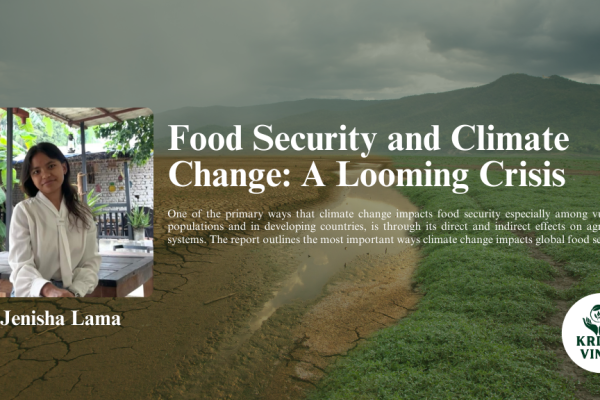
Food Security and Climate Change: A Looming Crisis – By Jenisha Lama || Krishi Vines
Climate Change and Food Security One of the primary ways that climate change impacts food security, especially among vulnerable populations and in developing countries, is through its direct and indirect effects on agricultural systems. The report outlines the most important ways climate change impacts global food security, including: Worsening of Extreme Weather Events: Increased global…
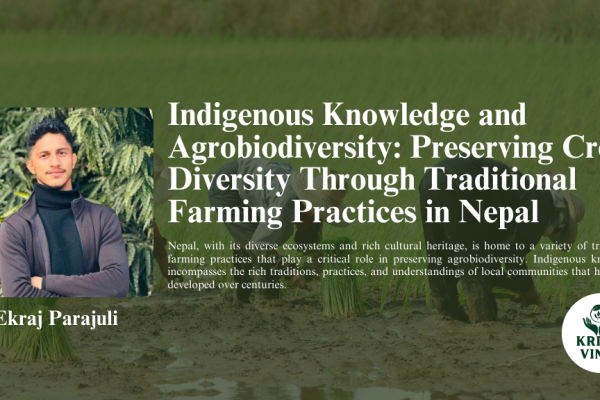
Indigenous Knowledge and Agrobiodiversity: Preserving Crop Diversity Through Traditional Farming Practices in Nepal – By Ekraj Parajuli || Krishi Vines
IntroductionAgrobiodiversity, defined as the variety of plants, animals, and microorganisms essential for sustaining agricultural ecosystems is vital for resilience against environmental changes, food security, and ecological balance (FAO, 2020). Nepal, with its diverse ecosystems and rich cultural heritage, is home to a variety of traditional farming practices that play a critical role in preserving agrobiodiversity….
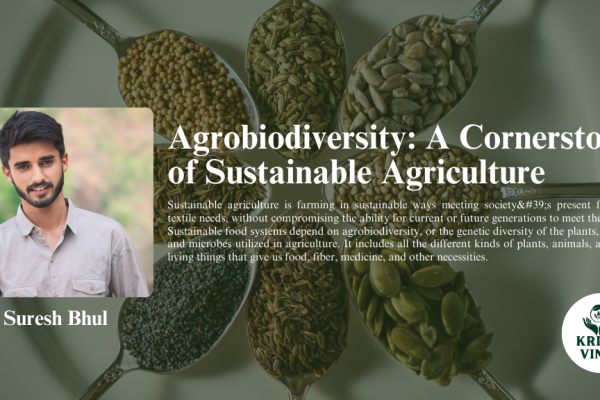
Agrobiodiversity: A Cornerstone of Sustainable Agriculture – By Suresh Bhul || Krishi Vines
Introduction: Sustainable agriculture is farming in sustainable ways meeting society’s present food and textile needs, without compromising the ability for current or future generations to meet their needs. Sustainable food systems depend on agrobiodiversity, or the genetic diversity of the plants, animals, and microbes utilized in agriculture. It includes all the different kinds of plants, animals, and other living things…
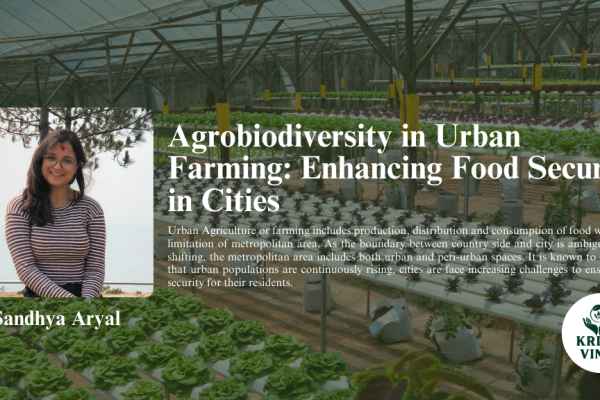
Agrobiodiversity in Urban Farming: Enhancing Food Security in Cities – By Sandhya Aryal || Krishi Vines
Urban Agriculture or farming includes production, distribution and consumption of food within the limitations of metropolitan areas. As the boundary between countryside and city is ambiguous and shifting, the metropolitan area includes both urban and peri-urban spaces. It is known to everyone that urban populations are continuously rising, and cities are facing increasing challenges to…
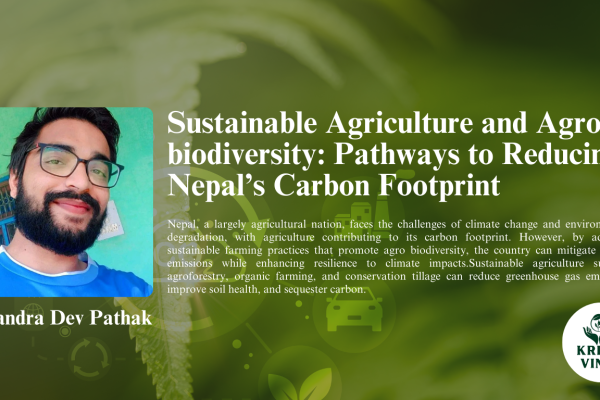
“Sustainable Agriculture and Agro biodiversity: Pathways to Reducing Nepal’s Carbon Footprint” – By Chandra Dev Pathak || Krishi Vines
Abstract Nepal, a largely agricultural nation, faces the challenges of climate change and environmental degradation, with agriculture contributing to its carbon footprint. However, by adopting sustainable farming practices that promote agro biodiversity, the country can mitigate carbon emissions while enhancing resilience to climate impacts. Sustainable agriculture such as agroforestry, organic farming, and conservation tillage can…