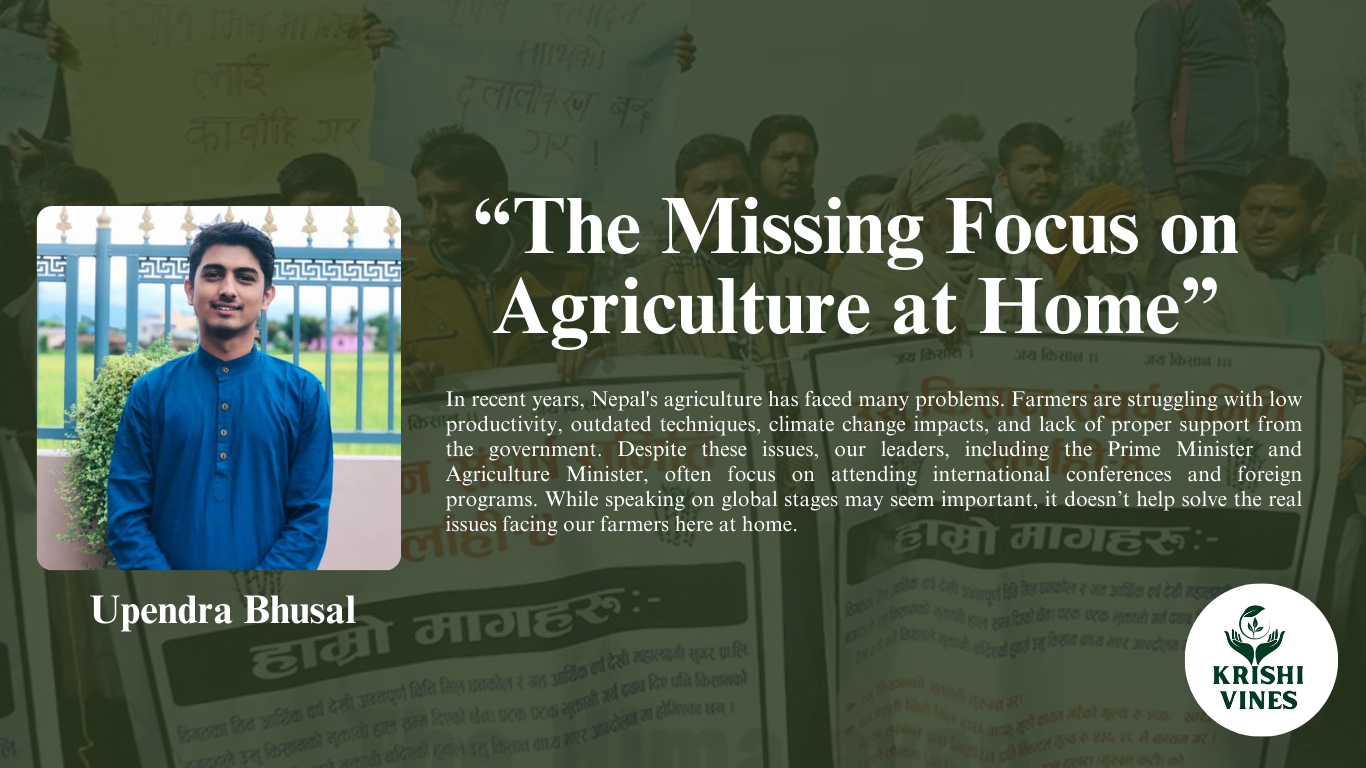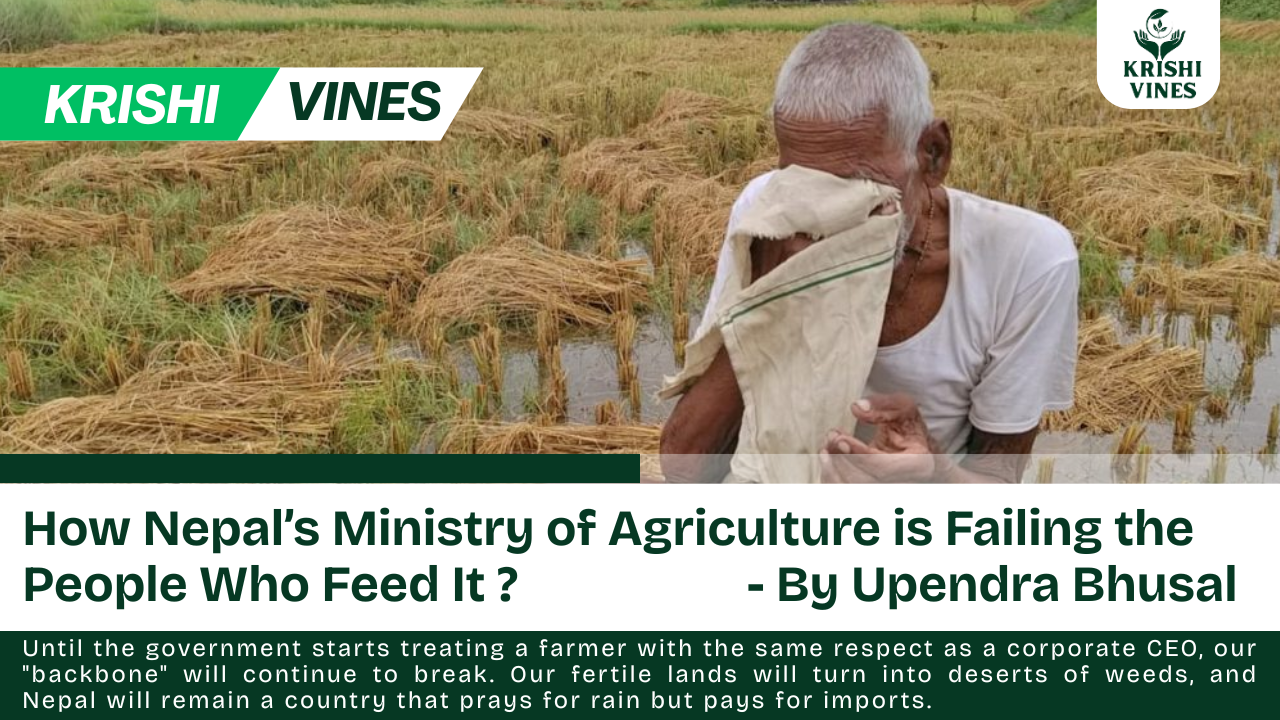
For decades, every politician in Nepal has stood behind a podium and recited the same tired script: “Agriculture is the backbone of our economy.” They throw out the big numbers – how it employs 60.4% of our people and contributes about 24% to our GDP – to make it sound like the sector is a national priority. But if you look at the actual budget and the empty plates of our farmers, the truth is far uglier. In reality, the Ministry of Agriculture has turned the “backbone” of Nepal into a neglected side project.
1. The Humiliation of Imports
While we have the fertile soil of the Terai and the sweat of millions of farmers, we are a nation that is eating someone else’s food. In the last fiscal year, Nepal’s total trade deficit reached a staggering Rs 1,400 Billion. A massive chunk of this comes from agriculture. We imported Rs 32 Billion worth of rice and paddy alone. Total agricultural imports have crossed Rs 300 Billion annually. Think about that: in a country where 6 out of 10 people are farmers, we are sending hundreds of billions of rupees to India and other countries for basic food items like onions, potatoes, and rice. We are not an “agricultural country”; we are a “food-importing country” that happens to have many farmers.
2. The Budget Lie: A “Fertilizer Office”
The biggest lie is found in the national budget. If agriculture is truly the priority, why does it receive only about 3% to 4% of the total national budget? At the Minister level, agriculture is treated like a charity case rather than a billion-dollar business.
Most of the money the Ministry does receive is wasted on a never-ending cycle of “fertilizer politics.” Over Rs 30 Billion—more than half of the entire agricultural budget – is swallowed up by chemical fertilizer subsidies. Because of this, the Ministry has stopped being a center for innovation and has become a “Fertilizer Procurement Office.” Even then, they fail. The government usually manages to supply only about 400,000 tons of fertilizer against a demand of 800,000 tons. This leaves farmers begging at the border or buying low-quality black-market supplies just to save their crops. By focusing almost 70-80% of its resources on one single input, the government is ignoring the real killers: lack of irrigation, poor seeds, and zero cold storage.
3. The Middleman Economy and the “Paper Farmer”
The lack of a “Market Guarantee” is the greatest insult to the Nepali farmer. We often see heartbreaking videos of farmers in Chitwan or the Terai throwing their tomatoes and milk onto the streets because they cannot get a fair price. While a farmer gets paid Rs 10 per kg for cabbage, the consumer in Kathmandu pays Rs 60 per kg. The difference – a massive 500% markup – goes into the pockets of middlemen while the Ministry sits silently.
Furthermore, the government’s “modernization” projects, like the Prime Minister’s Agriculture Modernization Project (PMAMP), look great on paper but fail in the mud. Millions of rupees in grants are handed out to “paper farmers” – people with political connections who have never held a spade—while the real workers are left with nothing.
4. The Human Cost: A Land of Weeds
Because the Ministry treats farmers with zero respect, our youth are voting with their feet. Every single day, nearly 2,500 to 3,000 young Nepalis leave the country through Kathmandu’s airport. Most are from rural farming families who have realized that farming in Nepal leads only to debt. Currently, over Rs 1.2 Trillion comes into Nepal as remittance – money sent home by youth working in the Gulf. This money is then used by their families to buy imported food. It is a deadly cycle: we export our youth to buy the food we should have grown ourselves.
The Solution: From “Relief” to “Revenue”
If the Minister wants to save this sector, the policy must change from giving “handouts” to creating “wealth.”
- Enforce a Minimum Support Price (MSP): The government must guarantee a price for crops before they are planted. If the market fails, the government must buy the produce.
- Infrastructure, Not Grants: Stop giving small cash grants that disappear into pockets. Spend that money on large-scale cold stores in every province and reliable irrigation for the 70% of land that still depends on rain.
- Stop the Fertilizer Monopoly: Invest in local organic fertilizer plants and diversify the budget so it isn’t entirely eaten up by chemical imports.
- Decentralize: The Ministry must stop hoarding power in Singha Durbar. The budget and experts must be moved to the local municipalities where the farming actually happens.
Until the government starts treating a farmer with the same respect as a corporate CEO, our “backbone” will continue to break. Our fertile lands will turn into deserts of weeds, and Nepal will remain a country that prays for rain but pays for imports.