admin

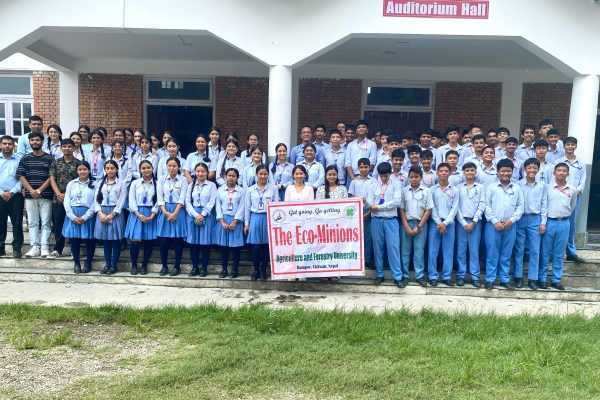
The Eco-Minions Host ‘BeeAware’ to Inspire Students on Apiculture and Sustainability

Chitwan, Nepal – [4th August, 2025] — The Eco-Minions (TEM), in collaboration with Small Heaven School, successfully organized “BeeAware: A Day of Learning & Quiz”, an interactive and educational program aimed at raising awareness about apiculture, sustainability, and environmental stewardship among students. The event, held in the school hall from 10:30 AM to 1:00 PM,…
Read More
Transforming Invasive weed into sustainable solutions: Biochar project in kaski, Nepal

Transforming Invasive weed into sustainable solutions: Biochar project in kaski, Nepal || Krishi Vine

In a groundbreaking initiative from IAAS Nepal, farmers in Macchapucchre Municipality, Kaski, Nepal, are turning the invasive weed Eupatorium adenophorum, locally known as Banmara or “forest killer,” into biochar to enhance soil health and combat agricultural challenge caused by the fluctuations of temperature. Eupatorium adenophorum also known as Banmara has rapidly colonized fertile lands in…

Read More

Role of birds in sustaining Agrobiodiversity – By Rebina Khanal || Krishi Vines

Birds play a varied role in enhancing agrobiodiversity, contributing to both the environment and agricultural productivity. Birds are crucial pollinators for various crops, with great impacts to agricultural yields. Species such as sunbirds are particularly important pollinators for citrus and mustard crops. By transferring the pollen from flower to flower, these birds help increase fruit…

Read More

Biodiversity Trails; Linking Trekking with Agrobiodiversity in Kaski – By Binayak Sigdel || Krishi Vines

Kaski, which stands in the shadow of the mighty Annapurna Range, is world-renowned for its picturesque landscapes, and tranquil lakes, and is a gateway to some of Nepal’s most popular trekking routes including Annapurna Circuit Trek, The Great Macchapuchre Trail, The Kori Trail The Poon Hill Trek, and so on. However, beyond its natural exquisiteness and adventure…

Read More

Indigenous Knowledge and Agrobiodiversity: Preserving Crop Diversity Through Traditional Farming Practices in Nepal – By Ekraj Parajuli || Krishi Vines

IntroductionAgrobiodiversity, defined as the variety of plants, animals, and microorganisms essential for sustaining agricultural ecosystems is vital for resilience against environmental changes, food security, and ecological balance (FAO, 2020). Nepal, with its diverse ecosystems and rich cultural heritage, is home to a variety of traditional farming practices that play a critical role in preserving agrobiodiversity….

Read More

“Sustainable Agriculture and Agro biodiversity: Pathways to Reducing Nepal’s Carbon Footprint” – By Chandra Dev Pathak || Krishi Vines

Abstract Nepal, a largely agricultural nation, faces the challenges of climate change and environmental degradation, with agriculture contributing to its carbon footprint. However, by adopting sustainable farming practices that promote agro biodiversity, the country can mitigate carbon emissions while enhancing resilience to climate impacts. Sustainable agriculture such as agroforestry, organic farming, and conservation tillage can…

Read More

Impact of Climate Change on Traditional Crop Varieties in Nepal: Preserving Heritage and Sustaining Livelihoods – By Barsha Mahato || Krishi Vines

Nepal’s agricultural landscape is rich and diverse, shaped by its diverse topography and climate, which ranges from the subtropical Terai plains to the temperate hills and frigid mountain regions. Over the centuries, farmers have grown a diverse range of traditional crop varieties that are uniquely suited to these micro-environments. These crops are more than just…

Read More

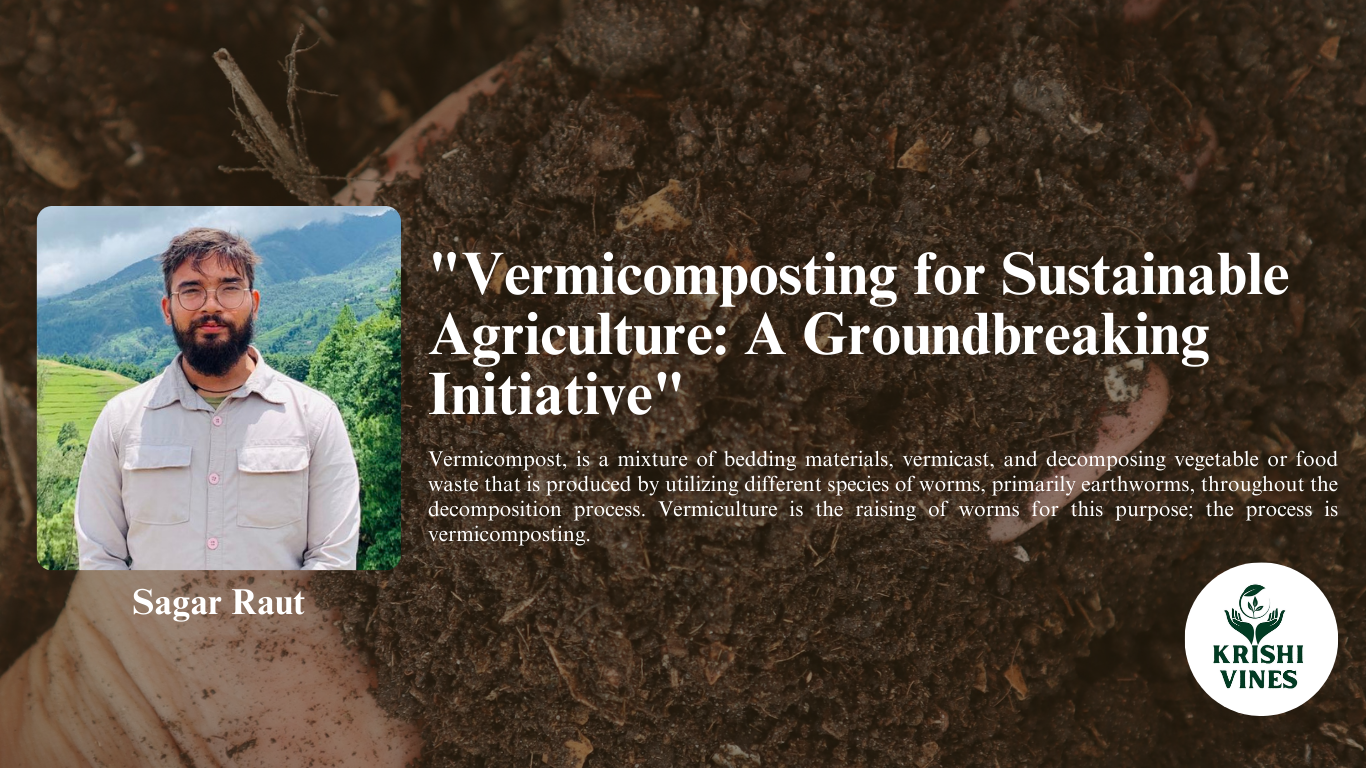
“Vermicomposting for Sustainable Agriculture: A Groundbreaking Initiative” – By Sagar Raut || Krishi Vines

Vermicompost, is a mixture of bedding materials, vermicast, and decomposing vegetable or food waste that is produced by utilizing different species of worms, primarily earthworms, throughout the decomposition process. Vermiculture is the raising of worms for this purpose; the process is vermicomposting. An eco-friendly, low-tech method for handling organic waste is called vermicomposting(Wachob et al.,…

Read More

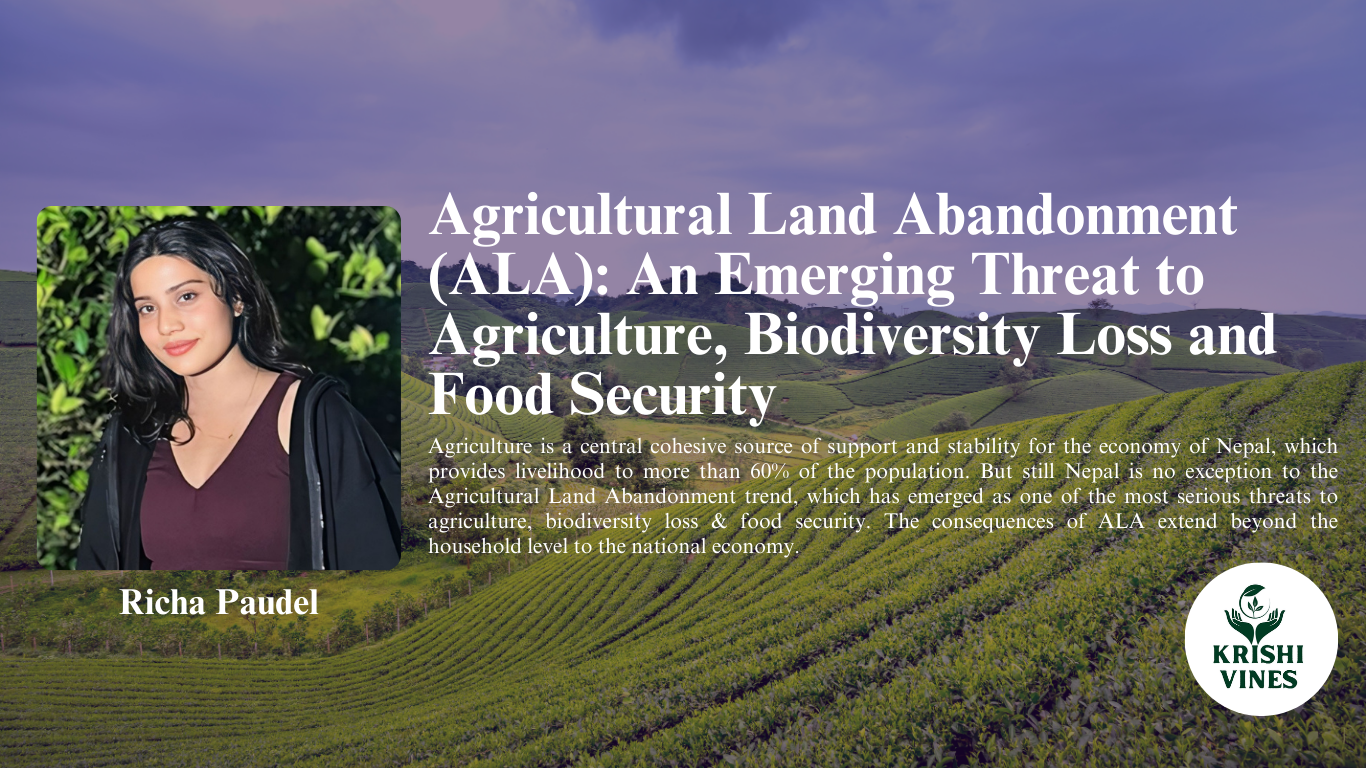
Agricultural Land Abandonment (ALA): An Emerging Threat to Agriculture, Biodiversity Loss and Food Security – By Richa Paudel || Krishi Vines

Agriculture is a central cohesive source of support and stability for the economy of Nepal, which provides livelihood to more than 60% of the population. But still Nepal is no exception to the Agricultural Land Abandonment trend, which has emerged as one of the most serious threats to agriculture, biodiversity loss & food security. The…

Read More

Rising Temperatures, Falling Yields: The Climate Change-Food Security Nexus – By Prabhat Gautam || Krishi Vines

Climate change poses a significant threat to global food security, impacting the availability, access, utilization, and stability of food systems. As temperatures rise and weather patterns become increasingly unpredictable, the agricultural sector faces numerous challenges that jeopardize food production and exacerbate hunger, particularly in vulnerable communities. The Current State of Food Security The number of…

Read More
Back To Top