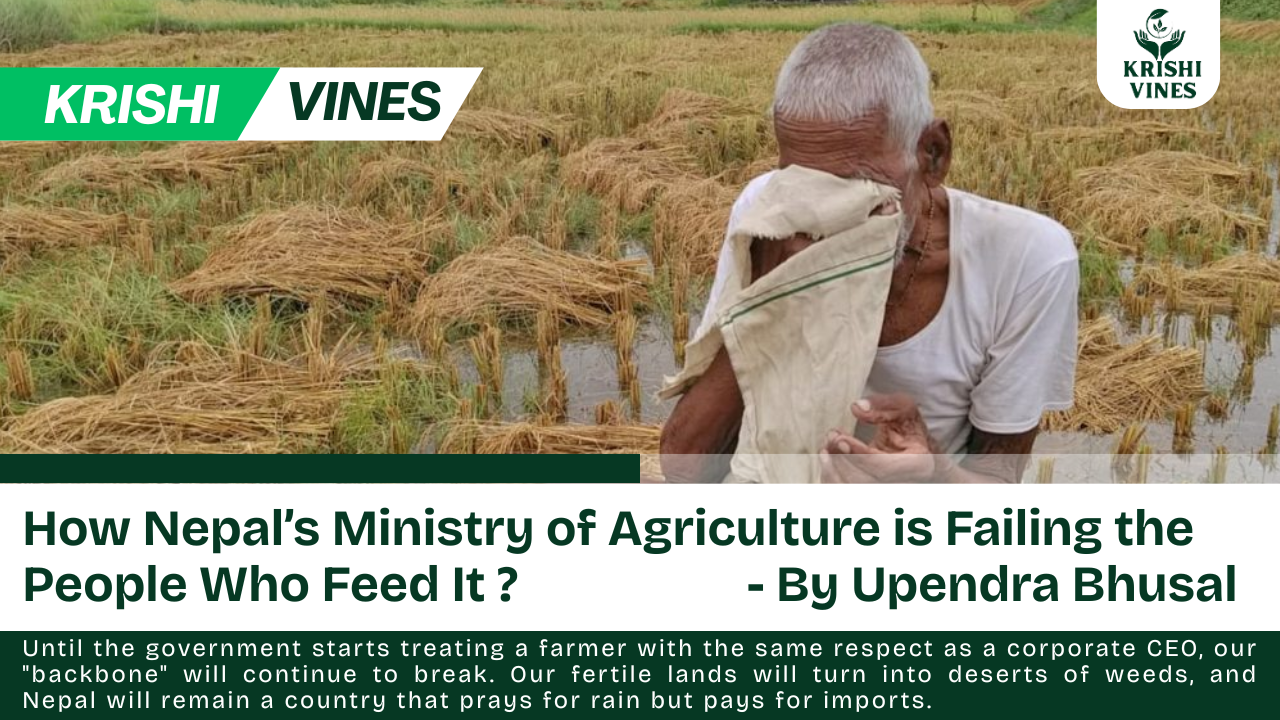
For decades, the Ministry of Agriculture in Singha Durbar has been a revolving door of political appointments. From 2018 to 2026, we have seen over 12 different Ministers take the oath. If you do the math, that is an average of one new Minister every 8 months. How can a sector that depends on long-term seasons, soil health, and 20-year strategies survive a leadership that changes faster than the weather?
Nepal doesn’t just need a Minister; it needs someone who understands that agriculture happens in the mud of the Terai and the terraces of the Hills, not just in the air-conditioned halls of Kathmandu.
1. The Decade of “Musical Chairs”
Since 2018, we have seen names like Chakrapani Khanal, Ghanashyam Bhusal, Padma Kumari Aryal, Mahindra Ray Yadav, and many others. Most were appointed not because they knew the difference between Urea and DAP, but because of political power-sharing deals.
When a Minister only stays for 200 days, they spend the first 100 days “understanding” the ministry and the last 100 days preparing for the next cabinet reshuffle. In this game of musical chairs, the farmer is the one left without a seat. For example, in 2021 alone, the Ministry saw five different leaders in a single year. While they were busy taking oaths, the farmers were busy fighting for a single bag of fertilizer.
2. The Statistics of Stagnation (2020–2026)
While the leaders change, the data remains depressingly the same.
- The Fertilizer Gap: The annual demand for chemical fertilizer is roughly 800,000 metric tons. In a “good” year, the government manages to supply only 450,000 tons. That’s a 50% failure rate every single year for a decade.
- The Import Shame: In the first nine months of the 2025/26 fiscal year, Nepal imported nearly Rs 32.5 Billion worth of rice. This is a country where “Rice is Life,” yet we pay billions to other nations because our own Ministry cannot manage irrigation or seed distribution.
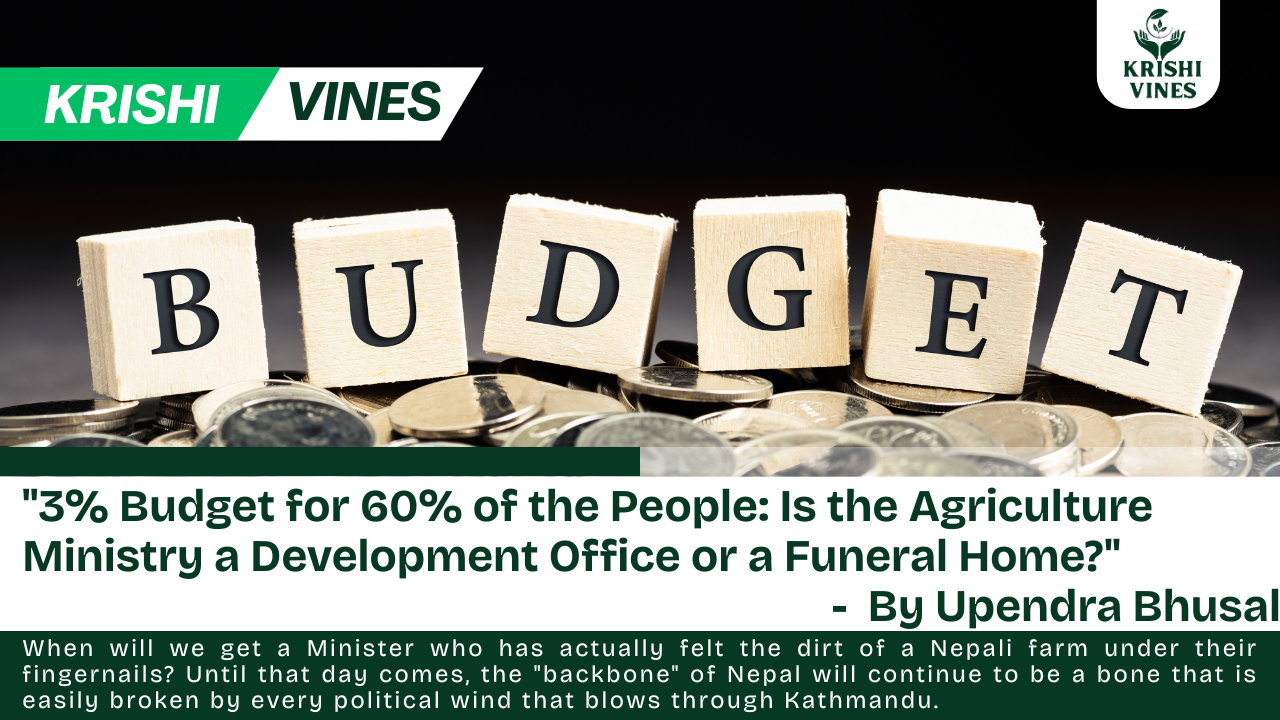
- The Budget Mismatch: While agriculture provides jobs for over 53% of our people, it consistently receives only 3% of the total budget. Even worse, over 50% of that small budget is locked into fertilizer subsidies, leaving almost nothing for technology or helping youth start agri-businesses.
3. “Off the Field” vs. “On the Field”
A true Agriculture Minister should know the reality on the field. They should know that 70% of Nepal’s farmland still depends on the Monsoon, not irrigation. They should know that a farmer in Jumla cannot get their apples to Kathmandu because the roads are broken and cold storage is non-existent.
Instead, we have Ministers who are “Off the Field.” They sit in meetings discussing “Agri-Modernization” while the actual machines (tractors and harvesters) are taxed so heavily that small farmers can never afford them. They launch “Smart Farms” for the cameras while the “Real Farms” are being abandoned because the cost of production is higher than the selling price.
4. The Last Decade: A Legacy of “Paper Projects”
Look at the last ten years: We had the Agricultural Development Strategy (ADS) and the Prime Minister’s Agriculture Modernization Project (PMAMP). These projects cost billions of rupees.
- The Critique: Where are the results? Productivity of paddy has barely moved from 3.5 to 3.9 tons per hectare in ten years. Meanwhile, our neighbors are hitting 5 or 6 tons.
- The Failure: The Ministry spent more time making colorful “PowerPoint Presentations” than building actual “Seed Centers.”
5. What a Real Minister Would Look Like
Nepal is waiting for a leader who treats agriculture as a National Security issue. We need a Minister who:
- Stays for 5 Years: No more 8-month terms. Agriculture needs stability.
- Fixes the Market First: Instead of just telling farmers to “grow more,” they should build the factories and markets so the crops don’t rot.
- Kills the Middleman: A Minister who uses technology to connect the farmer directly to the kitchen, ensuring the farmer gets 70% of the price, not just 20%.
- Prioritizes Irrigation over Subsidies: Fertilizer is a temporary fix; water is a permanent solution.
The Final Question: We have had Ministers who were doctors, lawyers, and career politicians. When will we get a Minister who has actually felt the dirt of a Nepali farm under their fingernails? Until that day comes, the “backbone” of Nepal will continue to be a bone that is easily broken by every political wind that blows through Kathmandu.