Articles

Impact Of Microplastic In Local Water Bodies In Nepal: A Growing Environmental Concern – By Nikita Thapa || Krishi Vines

Nepal, known for its rich biodiversity and abundant water resources, faces increasing environmental challenges, including the contamination of local water bodies with microplastics. Microplastics are the plastic particles smaller than 5 mm in diameter. They enter the environment either as primary or secondary microplastics. Primary microplastics are released directly in their original form often from…

Read More

Innovative Tools and Techniques for Agrobiodiversity Conservation – By Sudarshan Panta || Krishi Vines

The varied topography and climatic conditions of Nepal host an astounding level of agrobiodiversity. Besides underpinning national agriculture, this biodiversity indirectly supports livelihoods and further improves food security. However, rapid urbanization, climate change, and unsustainable agricultural practices now pose significant threats to this valuable resource. Thus, against these, innovative tools and techniques are rising to…

Read More

Climate-Resilient Crops in Nepal: Harnessing Agrobiodiversity for Sustainable Agriculture – By Resham Basnet || Krishi Vines

Nepal, with its diverse agroecological zones, is highly vulnerable to climate change impacts, such as erratic rainfall patterns, droughts, and rising temperatures. These changes threaten food security, livelihoods, and ecosystems, especially for smallholder farmers who rely on traditional agricultural practices. In response, there is a growing emphasis on developing and promoting climate-resilient crops through the…

Read More

Climate Change and Melting Permafrost: A Threat to Agrobiodiversity – Barsha Sapkota || Krishi Vines

Permafrost is any ground that remains completely frozen—32°F (0°C) or colder—for at least two years straight. These permanently frozen grounds are most common in regions with high mountains and in Earth’s higher latitudes—near the North and South Poles. Permafrost covers large regions of the Earth. Almost a quarter of the land area in the Northern…

Read More

Effect of climate change in pollinator population: A threat to Food security – By Asmita Ghimire || Krishi Vines

INTRODUCTION Pollinator populations are declining worldwide and over 87% of flowering plant species and 87 of the leading global food crops rely on pollinators for seed production. Pollinator decline seriously impacts biodiversity conservation, reduces crop yield, and threatens food security. Pollinator populations around the world have been declining at an alarming rate in recent decades…

Read More

The Threat of Modern Agriculture on Biodiversity – By Sangam Ghimire || Krishi Vines

Introduction Agriculture has been a cornerstone of human civilization, allowing societies to develop and thrive. However, as farming practices have evolved, particularly in the past century, the environmental consequences have become increasingly clear. Modern agriculture, characterized by intensive monoculture, extensive use of chemical inputs, and mechanization, poses a significant threat to biodiversity. The loss of…

Read More

Invasive Alien Plant Species in Nepal: Hidden Threats to Agrobiodiversity and Ecosystem Stability – By Aliza Thapa || Krishi Vines

Introduction:  Nepal, despite its small territory, is celebrated for its rich biodiversity and diverse ecosystems that support a wide array of plant and animal species. This vital natural diversity faces significant threats from anthropogenic activities, climate change, pollution, fragmentation and introduction of invasive alien plant species (IAPS). Invasive alien plant species (IAPS) is a species…

Read More

Agrobiodiversity: A Long-Term Solution to Combat Climate Change and Natural Disasters in Nepal – Saurav Pokharel || Krishi Vines

Nepal, one of the most climate-vulnerable countries in the world, is facing increasing threats from climate change. Major contributing factors, including deforestation, greenhouse gas emissions, glacier bursts, and unplanned urbanization, are accelerating environmental degradation. These changes are raising global temperatures, resulting in irregular seasonal cycles. The once-predictable monsoon is now erratic, bringing intense flooding, while…

Read More

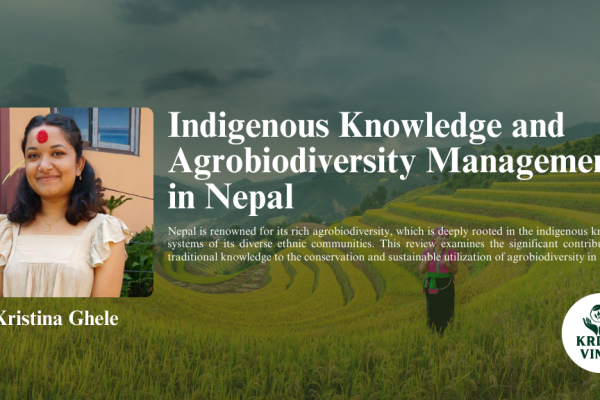
Indigenous Knowledge and Agrobiodiversity Management in Nepal – Krishtina Ghele || Krishi Vines

Nepal is renowned for its rich agrobiodiversity, which is deeply rooted in the indigenous knowledge systems of its diverse ethnic communities. This review examines the significant contributions of traditional knowledge to the conservation and sustainable utilization of agrobiodiversity in Nepal. We highlight specific agricultural practices, seed-saving techniques, and cultural traditions that underscore the vital role…

Read More

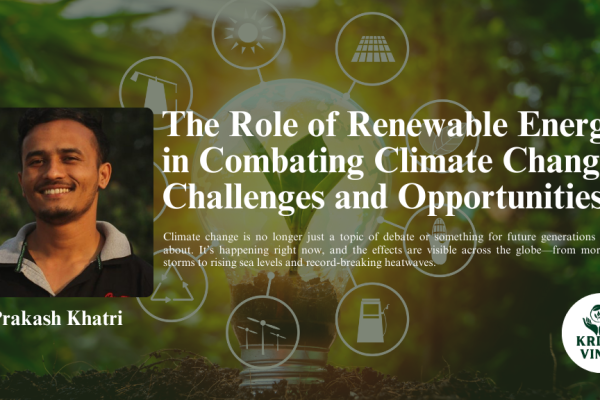
The Role of Renewable Energy in Combating Climate Change: Challenges and Opportunities – By Prakash Khatri || Krishi Vines

Climate change is no longer just a topic of debate or something for future generations to worry about. It’s happening right now, and the effects are visible across the globe—from more intense storms to rising sea levels and record-breaking heatwaves. One of the biggest drivers of climate change is the burning of fossil fuels like…

Read More
Back To Top